Sunday, May 24, 2020

Shattered Pride, Selflessness and Unconditional Grace: A Faith- Based Look at 'The Emperor's New Groove.'

Hello again everyone, and welcome to another edition of the Nightcrawler Experience!
Well, the pandemic is still causing havoc, but things seem to have died down just a bit. More businesses are opening (With wise policies put in place to prevent anything from spreading), and I was able to get my hair cut for the first time in months! We've still got a way to go, but I'd say now there's definitely starting to be a light at the end of our tunnel, praise be to God. We must stay positive, keep praying, and keep following the "Rules" relating to how to stay safe and healthy.
After my 'Lord of the Rings' series, I decided to look at some more light- hearted fare for a while, and since I have a Disney Plus membership (Which I highly recommend, btw; It really does offer an amazing array of content for a pretty reasonable price), I figured that would be a good way for me to get inspiration in.
To that end, for the next few segments of the Nightcrawler Experience, I will be taking devotional looks at some of Disney's beloved animated films, examining them both as a fanboy and as a Christian.
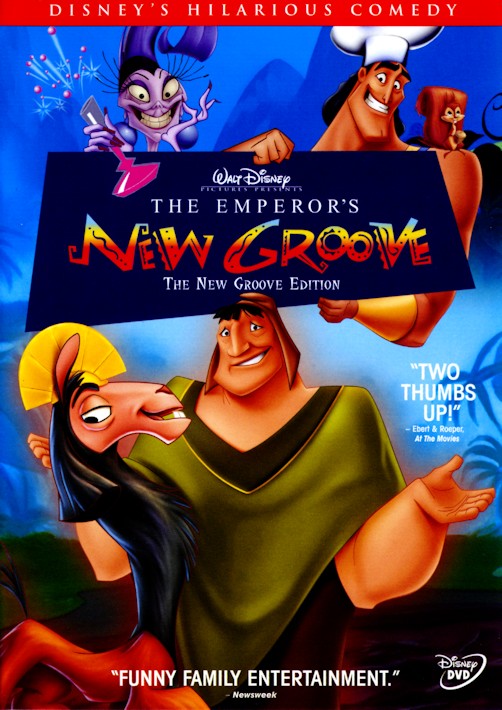
I'll start this series on a lively note with their hilarious 2000 animated film, 'The Emperor's New Groove.' This movie was originally conceived as a much more serious, epic- type film which would have been called 'The Kingdom of the Sun,' but it went through a ton of re-writes, character re- designs and a near- complete change to its plot, and ultimately became instead one of the most light- hearted comedy films Disney has ever made.

(Credit for this image goes to the user "RRabbit42"at the Emperor's New Groove fan wiki @ https://emperorsnew.fandom.com/wiki/The_Emperor%27s_New_Groove?file=The_Emperor%27s_New_Groove_-_The_New_Groove_Edition_-_front_cover.jpg)


This movie takes place long ago, in an impressive kingdom located somewhere in Pre- Colombian South America. The kingdom is ruled by the teenage Emperor Kuzco (Voice of David Spade), an incredibly selfish, spoiled jerk with a snarky attitude and a colossal ego. He views his kingdom as his own personal playground in which he can do and say whatever he wants regardless of how it affects others, and he becomes furious whenever anyone disrupts his lifestyle in any way. In the first few minutes of the film, he even has an elderly peasant thrown out of a high palace window for "Throwing off my groove," by accidentally bumping into Kuzco when he was doing a dance.

As you can probably guess, Kuzco living and acting in such a way results in a lot of people not being very fond of him. The worst in that regard is Yzma (Voice of Eartha Kitt), his scheming and power- hungry royal advisor. When Kuzco fires her, she and her dim- witted but amiable hunk of a henchman Kronk (Voice of Patrick Warburton) decide to do away with him so that Yzma can then seize the throne for herself. She invites Kuzco to a dinner in which she attempts to poison him, but through a mix- up caused largely by Kronk's incompetence, he is fed the wrong potion, so rather than being killed, Kuzco is instead turned into a talking llama.

Yzma then has Kronk take the transformed emperor out of the kingdom to finish him, but (Surprise, surprise) Kronk once again screws up. The llama- fied Kuzco ends up with Pacha (Voice of John Goodman), a humble and good- natured peasant farmer who had just learned that his entire village is due to be torn down to make way for a private vacation resort Kuzco intended to build for himself.

 When Pacha realizes the extent of what had happened to his emperor (Though Kuzco doesn't yet know that Yzma was deliberately trying to kill him, he thinks it was all just a mistake), he makes Kuzco a deal: He'll help Kuzco make it back to the palace and get turned back into a human, if Kuzco in turn agrees to spare Pacha's village and build his vacation home somewhere else. Kuzco more or less agrees (He varies a lot in his position), and they set out, not realizing that Yzma knows Kuzco is still alive, and she and Kronk are actively searching for him in order to finish him for good. Along the way, Kuzco gets a much- needed dose of humility and perspective, and he and Pacha learn the meaning of true friendship.

The only minor problem I have with 'The Emperor's New Groove' is that, for the first half or so, Kuzco acts as a voiceover narrator to the story, and while it works for the beginning with introducing the major characters and whatnot, it gets old fast. It becomes almost a relief in the middle of the movie when Kuzco then tells his narrative voiceover to buzz off.

With that out of the way, I had so much fun re- watching 'The Emperor's New Groove'!
Its main strength is most definitely its humor. I don't think there was a single scene in the entire movie that didn't make me laugh at least once! It's funny in a lot of ways, too. Most of its humor is dialogue- based through how the characters interact with each other, but there's also slapstick, sight gags, and situational humor. I actually think it works better this way than as the much more serious epic it was initially conceived as, because making a movie this consistently comedic isn't something that Disney has done very often, making it even more of a novelty.
In spite of this, though, the film does manage a nice serious moment or two here and there to keep it from getting TOO goofy.

All of the characters in the movie are a lot of fun. Even when Kuzco is a spoiled, cocky punk in the beginning, he's at least quite funny to watch, especially with some of the zingers he throws around (i.e. When firing Yzma, he tells her, "Hey, everybody hits their stride; You just hit yours fifty years ago."), and he retains that humor all through the film. However, at the same time, his change by the end of the movie seems really genuine. In a brief scene in the end when he's talking to the old man he'd had tossed out the window in the beginning and making sure the poor guy's okay, you can hear real humility and regret in his voice. The old Kuzco would never have cared that much about anyone else's well- being. Mad props to David Spade for his voice performance; I'm normally not much of a fan of his, but he's truly in his stride here.
Pacha makes for an excellent foil to Kuzco. While Kuzco is over the top, egotistical and often mean, Pacha is humble, down- to- earth, and likable. His interactions with his wife and kids are really sweet, and most of the film's serious moments involve him. John Goodman's voice was perfect for him, it conveys such a warm, sympathetic tone. The friendship that these two unlikely companions build with each other over the course of the film is really nice to see, definitely one of the better hero- duos I can recall from a Disney film.

Speaking of great character duos, easily one of the best parts of the movie (Certainly the funniest) is the villains. Yzma and Kronk play off of each other in an unbelievably funny, "Pinky and the Brain"- esque way. Yzma's overly complex plans and exasperated rants and Kronk's clueless yet endearing observations (i.e. Several hours after he unwittingly runs into Pacha and a disguised Kuzco in a diner, Kronk bolts awake from his sleep with the sudden realization that "That peasant, at the diner! ..... He didn't pay his check.") make a perfect contrast to each other. Even in terms of their voices, the menacing, almost snakelike voice that Kitt gives to Yzma (Which she ended up winning an Annie award for) perfectly contrasts with the dopey, jolly voice that Warburton gives to Kronk. It's no surprise that a direct- to- video sequel focusing on Kronk was made a couple years later, and another sequel centering around Yzma was initially planned but then cancelled when Eartha Kitt died in 2008.

One scene that is probably my favorite in the movie is a scene about two- thirds of the way into it. When it finally dawns on Kronk that Pacha has Kuzco with him and thus that finding the former of the two will lead them to the latter, he and Yzma go to Pacha's house claiming to be relatives of his. Fortunately, after Yzma tries to get some information from Pacha's wife about his location, the family finds a pretty awesome and creative way to get rid of the two. It's a scene that has loads of laughs considering its short time, and makes good use of each of the characters. Check it out:

https://www.youtube.com/watch?v=HE9Z6dr6WHw


I think there are definitely some Scriptural messages that can be taken from 'The Emperor's New Groove,'

First up, I think Kuzco can easily be seen as a kind of allegory for the Biblical king Nebuchadnezzar, whose story is seen in the book of Daniel, Chapter 4. Like Kuzco, Nebuchadnezzar was the supreme ruler of a large, mighty kingdom, in his case the kingdom of Babylon. Also like Kuzco, he had a horrifically bloated ego about it, and this pride led him to treat everyone around him horribly. Lastly like Kuzco, his pride ended up costing him a lot. See, he was warned by the prophet Daniel that his pride would be his undoing, and for a while, he did act in a more humble way, but it didn't last long. His egotism returned, and on one day when he looked over his kingdom and pompously said "Is not this great Babylon, that *I* have built...by the might of *my* power... For the glory of *my* majesty?," God had enough and punished Nebuchadnezzar for his pride. Nebuchadnezzar was driven mad in an instant, fled his kingdom, and for quite a while he lived like an animal and even ate grass like one. This makes a good parallel to the scene in the film when Kuzco, at his lowest point when he fully realizes just how much of a failure he has proven to be, blends into a herd of regular llamas and attempts eating grass like the rest of them. Eventually, after this, Nebuchadnezzar regained his senses and was restored to his sanity and his throne, and reigned with much more humility and decency for the rest of his days.
 As both Kuzco in the film and Nebuchadnezzar in the Bible came to discover the hard way, holding yourself up so high means the only way you have left to go is down. Our pride can blind us, both to what things around us are really like, and to specifically what God is doing around us. This is just one of many reasons why we need to stay humble, and not think too highly of ourselves. C.S. Lewis once made a good description of humility in one of his books: Humility can be seen as, if you were to build a great building or other structure, being just as proud of it and admiring of it as you would have been if someone else had made it. We can think well of ourselves (God wouldn't want us feeling too poorly of ourselves, either, since He created us), just not let pride blind us from what's really important or set us up for a fall. Proverbs 11:2 sums it up well by saying that "When pride comes, then comes disgrace, but with humility comes wisdom." Kuzco in the film and Nebuchadnezzar in the Bible found that out, and the sooner we learn that ourselves, the better.

A second lesson that the film teaches is regarding selflessness. Kuzco at the start of this film only cares about or even thinks about his own immediate wants. His initial plans for Pacha's hilltop village are the perfect example of this, as he was going to force Pacha, his family, and all the other families in that village to lose their homes just so he could build a gigantic private resort purely for himself. As the film progresses, however, he very slowly learns to care more about the needs of others than about himself. We see this through the aforementioned scene in the end with him apologizing to the old man, as well as with what Kuzco finally decides to do regarding Pacha's hilltop. Selflessness is an important theme for us as Christians, too. 1 Corinthians 10:24 says "Let no one seek his own good, but the good of his neighbor." The world teaches that everyone should only look out for number one, but once again, Jesus came to teach His followers to go against the secular world's bad example. We need to strive to show God's love towards others by seeking their good more than our own, as Kuzco eventually learned how to do.

Another Biblical lesson that the film teaches is, I think, a pretty good lesson on God's grace and love towards us. It, again, involves the scene when Kuzco has hit rock bottom and begun eating grass with a regular llama herd. Out of nowhere, he hears a familiar voice, and realizes that Pacha (Whom he had coldly rebuffed and run away from in an earlier scene) has followed after him and is now talking to one of the other llamas in the herd to try and find him. While talking to the llama, Pacha makes a simple but pretty powerful statement: "You know, call me crazy for following this guy all the way out here, but as much as he tries to deny it, I KNOW there's some good in him!"
 Even after how unbearably selfish Kuzco was, how much he mistreated Pacha and turned away from him all throughout the film up to this point, Pacha still came back looking for him. By this point, for Pacha, it wasn't even about saving his village anymore (After all, if Kuzco were to remain a llama forever and never return to the palace, he'd never be able to have Pacha's village demolished); It had become about looking past all of Kuzco's many faults to the good he had deep inside him, and the friend he could be. This is similar to what Jesus has done for all of us, through His grace. Even though we all sinned so many times, turned our backs on God so many times and in so many ways, He still knows that there's something worth loving in us, worth saving. That's why He sent His Son Jesus to save us. Romans 3:22-24 sums it up well by saying that "This righteousness is given through faith in Jesus CHrist to all who believe. There is no difference between Jew and Gentile, for all have sinned and fall short of the glory of God, and all are justified freely by His grace through the redemption that came by Christ Jesus." Even though we've all sinned, God showed us His grace by sending Jesus to pay for all of our sins so we can all be redeemed through Him.

There you have 'The Emperor's New Groove,' a fun, hilarious movie that teaches great lessons on humility, selflessness and on the incredible grace God shows to all of us. As Kuzco himself would put it, "BOOM, BABY!"
That's it for this edition of the Nightcrawler Experience. Stay tuned for the next installment in this series, which I should hopefully have up soon. Until then, stay safe and healthy, and may God bless you all!

Wednesday, May 13, 2020

Loyalty at all Times, Exalting the Weak, and Accepting Destiny: A Faith- Based Look at 'Lord of the Rings: The Return of the King.'

Hi everyone, welcome back to the Nightcrawler Experience!
Well, the Coronavirus pandemic is still raging, but for us who trust in Jesus, we know that God has us all in the palm of His hand. I continue to pray everyday over this situation, that God will weaken and eventually halt its spread, heal those who are afflicted with it, and comfort their loved ones. I encourage all of you to do the same, and of course continue to follow the various guidelines relating to staying safe and healthy in the meantime.
I also got a bit of good news recently even in the midst of our current times: After taking a hiatus from music for several years when she got married and started a family, Rebecca St. James (My favorite singer, who had been a major name in Contemporary Christian music in the 2000s) is finally working on a new album again, with its first single dropping next month!

Now then, speaking of returning to working for the Lord, the time has come for me to conclude my series looking at the 'Lord of the Rings' film trilogy.
Of course, this means I will be looking at the final film in the trilogy, 'The Lord of the Rings: The Return of the King.'

As with the previous film, this takes us on several different plotlines, following different characters.

Frodo Baggins, his friend Samwise "Sam" Gamgee, and their freaky guide Gollum (Whose unhappy backstory is revealed in the film's disturbing prologue) continue to make their way to Mount Doom. However, Gollum betrays the hobbits, manipulating them into turning against each other and leading them to a deadly encounter with the giant spider Shelob. After this and more, the hobbits finally arrive at Mount Doom. By the time they get there, it may be too late, as the Ring has begun seriously influencing Frodo's mind so he might not even want to give it up even though the fate of Middle Earth hangs in the balance.

Merry and Pippin are reunited with Aragorn, Legolas, Gimli, and Gandalf, but not for long.
Eventually, Gandalf has to take Pippin to the kingdom of Gondor, where they discovered an attack is imminent. They meet Boromir's father Denethor, who has been driven half- mad with grief over Boromir and is unwilling to yield his position as the kingdom's steward to Aragorn (Its rightful king).
Denethor is furious at learning that his other son, Faramir, let Frodo and Sam go with the Ring, and expresses even more vicious contempt toward his younger son than ever for it, leading Faramir to be gravely wounded and near death in a fruitless military attack to try and gain his father's favor. Denethor loses what little sanity he had upon discovering this and tries to get his people to surrender as he prepares to burn himself and Faramir's still- living body on a funeral pyre, with Pippin and Gandalf having to rush to save Faramir from this awful fate.

Aragorn, Legolas, Gimli, and Theoden come to prepare and aid in Gondor's defense, only to realize that they will be greatly outnumbered and in need of more help. The elf lord Elrond, father of Aragorn's true love Arwen, gives him his now- restored ancestral sword (Which his ancestor used to defeat Sauron the first time), and sends him, along with Legolas and Gimli, on a dangerous mission to try and gain the support of "The Dead Men of Dunharrow," an army of ghosts that in life did not honor a vow they made to Aragorn's ancestor but may redeem themselves by coming to Aragorn's aid now. This extra backup may provide the heroes with enough help to save Gondor from the invasion.

It all comes down to an ultimate showdown with the remaining forces of good marching on Mordor to try and distract Sauron's forces long enough for Frodo and Sam to at long last reach Mount Doom and destroy the Ring (And, with it, Sauron) once and for all.

The only real problem with this movie was the prevailing problem with all of the films: Its length. It is easily the longest film in the trilogy, and even after the Ring is destroyed, it takes another 40 minutes or so before we finally see "The End" appear on the screen.

Now that that's out of the way, 'The Lord of the Rings: The Return of the King' is truly a cinematic masterpiece. It completely swept the Oscars that year, taking home all eleven awards it was nominated for, including Best Picture (A still- standing record for the highest clean- sweep of the Oscars). It deserved every last one it got.

The film's action sequences are as top- notch as they have always been. Although the initial siege of Gondor is a little too similar to the Battle of Helm's Deep in the previous film, the land- battle that followed it (When Aragorn and co. enter the fray) was brilliant, with a lot of quite impressive visuals.
Another key action sequence is when Sam has an intense battle with the monstrous spider Shelob. You truly will be on the edge of your seat all throughout that scene.

All the characters are as wonderful as ever. We feel how the quest has been really taking its toll on everyone, especially Frodo, yet see them still endure. Frodo has been carrying the Ring for such a long period that he can barely function or even remember his old life in the Shire (Which, we find out from the prologue, is similar to what happened to Gollum as the Ring warped his mind). Then afterwards, when his quest is done, we see him attempting to settle back into normal life and find peace after all he went through.
A character who really shines in this is Sam. We feel his despair as he and Frodo have their brief falling- out, his courage and loyalty as he faces Shelob single- handedly, and his general kindness and devotion all throughout the film right up to his well- deserved happy ending as he returns to the Shire, marries his crush (Shooting down that stupid and baseless "Frodo and Sam= Gay lovers" fan theory), and starts a family with her.
Gollum is taken in a somewhat different direction than he was in the previous film. While the previous film gave him loads of comedic moments and showcased how torn he was between his two personalities, this one gives him many more serious moments and has him becoming pretty much completely evil. In particular, the way that he turns Frodo against Sam (First by getting Frodo to believe that Sam might try to take the Ring from him, then by framing Sam for stealing their rations) is so reprehensible and cruel, it really shows how longing for the Ring can strip people of all the good they once had and make them complete fiends.
Aragorn we see truly becoming who he was always meant to be. From the ragtag ranger he was in the first film, to a leader of armies, and ultimately a king. We see his struggles, relating to his love of Arwen and if her father will accept it, how to redeem his family name, and ultimately how to save all of Middle Earth. The speech he gives to his army right before the battle at the gates of Mordor is truly unforgettable.
Gimli, my favorite character, gets plenty of good play in it, too. He has a lot of funny moments (i.e. a scene early on when he and Legolas have a drinking contest, and later when ghostly hands form towards him out of the mist and he nervously attempts to dispel them by blowing them off with his breath), and yet also some nice serious moments. One that sticks out is a brief but poignant exchange he and Legolas have as the final battle at the gates of Mordor is about to begin: Gimli looks at Legolas and says "I never thought I'd die fighting side by side with an elf." Legolas then asks him, "How about side by side with a friend?" Gimli responds, "Aye. I could do that."

Probably even more than the other two films in the trilogy, this is one in which watching the "Extended Edition" is an absolute must, for a lot of reasons. First, it includes scenes showing the final fates of the evil wizard Saruman and his lackey Wormtongue, who were both completely cut from the theatrical version of the film. Saruman's actor, Christopher Lee, was understandably quite offended over that fact, and refused to attend the film's premiere for that reason. Second, on a related note, it includes the death scene of the foul and sadistic orc general Gothmog. We see him doing so many vile, savage things (One that sticks out is when he, to demoralize the people of Gondor before the siege, has catapults launch the severed heads of many of Gondor's slain warriors over the walls into the city), deeply wish to see him get killed for that, and yet he seems to evade death several times; It's only in the Extended Edition that we see him finally taken down for good by Aragorn and Gimli together double- teaming him. Lastly, the Extended Edition also includes a very funny cameo from the film's director, Peter Jackson, in which he appears as a rather unlucky pirate.

This movie also has truly remarkable and diverse set designs. From the impressive white buildings of Gondor, to the imposing cliffs of Mount Doom, to the dark and creepy environments of Shelob's lair and the kingdom of the Dead Men of Dunharrow, and back to the beautiful hills of the Shire, this movie truly is an incredible feat in production design. It's no wonder that one of the film's many Oscars was for Best Art Direction.

A scene that sticks out as probably the most memorable for me in the film is in the end, when Aragorn is crowned king. We see him accepting the crown, see how he even has some of his friends assist him in it (i.e. Gimli presents him with the crown, and Gandalf kind of presides over the coronation ceremony, like a minister at a wedding), and walks along the courtyard, acknowledging the other friends and allies that helped lead him to this victorious moment. He is finally reunited in person with Arwen, and they passionately kiss. Then (And this is what makes this scene so unforgettable), the crowds part as we see Aragorn and Arwen approach the four heroic hobbits standing in the back of the crowd. The hobbits bow respectfully to the new king, but Aragorn stops them. "My friends," he says, "You bow to no one." Then he, Arwen, and all the rest of the crowd kneel to the hobbits who went through so much to save their world, as the beautiful theme music for the Shire plays loudly in the background. All the performances in this scene are great, ESPECIALLY Viggo Mortensen, and that final scene with the hobbits served as a wonderful reminder that the physically smallest ones among them were the ones who proved to be the greatest heroes. If I remember right, it was this very scene that was used for its "Nominee preview clip" when it ultimately won the Oscar for Best Picture.


Like the previous two films in the 'Lord of the Rings' trilogy, 'The Return of the King' has a multitude of Scriptural messages and themes.
One example is the the message that we should be wary of false counselors. Gollum, as part of his scheme to reclaim the Ring, tries to turn Frodo and Sam against each other. He deliberately sows mistrust and paranoia in Frodo's heart (Which is already becoming strongly influenced by the Ring), by telling him that Sam wants to take the Ring for himself. We likewise need to be very careful of those who might lead us astray with bad advice. All the way back in the Garden of Eden, it was listening to the serpent's bad advice that drove Adam and Eve to eat of the forbidden fruit and allow sin to enter the world. Proverbs 25:19 tells us that "Trusting in a treacherous man in a time of trouble is like a bad tooth or a foot that slips." We indeed need to make sure that people are trustworthy and seek God's discernment before we blindly put our trust in them and their advice.

A second important Scriptural lesson to be taken from 'The Lord of the Rings: The Return of the King' concerns the accepting of one's destiny, as seen mainly through Aragorn finally accepting his destiny to become king of Gondor. The key moment in this regard is when Elrond, who had previously expressed reservations about Aragorn, both in terms of Aragorn's destiny as king and in terms of his love for Arwen, accepts this and convinces Aragorn to do the same by having Aragorn's ancestral sword Narsil reforged and presenting it to him. He tells Aragorn to "Put aside the Ranger: Become who you were born to be."
 This can tie into us as Christians due to the concept of the callings that God puts on all of us. Both in Biblical times and today, God calls people to do incredible things, if they will trust in Him and seek His will. Romans 8:28- 29 says that "We know that in all things God works for the good of those who love Him, who have been called according to His purpose. For those God foreknew He also predestined to be conformed to the image of His Son, that he might be the firstborn of his brothers and sisters." It's essentially saying that if we love and trust in God, He will make things work together well for us (Even if we can't see it at the time, such as these trying times we're currently going through). This is because He knew us before we were even born and destined us to become more like Him through following the example of Christ and go on to do great things for His Kingdom. It's just a matter of stepping out in faith and trusting Him to accomplish the incredible things He intended for us.

Another lesson is regarding loyalty, especially when it comes to helping others through trials. When Aragorn is initially planning on seeking out the aid of the Dead Men of Dunharrow alone, Legolas and especially Gimli will have none of it, and insist on accompanying him. Even though they know how unbelievably dangerous this mission is (When we first see the spooky mountain path leading to the Dead Men's lair, we are told that none who go down that path have ever returned), they not only didn't hesitate to join Aragorn on it, they made it clear there was no way he'd be going on it without them. However, the best example of this kind of loyalty in the film is definitely Sam. He sticks by Frodo in all of it. Even when they have a brief falling out due to Gollum's machinations, Sam before long comes back to Frodo. Finally, in the last stage of their climb up Mount Doom, Frodo has become so weak from exhaustion and carrying the Ring for so long that he feels he cannot move another step. Sam tells him, "I can't carry (The Ring) for you, but I CAN CARRY YOU!" He then lifts Frodo up onto his shoulders, and physically carries him up the mountain.
 Keeping loyalty to those we care about, even when it gets tough as it was for the heroes in those scenes, is an important part of being a Christian. Proverbs 3:3 instructs us to "Never let loyalty and kindness leave you! Tie them around your neck as a reminder. Write them deep within your heart."Also, Galatians 6:2 tells us to "Bear one another's burdens, and so fulfill the law of Christ." It's one thing to stay true to your friends when the going is easy, but when it gets a lot harder to do so (i.e. When we are going through the stresses associated with this pandemic), that's a sign of real, Godly loyalty. It's what Gimli and Legolas showed to Aragorn, what Sam showed to Frodo, and what we should show to those around us.

A final theme is on the exultation of the meek and seemingly unimpressive. Much like the previous lesson, there are several characters who demonstrate this. First concerns a brief exchange between Pippin and Faramir; The latter of the two is expressing sadness and regret over the fact that his father looks down on him so much compared to Boromir, and acknowledges that he will never have the strength that Boromir had. Pippin responds to this by saying, "I think you have strength, of a different kind." That indeed is true of Faramir. While he may not be as mighty or accomplished of a warrior as Boromir was, he demonstrated an amazing inner strength of will in the previous film when he refused the temptation to take the Ring for himself, a strength that Boromir had proved to be lacking. For the second example of this, an interesting pairing of sorts that develops in this movie is between the hobbit Merry, and Theoden's brave niece Eowyn. In the battle for Gondor, they both want to serve and help in the battle, but both are turned down because of who they are (Eowyn because she's a woman, Merry because he's a hobbit). Nevertheless, the two disguise themselves to blend in with the rest of the army, and both fight bravely in the Battle of Gondor. In fact, Eowyn single- handedly takes down one of Sauron's deadliest generals, the Witch- King. Lastly, there's the previously- mentioned coronation ceremony scene, in which everyone, even the newly- crowned king Aragorn, kneels to the four humble hobbits in gratitude for their heroism.
 This idea of even the seemingly weakest and least impressive of people and things being used to accomplish great things is very much a Godly principle. 1 Corinthians 1:26 has Paul telling the people in the church of Corinth, "Brothers, consider the time of your calling: Not many of you were wise by human standards; Not many were powerful; Not many were of noble birth. But God chose the foolish things of this world to shame the wise; God chose the weak things of the world to shame the strong. He chose the lowly and despised things of the world, and the things that are not, to nullify the things that are, so that no one may boast in His presence." Then, 2 Corinthians 12:9 has him saying that "(God) said to me, 'My grace is sufficient for you, for My power is made perfect in weakness.' Therefore I will boast all the more gladly of my weaknesses, so that the power of Christ may rest upon me." God loves using people and things that the world sees as weak or foolish or unimpressive to help do His will on Earth. Moses had a speech impediment, David was the youngest and smallest of his brothers, and Jesus's disciples included uneducated fishermen, corrupt tax collectors, political extremists (I can't even imagine the arguments that must have gone on between Matthew and Simon the Zealot behind the scenes), and others not looked on highly by society. In this blog, I've often looked at movies, shows, etc., that some in the world might see as foolish or useless, yet God, through me, has used those same movies, shows, etc., to help teach His Word in a relatable way. Indeed, it is through people and things that the world looks down on and sees as having no value that God's glory can shine the most brightly.

There you have 'The Lord of the Rings: The Return of the King,' a marvelous ending to an unforgettable film trilogy which teaches a lot of timeless lessons to us as Christians.

I hope you all have enjoyed this journey we've been on together through Middle Earth these last few weeks, the great stories it's produced, the wonderful characters we've met, and the incredible lessons we've learned on how to better walk with Jesus.
That's all for this edition of the Nightcrawler Experience. I already am well into the next series of entries I'll be doing for this blog, the next one should debut in less than a week, so keep your eyes oen for it. Until then, stay safe and healthy, and may God bless you all!

Sunday, April 26, 2020

Hope in Trying Times, Stewardship, Reconciliation, and Restoration: A Faith- Based Look at 'Lord of the Rings: The Two Towers.'

Hi everyone, and welcome back to the Nightcrawler Experience!
Hope everyone is bearing up well under the continued quarantine, and continuing to stay safe and healthy!
I'll be continuing my look at the 'Lord of the Rings' film trilogy by looking at the second (And probably my personal favorite) entry in them, 'The Lord of the Rings: The Two Towers.'

Unlike in the previous film, 'The Fellowship of the Ring,' in which the heroes largely kept together and there was one major narrative, the Fellowship is now divided after the death of Boromir, and as such there are now three different major storylines going on:
First up, Frodo Baggins and his friend Samwise Gamgee are continuing on their journey to Mount Doom to destroy the Ring. They soon run into the twisted creature Gollum (Andy Serkis), who had once possessed the Ring, which he famously refers to as "My Precious," for a long period and is determined to get it back. He eventually is convinced to help guide them on their trip, and we see that he is kind of wrestling between two different personalities, one friendly and the other not- so- much (They are differentiated by the fact that the latter personality is generally referred to as "Gollum," while the former personality is referred to by his real/ former name, "Smeagol"). They eventually have an encounter with their late comrade Boromir's younger brother Faramir, who is held to much lower regard by their father (Especially as seen in a wonderful yet sad scene in the Extended Edition in which the brothers celebrate a victory only to have their celebrations ruined by their overbearing father arriving and praising Boromir while nastily criticizing Faramir, favoritism at its worst), and consequently is eager to prove himself and believes that bringing the Ring back to their kingdom is the perfect way to do so. The Hobbits try their hardest to convince Faramir to let them go, not realizing that the seed of betrayal has been planted in Gollum's heart.

The second subplot involves the other two Hobbits, Merry and Pippin. We see them initially the prisoners of the orcs, as they were at the end of the previous film. They escape into the nearby Fangorn Forest, however, and meet Treebeard (Voice of John Rhys- Davies, who also plays Gimli), the leader of a race of living trees called Ents who act as kind of the protectors of the forest. As time goes on, they become determined to convince him to get the other Ents to help lay siege to the evil wizard Saruman's fortress. Eventually, they do so by leading Treebeard to see how heartlessly Saruman has wiped out a large chunk of the forest in order to get materials to strengthen his army. Outraged at this destruction of so many trees, an act he views as no less than mass- murder, especially as he personally knew some of the felled trees and some of them could talk like he could, Treebeard leads the Ents in a siege of Saruman's castle in Isengard, with Merry and Pippin joining in as much as they can.

The third storyline involves Aragorn, Legolas, and Gimli. They start out determined to rescue Merry and Pippin, but when they see that the two escaped and are safe with Treebeard, they go on other missions. They are reunited with their wizard friend Gandalf (Who we see survived his encounter with the Balrog in the previous film), and together set out to save the human king Theoden (Bernard Hill), whose mind is being controlled by Saruman through his vile and underhanded royal adviser Grima Wormtongue (Brad Dourif). When they help restore Theoden to his old self (I'll talk more about that incredible scene in a bit), they all together help Theoden lead his people to the much more secure fortress of Helm's Deep, where they are preparing for a brutal invasion by an enormous army of Saruman's mutated super- orcs. This group makes ready for the most intense battle of their lives to help foil this attack and save the people within.

As I said, 'The Lord of the Rings: The Two Towers' is probably my favorite film in the trilogy. It works in so many ways. It has great character development (Which is saying something, considering how many characters it has) and nice moments of drama and emotional impact, plenty of funny moments to help ease the tension, and TONS of incredibly well- done action scenes, usually in the form of various battles between different factions. I think it balances those elements better than either of the other films in the trilogy managed to do.

One of the main focuses of the film is on the Battle of Helm's Deep, and it is pulled off flawlessly. We get a great anticipation for it early on as the various characters (Both the major heroes, and just the regular soldiers that will be aiding them in the battle) nervously prepare for it in various ways. Even when Saruman's army arrives, the two sides merely face each other for a couple minutes without doing anything (Other than Gimli humorously complaining about the fact that his Dwarven stature makes him too short to be able to see over the battlement he has been stationed behind and thus wants to know what's happening), as rain begins to fall. Then, a stray arrow is accidentally fired, and all Hell breaks loose almost immediately from this.
In the battle itself, the scope is immense. We see just how massive the armies are and how well- fortified (Other than one key weakness) the castle is. We see the different battle strategies that each side uses, and how they each adapt to the changing circumstances of the battle and adjust their tactics accordingly. I cannot imagine how many people must have been involved in this scene, from the countless actors, to the costumers, makeup artists, prop designers, set designers, and so on.
This battle also features some pretty awesome visuals of the major heroes proving their strength and battle- skill. We see Legolas using a shield as kind of like a skateboard to slide down a flight of stairs while pouring arrows into enemy fighters (And even arranging so that, when he reaches the bottom, the shield is propelled into the chest of one of the orcs), Gimli throwing himself from off the top of a shattered wall to help fight off an orc charge on the lower level, and him and Aragorn then launching a fearless sneak attack to stop them from breaking down a major door. There is, in addition, a nice little running joke involving Legolas and Gimli (Who have gone from being intensely distrustful of each other in the previous film due to the rather shaky relations between Elves and Dwarves, to very slowly becoming friends) having a friendly competition as to who can kill the most Orc warriors in the battle. Hearing Gimli loudly counting off each one he takes out never fails to make me chuckle.

This movie also is our first real introduction of quite a few memorable new characters.
Theoden makes for a great addition to the cast, once he is freed from Saruman's influence (Again, more on that in a bit). He's shown to be a good king, effective military strategist, and capable warrior in the battlefield.
Faramir is pretty interesting as well, seeing his desire to prove to both his father and himself that he is useful and capable of defending his kingdom, and how conflicted he is over this as he comes to better know Frodo and realize just how dangerous the Ring can be.
Grima Wormtongue works wonderfully as a supporting villain. Brad Dourif (Best known as the voice of the killer doll Chucky) gives him such a creepy, menacing, smarmy personality, making your skin crawl every time he talks. From the moment he first appears, you pretty much instantly get the feeling that he is a very dangerous person trying deliberately to lead Theoden and all of Rohan into ruin.
Treebeard is a LOT of fun. His voice and body language are perfect, exactly how you'd imagine a sentient tree to move and talk. He has some funny moments largely involving how he and his fellow Ents believe in doing everything VERY slowly (Complete with his catchphrase of "Let's not be too hasty") and the frustration this causes Merry and Pippin, and yet it would be impossible to not sympathize with him when he looks on in horror at the destruction Saruman has begun inflicting on the forest.

Best of all the new characters in 'The Two Towers,' though, is most definitely Gollum. Even though Gollum technically appears a couple times in the previous film, these appearances are extremely brief, with you not even seeing much of what he looks like. In 'The Two Towers,' he is front and center, and steals every single scene he's in. He is often incredibly funny, especially in a scene when he brings Frodo and Sam a couple freshly- killed rabbits to eat, then reacts with horror when he sees Sam cooking them (Gollum prefers to eat his kills raw). The odd split- personality he has with his "Smeagol" and "Gollum" personalities is pulled off brilliantly, especially in a scene halfway through the film when the two personalities actually have an argument with each other. Between Andy Serkis's performance, the animation, and the camera work, it almost seems as if it is two different characters talking rather than just one talking to himself. He's probably the single- best CGI character I've ever seen in a movie, the effects for him still hold up well after all these years, and between that and Serkis's performance as not just Gollum's voice but also acting as his motion- capture double and the on- set stand- in for him, it really seems at times like he could be an actual living thing.


My favorite scene in this film, and easily one of my favorite scenes in the entire trilogy, is when Aragorn, Legolas, Gimli and Gandalf enter the throne room of King Theoden to have words with the king. Saruman's toxic influence over Theoden (Through a combination of his hypnotic magic and Wormtongue's foul advice) has caused the once- mighty king to become an incredibly frail, ancient- looking man who appears as though the slightest nudge could make him fall over. Sensing something's amiss, Gandalf approaches Theoden's throne while his three companions fight off the guards and Gimli grabs Wormtongue before the gutless little creep can sneak away. Gandalf begins attempting to magically release his old friend from Saruman's influence. While Saruman possesses Theoden and has him laugh off Gandalf's initial attempts and threaten that "If I go, Theoden dies," Gandalf brilliantly redoubles his magic efforts. As he puts it, "I withdraw you from Theoden as poison is drawn from a wound!" Sure enough, it works, and Theoden is saved. In a truly breathtaking use of visual effects, we then see Theoden de- age and regain his strength and sanity. He, his friends (Including Gandalf and co.), and his loved ones all rejoice that he is back to his noble self, and we then see him give Wormtongue the boot as he should have done long ago. This was such a magnificent scene in every way. All the performances are spectacular (Especially Ian McKellen and Bernard Hill), the music in that scene is gorgeous, and it just conveys a great feeling of victory and renewed hope. We can almost feel the joy in the scene spreading out to all of us, as though we were right there in the throne room celebrating alongside the heroes.
I remember the first time I saw this movie, being disappointed and saddened at Theoden's initial frail and decrepit appearance. I mean, in the book, Theoden is old, but he's still strong enough to kick some orc butt when he has to. Then, in this scene, when the spell is broken and Theoden regains his proper age and strength, I remember smiling broadly in the theater and thinking to myself, 'Yeah, THAT'S Theoden! THAT'S what he should look like!'
Those are just some of the reasons why 'The Lord of the Rings: The Two Towers' is my favorite film in the trilogy.

There are a whole bunch of Scriptural lessons that can be taken from 'The Lord of the Rings: The Two Towers.'

A major theme in 'The Two Towers' is on hope even when things seem hopeless. Each of the three subplots has characters dealing with that in some way: Merry and Pippin feel at one point like they don't have a chance of convincing Treebeard and the other Ents to join in the fight against Saruman and should just go home to the Shire. Aragorn and his companions, especially Legolas, feel at one point as though attempting to defend Helm's Deep against Saruman's gigantic army is a useless effort which will only result in getting them all killed. Frodo and Sam, in turn, come at one point to feel as though there's no way they'll be able to get the Ring to Mount Doom. Eventually, all find the courage and hope within them to resist despair and persevere in their missions. Sam even gives this truly unforgettable monologue near the end of the movie which sums this up (I'd simply write it out, but believe that to do so would be a disservice to Sean Astin's amazing delivery of it):
https://www.youtube.com/watch?v=k6C8SX0mWP0
(Credit for that video goes to the Youtube user EgalmothOfGondolin01)
As Sam points out, things can at times seem hopeless, like there's no way out and no way that good can come from our circumstances or things can ever go back to even remotely what they were before. For us trying to get through this pandemic, it can certainly seem that way. However, again as Sam points out in his monologue, the times of darkness WILL pass, and the dawn will shine all the brighter for it. Similarly, the trying times we are going through now because of the Coronavirus WILL one day be in the past, and our world will be all the brighter and happier for our having conquered it. This kind of hope and endurance is very much a Biblical trait, something that we as Christians should demonstrate. We recently celebrated Easter, which was all about that. The suffering, darkness, and hopelessness of Good Friday were overcome by the victory and light of Easter Sunday. 2 Corinthians 4:17- 18 says "For our light and momentary troubles are achieving for us an eternal glory that far outweighs them all. So we fix our eyes not on what is seen but on what is unseen, since what is seen is temporary, but what is unseen is eternal." The hardships we are faing now as a result of the quarantine are merely temporary, and in a time will be over, but the eternal glory that awaits us in Jesus is eternal and so infinitesimally better and more significant than our past hardships, which will by that point seem like mere afterthoughts.

Another Scriptural theme in 'Lord of the Rings: The Two Towers,' which is especially relevant since last Wednesday was the 50th anniversary of Earth Day, is the importance of taking proper care of the environment that God entrusted to us. Treebeard at one point mentions that Saruman used to enjoy walking among the trees and woods, but lost that enjoyment when he became evil, hence why he came to see nothing wrong with wiping out large chunks of Fangorn Forest to gain the resources to fuel his army. We have a responsibility to protect the planet that God gave us. He put man in charge of the Earth, we the intent that we should be good stewards over it. While we are His highest an most beloved creation, He still has a great deal of love and care for plants, animals, and all other living things on Earth, and wants us to have that love and care for them, as well. Many verses in Scripture speak of the importance of properly caring for the land, trees, and animals. For instance, one which particularly applies to Saruman's devastation of the forests to support his army is Deuteronomy 20:19, which says "When you besiege a city for a long time, making war against it in order to take it, you shall not destroy its trees by wielding an axe against them. You may eat from them, but you shall not cut them down. Are the trees in the field human, that they should be besieged by you?" God cares enough about the trees that He doesn't want to see them cut down in a war, a compassion that Saruman was clearly devoid of, but that God wants all of us to have.

An additional Scriptural lesson to take from 'The Two Towers' is the importance of resolving conflicts fast. About 2/3rds of the way into the film, Frodo is put into a position in which he is forced to lead Gollum to be captured by Faramir's troops (It was the only way to save the poor freaky guy's life, as Gollum had trespassed into a sacred pool, and Frodo doing this was the only thing that prevented Faramir's archers from simply killing him). Gollum is unaware of how close he came to death, and believes that Frodo had simply betrayed him, and of course doesn't take it well. In the end of the film, Sam tries to explain to Gollum what happened, but does so in an extremely brief and unsatisfying way that doesn't really convey that Frodo did what he did because it was the only way to save Gollum's life. I think that, if Frodo had done more to help Gollum to understand what had actually happened, things could very well have ended differently, and Gollum likely wouldn't have done the treacherous things he ended up doing in the final film. Ephesians 4:26 says "...Do not let the sun go down on your anger," and Jesus says in Matthew 5:24 that, if you are about to present an offering to the Lord but remember that you still have a quarrel with someone, that you should "Leave your gift there before the altar and go. First be reconciled to your brother, and then come and offer your gift." Letting anger and conflicts endure without being promptly resolved causes them to get worse, for the anger and hurt feelings to fester and grow, which can have big consequences for you and others in the long run, just as Frodo not quickly and properly talking out his issue with Gollum led to a lot of problems for them in the next film.

A final major theological message that can be taken from 'The Two Towers' concerns the wonderful scene I talked about earlier with the exorcism of King Theoden. This is significant in a couple ways: First, because it is similar to the ways that Jesus would exorcise demons from the people they were possessed, such as how He saved the man who was possessed by Legion. Also, as I said earlier, I felt like Theoden being freed from Saruman's influence and changing back to normal was him regaining his TRUE self, what he's supposed to be like. In much the same way, when Jesus becomes our Savior and Lord, He does a very impressive transformation in our lives, helping to dispose of our sinful old selves and making us into our TRUE selves that we're supposed to be like. 2 Corinthians 5:17 illustrates this by showing that "Therefore, if anyone is in Christ, he is a new creation. The old has passed away; behold, the new has come." I've indeed always believed that Jesus's main goal in life is to help us ascend and become who He meant us to be, the best servants of Him we can possibly be, through His miraculous transformative work on us.

There you have 'The Lord of the Rings: The Two Towers'. It's a truly marvelous movie which teaches us a lot of very valuable lessons on what it means to be a Christian.

I have one more thing to add, rather unrelated. Richard Smith, a dear old friend of mine from our seminary days, an Episcopal priest and an awesome guy in general, has started a new online ministry called "Binary Sunset Church" which seems to be kind of in the same vein as what I do here on the Nightcrawler Experience. Each Sunday, he performs a livestream online worship service in which he uses themes and concepts from 'Star Wars' to help communicate the messages in his sermons, similar to what I do here. While his services are Episcopal in delivery and liturgy and whatnot, the doctrine  Richard preaches in his sermons appears to be pretty nondenominational. So, if you have an interest in that, check out "Binary Sunset Church" on Facebook, and you'll be able to watch their services at 1:00 on Sundays.

That's all for this edition of the Nightcrawler Experience. Stay tuned in the next week or so, when I finish out this series with a look at the final movie in the trilogy. Until then, take care, stay safe and healthy, and may God bless you all!

Thursday, April 16, 2020

Obedience, Temptation and Redemption: A Faith- Based Look at 'Lord of the Rings: The Fellowship of the Ring.'

Hi everyone, welcome back to a new edition of the Nightcrawler Experience!
Well, the Coronavirus is still raging, and we've all (Most of us, anyway) got a lot of time at home on our hands as a result of it, so I hit upon an idea, to examine a series of films on the Nightcrawler Experience, as well as satisfying a request that my friend Jonah made for the blog years ago:
A devotional look at each film in the 'Lord of the Rings' trilogy!
They are three very long films (Especially since I'll be viewing the Extended versions of them, and I recommend that all of you do the same as most of the deleted scenes do indeed add a lot to the story, whether through plot advancement or just sheer entertainment value), so the Coronavirus quarantine period is the perfect time for me to re- watch them and post faith- based reviews on them here.
The 'Lord of the Rings' trilogy is of course based on the book series of the same name by J.R.R. Tolkien, as sequels to his previous book 'The Hobbit.'
We begin with the first film in the trilogy, 'The Lord of the Rings: The Fellowship of the Ring.'


Through an opening flashback, we learn that the dark lord Sauron, thousands of years before the story took place, attempted to take over the world of Middle Earth with the aid of a magic ring, the One Ring, that among other things, greatly amplified his power. He was defeated, and the Ring separated from him, but the human king who took the Ring was soon corrupted by its addictive power, and refused to destroy it (Which in turn would have completely destroyed Sauron forever). The Ring was lost for many thousands of years, then found by the creature Gollum, who kept it with him for a few centuries, with it warping his mind and body in the process.

Then, in the events of 'The Hobbit,' the hobbit (A small, normally- unimpressive humanoid creature normally not made for battles or adventures) Bilbo Baggins took the Ring from him. Bilbo kept the Ring for sixty years in his home in the peaceful Hobbit village known as the Shire, with the Ring unnaturally preserving his life/ youth. Eventually, he left and went to the Elven city of Rivendell, leaving the Ring (Which was already starting to corrupt Bilbo's personality somewhat) and the rest of his possessions to his nephew, Frodo Baggins (Elijah Wood).
At this point, Sauron is preparing to return and again try and conquer Middle Earth, but needs the Ring in order to do this, so he sends a group of corrupted formerly- human creatures known as the Ringwraiths to try and hunt down the Ring.

Eventually, Frodo, his best friend Sam (Sean Astin), a couple wisecracking fellow Hobbit friends named Merry and Pippin, and a human ranger known as Strider (Viggo Mortensen) who was guiding and protecting them, all leave the Shire and make it to Rivendell. There, a council is formed with leaders from various groups and races all over Middle Earth, to decide what to do about this. They decide to create a group, known as the Fellowship of the Ring, to travel across Middle Earth and destroy the Ring by throwing it into the fires of Mount Doom, where it was first created.
 In addition to the four Hobbit friends and Strider (Whom we soon learn is actually named Aragorn, and is the rightful heir to the throne of one of the human kingdoms there), the group also includes the wise and powerful wizard Gandalf (Ian McKellen), the hotheaded Dwarf warrior Gimli (John Rhys- Davies), the Elven prince/ master archer Legolas (Orlando Bloom), and a human warrior and nobleman named Boromir (Sean Bean).
This group travels over a far region, and has many perilous adventures, before leading to a cliffhanger ending and the group splitting up in pursuit of different goals.

If I had to nit pick about any real faults with 'The Lord of the Rings: The Fellowship of the Ring,' other than its length, about all I can think of would involve something concerning the Ringwraiths. These hooded humanoids look scary and all, but they let out these shrill, piercing shrieks that got on my nerves after a while.

Other than that, 'The Lord of the Rings: The Fellowship of the Ring' is a great movie and a wonderful way to get started on the series. It was so much better than the previous attempt to do a movie adaptation of the books (A bizarre, trippy animated version from the late 1970's directed by Ralph Bakshi that made the entire story seem really boring).
It explained the storyline in a way that was interesting, and still easy to understand for most viewers.
It has loads of great action sequences all throughout it, with my favorite being a lengthy battle between the Fellowship and the orc army in the underground Dwarven kingdom of Moria, culminating in Gandalf's unforgettable confrontation with the Balrog, a terrifying monster of shadow and flame.
The Fellowship are a great, interesting, diverse group of characters. Frodo and the other Hobbits have a nice bond with each other, you really get the sense that they had been close friends ever since they were young. In particular, Sam's shown to be an extremely loyal and devoted friend to Frodo, always right by his side. Merry and especially Pippin also bring a lot of humor to the film.
 Aragorn makes for a good, strong leader to the group, you can definitely see both the ragtag ranger warrior he is, and the noble king he eventually will become. My mom didn't like the fact that she thought his hair looked too "Greasy," but hey, it's not like a woodland ranger would have access to a lot of top- notch hair- care products!
 Gandalf is a wonderful mentor, with strength (Again, it's amazing to see him fight the Balrog), immense wisdom, and yet also kindness and compassion. He's shown to be a mighty ally in battle, a wise adviser in tough times, and also a fun friend to hang out with in good times (The fireworks he brings to the Shire to help celebrate Bilbo's birthday party are a marvelous sight to see).
My favorite character would have to be Gimli the Dwarf. He works well in a lot of different ways. He's shown to be a brave and capable fighter, has some good serious moments (i.e. A scene when he mourns the death of a relative of his is quite touching), and yet also makes for a great comic- relief character to help break the tension in some scenes.
The music for it (For the entire series, actually, but I'm focusing on this, as the music used in this was integral to the score in the rest of the trilogy) is top- notch, as well. The central theme for the Ring has a quiet, mysterious tone. The main action- theme for the films, in contrast, is loud, exciting, and gets your blood pumping. Probably my favorite bit of music in the movie, though, is the theme music for the Shire. It has such a pretty, small- village theme to it, perfectly fitting the beautiful, homey imagery of the Shire.

One scene that remains one of the best parts of the movie for me lies in the end; Frodo leaves the Fellowship, intent on getting to Mount Doom on his own before any of the Fellowship are corrupted by the Ring. Frodo begins rowing across a river in a boat, only to discover that Sam is running into the water after him, even though he can't swim. Even as the water gets deeper and Frodo tells him to go back, Sam keeps going. Eventually, the water is too deep to stand in, and Sam starts drowning, but Frodo gets him and pulls him into the boat. Sam then sobbingly says, "I made a promise, Mr. Frodo. A PROMISE! 'Don't you leave him, Samwise Gamgee!' And I don't mean to. I don't mean to." Sean Astin's performance as Sam in that scene is so poignant, I'll never forget it. The truest picture of what loyalty looks like.
In short, 'Lord of the Rings: The Fellowship of the Ring' is a marvelous film, a great launching- point for the series, and perfect quarantine- viewing.


One of the main reasons why I've decided to do this series, other than my friend's suggestion, is because the 'Lord of the Rings' films all contain a lot of good Scriptural messages, and this one is no exception.
I think the first theological message that 'The Fellowship of the Ring' contains is on the dangerous, corrupting nature of sin. We see in the movie how even good people can be driven astray. Gandalf's former ally and friend, the equally powerful wizard Saruman, becomes evil and sides with Sauron. Saruman was at one time a great force for good in Middle Earth, but he simply lost hope, came to believe that the now- returned Sauron could not be defeated, and joined up with him instead in the interest of survival and gaining even more power.
This could be seen as similar to King Solomon, the son of David. For many years of his reign, he was a good king, as his father was, and was known for his wisdom. As time went on, however, this good king became corrupted. 1 Kings 11 describes how Solomon married many women from other nations that did not know God, and that God prohibited His followers from intermarrying with. In Solomon's old age, these wives convinced him to turn from the Lord (Who had personally appeared to him not once but TWICE) and instead worship the foul pagan deities they worshiped. The Lord was greatly angered by this, and decreed that, because of Solomon becoming so corrupted, the kingship of Israel would be taken from his family line and given to another after he died.

This corrupting nature can also be seen in the movie through the character Boromir. While a heroic and respected warrior with a strong sense of honor, Boromir becomes entranced with the power the Ring possesses, and near the end attempts to forcefully take it from Frodo (Sean Bean demonstrates remarkable emotional range as Boromir in this scene, going from amiably chatting with Frodo to furiously attacking him for the Ring in less than two minutes). He has good intentions; He believes the Ring can be used for good, and that he can use it to help his people in their struggle against Sauron's forces, and we learn in an extended version of the sequel, 'The Two Towers,' that he was also heavily pressured by his father Denethor into seeking the Ring. Nevertheless, the corrupting nature of the Ring drives this good man into committing reprehensible acts against Frodo, whom he had previously sworn to protect.
However, Boromir repents of this failure. He regains his senses, realizes almost immediately the awful thing he's done, and in the brutal battle against the orc hordes that follows, he fights bravely, and dies a hero's death. As he is dying, Boromir confesses to Aragorn what he did, and Aragorn forgives him, telling him, "Go in peace, son of Gondor."
Like Boromir, we too can at times fall to sin and do things we shouldn't, even when we believed we would be so much stronger than that. Yet, also like Boromir, we can repent of our sins, humbly seek God's forgiveness for them, and He will joyously grant it to us. Jesus died for us to give us that opportunity. The Bible is, of course, filled with verses pointing this out. Proverbs 28:13 says that "Whoever conceals their sin does not prosper, but the one who confesses and renounces them finds mercy." 1 John 1:9 says "If we confess our sins, He is faithful and just and will forgive our sins and purify us of all unrighteousness." While we can be corrupted into doing what we shouldn't through the allure of sin, we can also be freed and forgiven from that corruption through Christ's love and mercy.


Another major theological lesson to be taken from 'The Fellowship of the Ring,' which can particularly apply to us during this time of quarantine, involves a brief discussion between Frodo and Gandalf about two- thirds of the way into the movie. Frodo, feeling scared and discouraged, tells Gandalf that "I wish the Ring had never come to me. I wish none of this had happened." Gandalf responds, "So do all who live to see such times, but that is not for them to decide. All we have to do is decide what to do with the time that is given to us."
I'd imagine that, indeed, all of us feel about the current Coronavirus situation the same way that Frodo feels in this scene, that we wish none of this had happened to us. Nevertheless, as Gandalf points out, such things are not for us to decide, what matters is how we respond to them. Jesus, too, struggled at times with accepting the harder parts of what He was meant to do.  This exchange between Frodo and Gandalf rather resembles Jesus's prayer in the Garden of Gethsemane, the night before His crucifixion. According to Matthew 26:39, He prayed "My Father, if it is possible, may this cup be taken from me. Yet not as I will, but as You will." He would much rather not have gone through the pain, death, and momentary separation from His Father that He knew were about to happen, but nevertheless was determined to obey His Father. May we all have the same spirit of obedience, in this current unpleasant time, and long after it, all through our lives.

So, there we have 'The Lord of the Rings: The Fellowship of the Ring': A wonderful film which teaches wonderful lessons about avoiding corruption of sin, finding redemption for when we do sin, and obeying God even when going through times we'd rather avoid.

That's it for this edition of the Nightcrawler Experience. Keep your eyes open for when I look at the next film in the 'Lord of the Rings' trilogy, which is coming very soon. Until then, may God bless you all!

Tuesday, April 7, 2020

Friendship, Allegory, and a Super- Fast Woodland Creature: A faith- based review of 'Sonic the Hedgehog.'

Hi everyone, welcome back to the Nightcrawler Experience!
Well, it's been quite a couple months, hasn't it?
I've been meaning to make this entry for a while now, but was delayed by a combination of work and my computer having been in the shop for a couple weeks. Now that my computer's back, and the Coronavirus issue (Which I try and pray about every day, and I'd suggest all of you do the same) is ensuring I'll be doing most of my work from home, I'll be better able to put out this and maybe a couple more entries in the future.
For my birthday weekend in February, I went with a couple friends to see the new 'Sonic the Hedgehog' movie.
Sonic 2020 Poster
(Credit for this image goes to the user "Inferno Lord Red" on the Heroes Wiki at https://hero.fandom.com/wiki/Sonic_the_Hedgehog_(2020)/Gallery?file=Sonic_2020_Poster.png)
Now, however, because of the Coronavirus issue keeping everyone at home, it's already available to watch on home format through digital streaming services.
The story of Sonic and my kind of connection to him goes back a long, long way:
As a kid in the 1990s who owned a Sega Genesis rather than a Super Nintendo (I still to this day maintain that the Genesis was the superior console) I was pretty much raised on the first few 'Sonic the Hedgehog' games, and on the animated shows that came out in that period which featured Jaleel White (Best known for playing Steve Urkel on the show 'Family Matters') as the voice of Sonic.

For the uninitiated, the "Sonic" games had you of course playing as Sonic (Though he soon gains some friends who similarly become playable characters in later games, such as his sidekick Tails and enemy- turned- ally Knuckles), a rather cocky but brave and good- hearted blue hedgehog with superhuman speed who sets out to save his world from being conquered by the evil Dr. Robotnik, a power- hungry mad scientist who specialized both in creating machines that he could use to try and kill Sonic and take over the world, and in insidiously kidnapping cute little animals and turning them into his vicious robot henchmen.

 The levels would each consist of Sonic going through different areas, picking up rings along the way to help protect him from harm, fighting some of Dr. Robotnik's aforementioned robots along the way (In a sweet touch, whenever Sonic would destroy one of those robots, you could then see the little animal that had been imprisoned inside it happily running off), and then having a boss fight against Robotnik himself with the latter in a weaponized machine or vehicle.
These games took up so much of my time as a kid! The action was great, the graphics looked really good for the time, the music was wonderful as well (In fact, Michael Jackson himself helped collaborate on creating the musical score in the third game), and the characters were likable, especially Sonic himself.

I recall even back then as a kid, imagining what a 'Sonic' movie would be like (I think I and my brothers at one point suggested that Joe Pesci could be a good choice for playing Dr. Robotnik).
Things seemed rocky on that front, though.
It reached a real low point with the first teaser trailer for the film last summer. This trailer had a lot of problems: The jokes didn't seem very funny. It looked as though Jim Carrey as Dr. Robotnik may have been a miscast based on the clips of him they showed. The Coolio song "Gangsta's Paradise" was used, which doesn't fit the tone of a Sonic film at all (It's a very slow- paced song, not exactly fitting for a character/ franchise most known for blinding speed). Worst of all by far, though, was the horrendous character design for Sonic. It made him look unspeakably ugly and honestly kind of scary, certainly a far cry from the gaming mascot beloved by children the world over for decades. The fans were understandably outraged over it, and of course took to social media to express their unhappiness over the cinematic dumpster- fire they knew it would likely be.
Then, though, something miraculous happened: The filmmakers actually listened to the fans!
 Sonic's character design got a complete overhaul which made him look much better and much closer to how he looks in the current games, and in the newer trailer, they even used a much more fitting song for it in the form of the Ramones' "Blitzkrieg Bop" (A nice, fast- paced song that does indeed make a good Sonic theme). After that point, practically everything I saw relating to the movie made me more excited for it.


Now, on to the movie itself. It starts with Sonic (Voice of Ben Schwartz, who I best know as the voice of Dewey Duck in the excellent "DuckTales" series reboot) as a young child, having to leave his home world and the kind owl that had been sort of like his adoptive mother when she is mortally wounded and tells him to "Never stop running." With the aid of a bunch of magic rings that can act as portals to different worlds, that's exactly what he does for quite a while. He eventually settles, though, in a Montana town called "Green Hills" (A nod to the 'Green Hills Zone,' the very first level in the very first 'Sonic' game). He fills his days there in isolation, keeping busy with random fun and observing the locals from afar, but at the same time dealing with crippling loneliness over the fact that he cannot interact with anyone due to his fear that they might attempt to exploit or experiment on him to find the source of his speed power. He especially enjoys observing the lives of the town's sheriff, Tom Wachowski (James Marsden), and his veterinarian wife Maddie (Tika Sumpter). The nicknames Sonic gives them are so funny, I don't want to spoil them here. Those two have a content enough life, but Tom has ambitions of doing bigger things and helping people more, so he is seeking to join the San Francisco PD.

Eventually, Sonic's actions cause a massive power anomaly that attracts the attention of the US government, who put the odd and reviled yet brilliant scientist Dr. Robotnik (Jim Carrey) in charge of the hunt for whatever caused it, with the aid of his swarm of advanced robot drones. Soon realizing that his cave home in Green Hills is not safe anymore, Sonic sets out to go to a new world in which he will be completely alone (In this other dimension he has set his sights on, the only other life forms are apparently giant mushrooms). In the process, though, his bag of transport rings are accidentally beamed to San Francisco, and he must reveal himself to Tom and seek the sheriff's help in getting there.

Tom and Sonic go on a lengthy road trip to get there, and in the process learn more about each other and themselves. Meanwhile, Robotnik has found one of Sonic's quills, discovers that even just that single quill holds a gigantic amount of energy that he can harness to power his machines and make them even faster and deadlier than before, and becomes even more determined to find and capture Sonic to see how much power can be taken from ALL of the little blue dude. All of this leads up to a fast- paced showdown between good and evil, and a great look at the power of friendship.


One of the only problems I had with the 'Sonic the Hedgehog' movie concerned a supporting character, Maddie's sister Rachel. While my friends I saw the movie with liked her, I found her very unlikable. For instance, early in the film, a simple and calm disagreement over the phone between Tom and Maddie prompts Rachel to try and imply that Maddie should divorce him. Rachel just seemed like an unnecessarily mean and rude person meddling in a clearly- happy marriage, though in an ironic contrast, her young daughter Jojo made for a delightful character for the few scenes she was in (More on her in a little bit).
Other than that, 'Sonic the Hedgehog' proved to be a really good movie, easily one of the best video- game films I can ever recall seeing (A couple other good ones I'd recommend are 'Rampage' and 'Pokemon: Detective Pikachu'). The action is solid all the way through, there's loads of extremely funny moments, and a good amount of heart and character development, especially between Sonic and Tom.
Also, much like what 'The Lego Batman Movie' did with the various incarnations of Batman, the 'Sonic' movie is filled with tons of different nods to the previous incarnations of the little blue blur, with the aforementioned naming of the town as Green Hills being just the tip of the iceberg. There are nods to other levels in the games, they make reference to Sonic's fondness for chili dogs that was seen in the 90's animated shows, and one scene uses an iconic bit of music from one of the games.

Of course, I must first talk a little about the title character. They do a wonderful job giving Sonic a well- developed personality. We see he's adventurous, fun- loving, compassionate (There's a sweet yet funny scene early on in which he saves a turtle from getting run over on the highway and takes it on a super- fast ride), and deep down, extremely lonely and desperate for companionship. He wants so badly to connect with people and form relationships with them like he sees them form with each other, but he's afraid to do so out of fear that someone will either kill him or exploit his power. It makes for a vicious cycle that you will be VERY glad to see him get out of as the movie goes on. He makes for a good hero, as likable and charismatic as he was in the games. Ben Schwartz does a marvelous job with his voice, making him sound cocky and fun- loving, yet with some real vulnerability as well. The moments of him enjoying random elements of human culture as he's observed them tend to be extremely funny. Just an all- around great job of portraying one of the greatest heroes in the history of video games.

Tom and Maddie both make for great characters on their own, and as a couple. You can definitely see where Tom is coming from, in which he has a good life in Green Hills but wants to feel like he could be somewhere where he REALLY makes a difference. It's also great to see how loyal and supportive Maddie is towards him (i.e. Early on, when Tom gets a letter from the SFPD about if they will hire him or not, we see that Maddie has arranged to have two different cakes made for him, one for each possible outcome). We just really get the sense that they are a happy, loving couple. Also, although she's just a minor character, Maddie's niece Jojo (The daughter of the irritating Rachel I mentioned earlier) is a real sweetheart, funny and kind. It makes me wish we had seen more of her in the movie and less of Rachel.

As I indicated earlier, I initially had some real concerns going into it about the casting of Jim Carrey as Dr. Robotnik. I'd have cast Kelsey Grammer to play him, and portray him similarly to how he (Grammer) plays the excellent "Simpsons" baddie Sideshow Bob. Nevertheless, when I saw the movie, I was VERY impressed with Jim Carrey's performance. While Carrey has definitely been on a career slump the last several years, in his performance as Robotnik he seems to be channeling the zany comedic energy he showed in his most popular films of the 1990's when his career was at its peak. This version of Robotnik is ridiculously arrogant (In an entertaining way, similar to Ben Stiller's character White Goodman in the movie 'Dodgeball'), condescending to literally everyone around him, and yet his arrogance seems rather understandable considering his vast intellect. As a t- shirt slogan I once saw put it, "It Ain't Braggin' If You Can Back it Up!" The movie does a great job of showing what a technological genius Robtnik truly is, such as through the special gloves he wears that let him remotely control his drones simply by flexing his fingers in certain ways. At the same time, we can see how his egomania, his obsessive dependence on technology for everything, and his equally obsessive pursuit of Sonic are slowly wearing down his sanity and turning him into the twisted madman I remember spending so much time fighting in the games. Plus, in the very end, we get a glimpse of him starting to gain the physical appearance that Robotnik has in the games and other media. While it's not exactly the Dr. Robotnik I remember, Carrey still makes him into a very entertaining villain who steals every scene he's in.


I can think of a couple different theological messages that can be taken from the 'Sonic the Hedgehog' film.
The first comes from a scene in the film's climax: Dr. Robotnik has critically wounded Sonic and is about to finish him, when Tom intervenes. Robotnik claims that a "Silly little alien" like Sonic doesn't belong on Earth, to which Tom gives a kind of cliched but still REALLY accurate and eloquent response: "That little alien knew more about being a human than you ever will!" There is a LOT of truth to that statement. While Robotnik has no friends (Even the person he's closest to, a stooge named Agent Stone, he treats like dirt) and makes it clear he doesn't want any, Sonic rightfully regards friendship and true companionship as one of the most important things in existence. While Robotnik proves to be as cold and soulless as the machines he surrounds himself with, it's clear how much Sonic loves fellow living things, the world around him, and life in general. For instance, about halfway into the film, simply realizing that he will apparently be leaving Earth in a day motivates Sonic to create a bucket list of things he'd like to do before he leaves (And they're a pretty funny, random list of things), and try to fill as many of them as possible. When Maddie's delightful niece Jojo notices that Sonic's shoes have become incredibly worn from all of his running and gives him the trademark red and white sneakers that he wears in the games, Sonic expresses sincere gratitude and wonder over the fact that these new shoes are the first gift that anyone had ever given him. He truly does know and ESPECIALLY appreciate what it means to be human, to be alive, more than Robotnik ever will. In this way, Sonic can be seen as a little bit of an allegory for Jesus. It in fact calls to mind a sermon that a pastor gave  in church a couple weeks ago about the nature of Jesus. John 1:14 points out that "The Word became flesh and lived among us...", and the pastor elaborated on this by saying that "Jesus experienced the limits of time and space. He felt all the emotions we feel: Hunger, aches and pains, joy, heartbreak. He knew what it was like to live in a human body and think with a human mind." Unlike the self- righteous and hypocritical Pharisees who did all they could to distance themselves from the common "Sinful" people around them (Similar to how Robotnik in the film looked so disdainfully on pretty much everyone around him due to how intellectually inferior to him he believed them to be), Jesus loved all people and connected with all of them. Just like Sonic in the film, Jesus came, lived among people, took part in their joys and pain, and loved experiencing all of it with them.

Another theological message to be taken from the 'Sonic' film involves the concept of friendship. Again, we see quickly that Sonic dearly desires friendship and companionship with others, viewing these connections as one of the best parts of being alive. Tom comes to feel the same way, through the friendship he builds with Sonic. There are quite a few verses of Scripture that openly show just how important friendship and companionship can be. Ecclesiastes 4:9- 10 says "Two are better than one, because they have a good return for their labor: If either of them falls down, one can help the other up. But pity anyone who falls and has no one to pick them up." Also, a translation of Proverbs 27:9 points out that "Sweet friendships refresh the soul and awaken our hearts with joy, for good friends are like the anointing oil that yields the fragrant incense of God's presence." Good friends are there for each other, assist each other in their efforts and pursuits, pick each other up when one is struggling, and can refresh one another's souls and bring joy to their hearts. No man is an island, and these truths are particularly important now, with so many of us shut in at home due to the quarantine. We need to maintain correspondence with our trusted friends and loved ones to help each other through this time. Call them, text them, facebook message them, just find a way to reach out to them and let them know you're thinking about them, praying for them, and love them. That is one of the many ways that, even in this time, we can show God's love to those around us.

That pretty much sums up 'Sonic the Hedgehog.' A wonderful, thrilling, funny and moving family film which conveys the great truth about how important true friendship is, and helps show through an unlikely source a little of what it meant in the Bible when it described Jesus as "The Word made flesh." I highly recommend digitally renting it if you're so inclined.
Also, I found this great video on Youtube which uses the awesome opening theme song from the classic Saturday morning 'Sonic' cartoon that aired in the 90's, paired up with clips from the film. Check it out if you want:


(Credit for this video goes to the Youtube user "Leonardo Shellhead")
That's all for this edition of the Nightcrawler Experience. As my computer is now back in working order and I have more home- time on my hands, I have an idea for a new mini- series of entries I'll be working on, so keep an eye out for them. Until then, stay safe and healthy, and may God bless you all!

Sunday, February 2, 2020

My Ten Favorite Movie Characters of 2019, and What We Can Learn From Them!

Hello everyone,  and welcome to another edition of the Nightcrawler Experience!
We're now a month into 2020!
As usual for a new year, I'll be doing my annual countdown of my favorite movie characters from the previous year, delving both into why I liked them as a fan, and what theological lessons they can help teach us as Christians (As a "Be like them" example, a "Don't be like them" cautionary tale, or an allegory for a Biblical figure or principle). All the same rules as before apply:
They are not in any particular order of preference.
It could be an original character, or a cinematic adaptation of an already- existing character.
It could be a brand- new character making a breakout appearance, or an already- established character that we see more of and learn more about.
It could be from any genre of film.
It can be any type of character, be it hero, antihero, villain, or supporting character.
DISCLAIMER! Some of the characters are from films with objectionable subject matter, look into them before seeing them or letting your kids do so.
SPOILERS! I'll try not to spoil too much, but to better convey why I like these characters and the lessons they teach, I may need to delve into some major plot points.
Now, let's get this party started!

1. Mr. Harrington, 'Spider- Man: Far From Home.'
(Credit for this image goes to the user DrStrange177 at the Spanish Marvel Cinematic Universe wiki at https://marvelcinematicuniverse.fandom.com/es/wiki/Roger_Harrington?file=Roger_Harrington.png)

Yes, strange though it may sound, one of the characters in 'Spider- Man: Far From Home' who stuck out for me the most was Mr. Harrington, Peter Parker's long- suffering science teacher. He makes for one of quite a few great and hilarious comic- relief characters in this funny and thrilling sequel.
This is a man who's had life kick dirt in his face so many times, and it's continuing to do so as he helps chaperone his class on a tour of Europe over the summer. We learn on the flight over that his wife pretended to have been among those wiped out in Thanos's "Snap" at the end of 'Avengers: Infinity War,' when she really just ran off with another man (As he sadly explains, "We had a fake funeral for her and everything... Well, the funeral was real. 'Cause we thought she was really dead."). He accidentally drops his camera in a river at their very first stop. The museum in Venice that he intended to take his class to was in fact closed and would be for several more months (This is why you do a little more research before the trip, and make contingency plans).
 Still, Mr. Harrington puts on the best face he can and takes the most optimistic attitude he can in order to make the most of the trip for his students' sake, and make it as fun for them as possible. His optimism in the face of such hardship is rewarded ultimately, as he and the students end up having the second half of the trip be quite enjoyable (Other than almost getting killed as a result of the villain's actions, that is). Even during the life- threatening moments, Mr. Harrington stays as optimistic and calming as possible and remains a good leader to the class, putting more priority on protecting the students entrusted to him than on whining about the problems he's gone through. Just like what a good teacher should do in such circumstances.
Keeping a positive outlook even when facing bad luck the way Mr. Harrington does is a Biblical concept. Psalm 30:5 says that "...Weeping may last through the night, but joy comes with the morning." Furthermore, Romans 8:18 says "For I consider that the sufferings of this present time are not worth comparing with the glory that is to be revealed to us." It's about holding out when hardships come, knowing that happy times will eventually return, and not letting our current hardships stop us from serving God and our fellow man.
It's rather strange that, for a science teacher, the most valuable lesson Mr. Harrington would have to teach us would have nothing to do with science. That's part of why he's such a fun character who's earned his place on my list.

We now go from a high school teacher to a high school student (Albeit one who was in high school about forty years earlier):

2. Daniela, 'Annabelle Comes Home.'


(Credit for this image goes to the site/ article https://blackgirlnerds.com/meet-the-cast-of-annabelle-comes-home/)
The terrifying 'Conjuring' cinematic universe (Including not just the actual 'Conjuring' movies, but also spinoffs like the 'Annabelle' series, 'The Curse of La Llorona,' and 'The Nun') just keeps growing, and the latest entry in it, 'Annabelle Comes Home,' is one of my favorites of it. Scary, exciting, funny at times, it has great performances, and I could see it helping to spawn even MORE spinoff films to help reveal the origins of some of the cursed/ haunted objects in Ed and Lorraine Warren's occultic artifacts room that come to life in various freaky ways in this film. In particular, the suit of Japanese samurai armor in it I could see having a really fascinating backstory that could potentially make for a great spinoff movie, and don't get me started on the creepy wedding dress in it (Let's just say those who put it on appear to give new meaning to the phrase "'Til death do us part.").

Anyway, on to Daniela. When the Warrens are going out of town for a few days and put teenage babysitter Mary Ellen (Madison Iseman, I swear it's just a coincidence that she keeps popping up in my Favorite Movie Characters lists in one way or another!) in charge of watching their daughter Judy, and shortly after they're gone, Mary Ellen's outgoing friend Daniela invites herself over to the house. She sneaks into the artifacts room and begins curiously examining and even touching several of the items there, such as the demonic "Annabelle" doll. We soon learn that she does this because she recently lost her father in a car accident that she wrongfully blames herself for, and she wants badly to contact his spirit and apologize to him for it, and upon learning of the Warrens' connection to the afterlife, figures that they and the various occultic artifacts they possess can enable her to do so. While in the artifacts room, she at one point actually says, "If there is a presence here in this room, please give me a sign. Any sign at all."
Unfortunately, as you can probably guess, that was a REALLY bad idea. This invitation enables the various evil and demonic spirits connected to the artifacts to come out and play, with the Annabelle doll at the forefront.
Even though the horrible things that the heroes are put through in the film are pretty much entirely Daniela's fault, it doesn't impact her likability as much as you'd think. We still see she's a nice enough girl who's funny, outgoing, and a good friend to Mary Ellen who encourages the latter to come out of her shell more and talk to a guy she likes (She's sort of like a gender- swapped version of my best friend Jon in that way). She also helps Judy learn to be more resilient towards the bullying she faces from her classmates over what her parents do, via a nice pep talk she gives while Judy is feeding chickens. Plus, again, learning about the reason why she was so interested in the Warrens' occult artifacts, and that it wasn't just a simple matter of stupid "Ooh, ghosts are cool, lemme see" curiosity, helps her become more sympathetic. Lastly, in the end, she does manage to help end the horror by aiding in getting the Annabelle doll locked back up where it belongs, and even helps ensure that Judy's upcoming birthday party proves to be a big success. Combine that with a great performance by Katie Sarife, and you have a very effective character who brings a lot to the movie.
The theological point that Daniela helps to bring up is the vital importance of not fooling around with the occult. While it is understandable that she'd want closure relating to her father's death and even to want to talk to him one final time and tell him how sorry she is over the role that she believes that she may have played in his death, her making the incredibly foolish decision to try and use the cursed/ haunted objects in the artifact room and the unclean spirits they contain to do so sets into motion a nightmarish ordeal that nearly gets herself and several others killed or worse.
 I believe that there is indeed an "Other side," but that it is something that REALLY shouldn't be messed with, as the potential to inadvertently release something truly evil in that way is through the roof. That includes consulting with supposed "Psychics" or "Mediums"; Most are just frauds who know a few parlor tricks to con tourists out of their money, but the few who have actual power get it from VERY dark and undesirable sources that can demand a major price. Even fooling around with things like Ouija boards can be a gateway to evil forces.
Leviticus 19:31 says clearly, "Do not turn to mediums or spiritists; do not seek them out to be defiled by them. I am the Lord your God." For another example, King Saul's seeking out the services of a witch to try and contact the spirit of the deceased prophet Samuel ended up costing him and his sons their lives, and leading to Israel's army being defeated by the Philistines.
Attempting to contact the dead or get involved in anything supernatural not Godly in nature is a really bad idea. It won't help anyone, and it can produce truly horrific consequences, especially if done by a complete amateur like Daniela.
Still, Daniela made for a very enjoyable, sympathetic character who brought a lot to her movie. Let's just hope she stays away from cursed and haunted artifacts from now on.

For the next entry on the list, we'll be looking at someone who has a lot in common with Daniela: Similar generation (Teenager in the late 1960's- mid 1970's), same interest in creepy things that gets her and others into a lot of trouble, and same struggle with guilt. Heck, her first name even rhymes with Daniela!

3. Stella Nicholls, 'Scary Stories to Tell in the Dark.'

StellaNicholls-SSTTITD
(Credit for this pic goes to the user Dalvin98 on the Heroes Wiki at https://hero.fandom.com/wiki/Stella_Nicholls?file=StellaNicholls-SSTTITD.jpg)
I really did enjoy the 'Scary Stories to Tell in the Dark' movie (Based on the controversial book series of the same name), for a lot of reasons. It had decent scares for a PG- 13 movie, good characters, GREAT creature effects (The assorted monsters look just like they did in the original book's frightening yet gorgeously- drawn illustrations, with my hands- down favorite being the vengeful scarecrow Harold), nice twists, and even some pretty astute and well- handled social commentary. One of the best parts of it is the main character, Stella.
 An aspiring writer with a love of scary stories, Stella and a group of her friends get a lot more than they bargained for when, in a house rumored to be haunted by the ghost of a woman named Sarah Bellows, she discovers a book full of scary stories written by Sarah and soon finds some of them coming to life in VERY unpleasant ways. While she had already been wrestling with things like being bullied, feeling guilt over her mother running off when she (Stella) was a little girl, dealing with writer's block, and her starting to develop feelings for the charming town newcomer, NOW she also has to concern herself with protecting her friends and herself from the story monsters coming to life.

She still proves to be smart, witty, brave, a good leader, and manages to prevail against the dark powers stalking her, and even wins the scary- story- writing contest she had entered!
As for the theological point to be taken from Stella, that makes for an interesting point. 'Scary Stories to Tell in the Dark' deals with themes of stories and the power they can have to reveal or conceal things, truth, and handling guilt. Stella faces struggles relating to all of these, and they are Biblical concepts as well. We eventually see that the book and the stories contained therein were written by Sarah Bellows as a way of helping to bring to light the truth about something horrible that her rich, influential family had done and then covered up. In the film's climax, Stella manages to pacify Sarah's angry spirit and bring all this horror to an end by openly revealing this dangerous family secret that Sarah had wanted to expose to the world. Some people believe her, some don't, but what matters is that she became an agent of truth, using her talent for writing and creating stories to help reveal it.
 The pursuit of truth is very important to followers of Jesus. He Himself said in John 8:32 that "and you (Followers of Jesus) will know the truth, and the truth will set you free." It might be easier or more palatable to accept a lie, but knowing and revealing the truth is what genuinely liberates people and lets them live in Jesus to the fullest. The Apostles and other leaders in the early church believed this so strongly that they were willing to endure persecution, imprisonment, torture and death for the sake of bringing the truth of the Gospel to those who needed to hear it. Much like with Stella revealing the Bellows family's dirty secret, some believed them about Jesus, and some didn't, but what matters is that those early heroes of the faith did what they were supposed to do: Talk about Jesus, and share His truths to the world. May we all be willing to do the same.

This "Creepy train" portion of my list has one more stop to make before heading into slightly more cheerful territory, so let's keep on chuggin':

4. Wednesday Addams, 'The Addams Family.'

Wednesday Addams 2019
(Itay66647  https://hero.fandom.com/wiki/Wednesday_Addams?file=Wednesday_Addams_2019.jpg)
The new 'Addams Family ' animated movie was a real mixed bag for me. Some parts of it worked great (i.e. the humor, most of the voice acting), others didn't (i.e. the message was a little too preachy, and I'm not fond of Gomez's physical appearance in it). Fortunately, one thing about it that worked perfectly was Wednesday!
They pretty much nail every part of her perfectly. Her animated design looks great (One detail about her that I love is we see her braids are styled to resemble nooses; That's a really creative touch and fitting for her), I knew even before seeing the movie that Chloe Grace Moretz would be a marvelous choice for voicing her and indeed she was, and we also get some pretty deep looks at Wednesday's personality.
We soon see that, while Wednesday is content in her current environment, staying in the massive Addams mansion with her family, she also harbors some curiosity as to the outside world beyond the house, which she has never seen before.
Wednesday ultimately adjusts to this outside world in a great way. She becomes open- minded as to some of what it can offer, finds ways to change it for the better (i.e. A scene where she is in a biology class and hilariously turns the tables on the school's nasty "Queen bee"), and yet remains at heart an Addams, refusing to submit to the ideas of blind conformity that the town tries to force on her and still devoted enough to her family that she helps to save them from an angry mob in the film's climax.

Wednesday maintaining this balance between getting out and trying things with curiosity and open- mindedness yet remaining true to who she is inside reminds me of the important guidance we as Christians receive to be IN the world, but not OF the world. We cannot just shelter ourselves from the world and all the good it can offer, yet we also must remain committed to what we believe in and not compromise for the sake of fitting in. Colossians 3:2 advises believers "Set your minds on things above, not on things of this world." Jesus said in John 15:19 that "If you were of the world, the world would love you as its own; but because you are not of the world, but I chose you out of the world, therefore the world hates you." We need to be out and active in the world, but know that it's not our eternal home, and be true to ourselves as Christians.
That’s my take on Wednesday Addams. I guess you could say her making my list was a real “Snap.”
https://www.youtube.com/watch?v=zOYpduX68js


Now, we go from someone dark and spooky, to someone clean- cut and wholesome:

5. Prince Phillip, 'Maleficent: Mistress of Evil.'
Maleficent Mistress of Evil 38
(Sorry, this was the best picture of him I could easily get. Credit for this image goes to the user Valyrian Wildfire on the Maleficent wiki at https://maleficent.fandom.com/wiki/Prince_Phillip?file=Maleficent_Mistress_of_Evil_38.jpg)
As great a movie as the first 'Maleficent' was, Prince Phillip was honestly just kind of an afterthought in it. In the sequel, 'Maleficent: Mistress of Evil,' in contrast, he's a quite well- handled supporting character. We see his kingdom, his parents, and get more of an idea of how he feels relating to Maleficent. We also see how torn he becomes over the various loyalties he has, to his family, to his kingdom of Ulstead, to his love Aurora, and so on.
Phillip especially earns my praise for the film's climax. We see him caught in the middle of a bloody battle between his kingdom's army, headed by his scheming and bigoted mother Queen Ingrith, and Maleficent's race of Dark Fey. Phillip quickly realizes that he, as a soon- to- be ruler, has a responsibility to try and bring an end to all this pointless fighting and bloodshed and bring about peace.
During the battle, after pretty awesomely leaping off a tower and gliding down to the ground with a kite- thing, Phillip comes across his friend Percival, the Captain of the Guard, and convinces him to stand down, but then they are interrupted by the aggressive Fey warrior Borra. Phillip holds his sword to Borra’s neck to keep him from attacking Percival, and tells Borra “Stand down! This is not my fight! My mother wanted a war, and you are giving it to her. I won’t allow her hatred to ruin my kingdom or yours! (Lowering his sword from Borra’s neck) There will be no Fey blood on my hands.” At this, he drops his sword. Borra (Whose hatred of humans up to that point rivaled Queen Ingrith’s hatred of the Fey) is moved by this display of mercy and goodwill from a human, and he flies off, helping to convince his people to bring an end to the fighting while Phillip and Percival do the same to the royal soldiers on their side. So, a bloody war is averted and an alliance is formed between Ulstead and the Fey, all because of Phillip’s courageous commitment to peace.
In that sense, I’d say Prince Phillip made a perfect demonstration of Jesus’s remark in the Sermon on the Mount in Matthew 5:9, that “Blessed are the peacemakers, for they shall be called children of God.”
We too should strive to bring peace where we go. We may not be called upon to get warring faction leaders in a battle to lay down their arms, but we could be called upon to help arguing relatives, coworkers, or friends to help bury the hatchet with each other and become more civil.
Civility is becoming an increasingly rare commodity nowadays, but we as followers of Jesus need to help bring more of it to the world as a sign that we serve Jesus.

So, there we have Prince Phillip. A great character who helps set a great example on working for peace. Ulstead is in good hands with him preparing to be king.
Now, we go from someone who becomes a force for peace and justice, to someone who becomes a force for terror and chaos:

6. Arthur Fleck/ The Joker, 'Joker.'
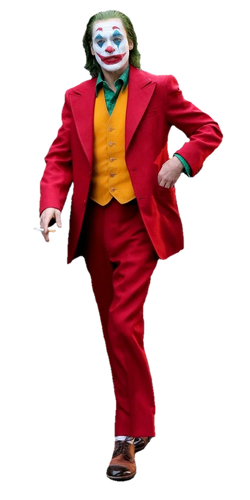
Joker
(Credit for this pic goes to the user NerdWithAKeyboard at https://villains.fandom.com/wiki/Joker_(2019)?file=2019Joker.png)

Many iconic characters, as time goes on, are portrayed in vastly different ways as different writers and actors come up with their own interpretations of them, and Batman's nemesis the Joker is a perfect example of this. Some versions of Joker have made us laugh (i.e. Caesar Romero in the Adam West series), some versions have made us scream and cringe in fear (i.e. Heath Ledger's version in 'The Dark Knight'), and some versions manage to effectively balance the two extremes (i.e. Mark Hamill's version in the animated series and the 'Arkham' video games). Joaquin Phoenix's version of Joker, however, is the only version I've seen that could make us cry.

We see that he had been a man named Arthur Fleck, a clown/ aspiring stand- up comic with a whole laundry list of problems plaguing his life; Career issues, an aging and rather unbalanced mother, a neurological condition that causes him to burst out laughing at inopportune moments, a practically neverending list of people who bully and mistreat him in one way or another, and a lifelong struggle with depression and mental illness that nobody in his life seems to care about or really want to help him through. Unlike with the previous example of Mr. Harrington on this list, though, none of these problems are played for laughs. Indeed they shouldn't be, considering that these all cause him to slowly turn into one of the most monstrous characters in all of fiction.
The tipping point is when, shortly after being fired from his clowning job, Arthur is accosted on a subway train by a group of Wall Street- types. When their harassment of his crosses the line into physically attacking him, Arthur finally has enough and kills them all. When Gotham's public learns that someone dressed as a clown killed those guys, he's seen as a kind of figurehead that unwittingly launches an Occupy Wall Street- esque social activism movement that quickly gets violent and chaotic, and things just kind of go from there.
Joaquin Phoenix gives an honestly brilliant performance throughout the movie, as we see Arthur trying so hard to make something of himself and do some good in his life and bring laughter and happiness to others, only to slowly slide into madness due to a variety of factors. I'll really be rooting for him to hopefully win the Oscar for Best Actor in a couple weeks.

The important theological lesson to be taken from Arthur Fleck concerns the dangers of apathy, especially when it comes to those with already troubled minds or emotions like him. He shows the kind of person who most clearly needs someone to reach out to him with Godly love and compassion. A little real kindness or care shown to Arthur could very easily have helped to save him and make his life turn out differently. As it is, though, the people's apathy and cruelty towards him pushes Arthur completely over the edge.
 A scene that sums this up is near the end of the movie, when he appears on the talk show of his comedian idol, Murray Franklin (Another excellent character in the film, played by Robert De Niro). Arthur has completely become the Joker by this point, and while openly reveling in the brutal things he's already done/ been driven to do, he tells a "joke" which essentially acts as the film's main message: "What do you get when you cross a mentally ill loner with a society that abandons him and treats him like trash? I'll tell you what you get: YOU GET WHAT YOU ****ING DESERVE!"
In the multiple mass- shootings that the US has been plagued by in recent years, I've observed that there is one common factor that unites nearly all of them: In nearly every case, the shooter wasn't some regular, happy- go- lucky guy who one day just suddenly snapped out of nowhere. Rather, it was someone who had amply demonstrated symptoms of severe mental illness and the warning signs that a person was at risk of committing a violent act (Much like Arthur did in the movie), but nobody cared enough to do anything about it until it was too late. It was someone whose friends and family KNEW he was dangerous, but they didn't lift a finger to get him the help he needed.
The Bible is littered with condemnations of such apathy. In Psalm 17:10, it says "(The wicked) close their hearts to pity; With their mouths they speak arrogantly." 1 John 3:17- 18 says "But if anyone has the world's goods and sees his brother in need, yet closes his heart against him, how does God's love abide in him? Little children, let us not love in word or talk but in deed and in truth." Our caring for others, especially those who are needy and hurting, is how people can tell that we have God's love within us.
 If we look closely and mindfully, most if not all of us can see someone around us who is hurting, and in desperate need of love, sympathy and understanding. They need us to help point out to them through our example that there ARE people who love them, ESPECIALLY Jesus, who thought they were so worth loving and worth saving that He suffered and died for them. By doing this, we just might help God save someone in real life who could have otherwise become like Arthur Fleck, someone who views life as just one big, sick joke waiting for him to provide it with a horrific punchline.

For the next character on my list, we look at another lost soul, but unlike Arthur, this is one who actually DOES end up getting the help she needed:

7. Gabby Gabby, 'Toy Story 4.'
Gabby Gabby 02
(Credit for this image goes to the user Markim99 on the Villains Wiki at  https://villains.fandom.com/wiki/Gabby_Gabby?file=Gabby_Gabby_02.png)
Alas, poor Thanos. The same thing happened regarding him in 'Avengers: Endgame' that happened last year regarding 'Avengers: Infinity War': Just when he seemed a shoo- in to win the title of being my favorite movie villain of that year, he got booted from the top spot by a newcomer with the initials of G.G.. Last time, it was by Gellert Grindlewald, this time it's by a talking doll named Gabby Gabby.
'Toy Story 4' makes for a very good film, and a nice way to end the 'Toy Story' saga, and one of the most intriguing elements of it was definitely this troubled doll.
Gabby was an old- school talking doll, but unfortunately, while her record with all of her talking- doll phrases was fine, her voicebox was defective and gave her recorded phrases a really creepy sound. Because of this, no child would play with her and she spent decades living in an antique store, hoping that she might someday get an opportunity to be played with, preferably by the store owner's young granddaughter Harmony. Then, Woody comes along. As he is a talking doll made in around the same time period as her, she realizes his voicebox would likely be a perfect replacement for her own defective one. She becomes determined, one way or another, to get that voicebox.
Eventually, Woody agrees to let her have it, partly because in exchange she returns to him "Forky" (Another delightful new character who had become Bonnie's new favorite toy, and whom Gabby had been sort- of holding hostage, though they seemed to be on pretty friendly terms throughout it), and partly because he realizes Gabby meant no real malice, but merely wanted to know what it felt like to be loved by a child and to help build the kinds of happy memories for them that Woody had built for Andy and then for Bonnie.
Her recorded phrases now sounding clear as a bell, they arrange for Gabby to be put somewhere that Harmony will find her. When given the opportunity to take her home, though, Harmony decides not to and callously tosses Gabby aside.
Harmony's rejection leaves Gabby heartbroken, but Woody reminds her that there are so many children out there who would love and cherish her. Gabby decides to help Woody and his friends with the rest of their quest any way she can, and along the way, she meets a lost girl at a fair, someone who much like her, is feeling sad and alone. Woody and the others help the girl to discover Gabby. The girl instantly takes a liking to her and keeps her, at long last providing Gabby Gabby with the love of a child that she had dreamed of for so long.

 Gabby Gabby sticks out as being, unquestionably, THE most sympathetic antagonist of any Pixar film. Even when she gets a little cuckoo in some scenes, she's never really evil, and you can easily see where she's coming from. Christina Hendricks's soft, soothing voice fits Gabby like a glove; When she is antagonistic towards Woody and co. early in the film, it makes her lines sound more creepy and menacing, but when we eventually see her more sympathetic side and how desperately she just wants to be loved, it makes her sound all the more heart- meltingly poignant. If the scene of her finally getting that wish granted near the end doesn't have you in tears, I strongly suggest someone check you for a pulse.

The Biblical lesson that can be taken from Gabby Gabby is on second chances. After being rejected by Harmony, Gabby miserably tells Woody, "She was my chance; My time is over."
As someone who similarly went through an extremely painful loss this last year, I was left feeling initially a LOT like how Gabby felt at that moment, like I had just lost my one and only chance at love and happiness. However, similar to how Woody assures her that she can have plenty of fresh chances to find a child who will accept her, we serve a God who always has love and mercy towards us, and is always ready to provide us with another chance. Lamentations 3:21- 23 says "But this I call to mind, and therefore I have hope: The steadfast love of the Lord never ceases; his mercies never come to an end; they are new every morning; great is your faithfulness." Now, without going too much into detail, I like Gabby have learned that there is fresh hope for me to find love and joy in life.

That about sums up Gabby Gabby; Who would have guessed that a damaged (Physically and emotionally) doll could convey such a beautiful message of hope and redemption?
Some of my other picks for memorable 2019 villains include the aforementioned Thanos from 'Avengers: Endgame,' Pennywise from 'It: Chapter 2,' Mysterio from 'Spider- Man: Far From Home,' the Martinez brothers from 'Rambo: Last Blood,' and Queen Ingrith and ESPECIALLY her twisted servant Gerda from 'Maleficent: Mistress of Evil.'

Now, for the next character on this list, we'll be looking at someone who, like Gabby, is a real pessimist turned optimist:

8. Grandpa Eddie Gilpin, 'Jumanji: The Next Level.'
(Credit for this image goes to the user Son of Andross on the Jumanji wiki at https://jumanji.fandom.com/wiki/Eddie_Gilpin?file=Jumanji_Eddie.jpg)
Like the previous entry in the 'Jumanji' series, 'The Next Level' was a fun, amusing thrill ride of a movie. Also like the previous film, it deals a lot with the concept of people developing new perspectives and ways of looking at the world through the characters' adventures in the video game world of Jumanji. In this case, the character whose perspective changes the most is definitely the main boy Spencer's crabby Grandpa Eddie, played by Danny DeVito. Grandpa Eddie is staying with Spencer and his mom while recovering from a hip replacement, and also finds himself having to deal with a surprise visit from his ex- business partner and ex- best friend Milo (Danny Glover). We learn that the two of them used to run a diner together for a long time, but Milo ultimately wanted to retire, and sold the diner against Eddie's wishes, forcing Eddie (Who was the kind of person who believed a man should stick with his job until literally the day he dies) to go into retirement as well. Their relationship deteriorated after that.
When the now- malfunctioning 'Jumanji' game draws some of the characters into it, Grandpa Eddie and Milo are both pulled into it as well. Eddie takes on the game- character Avatar of Dr. Smolder Bravestone (Dwayne Johnson), the mighty powerhouse of an archaeologist. He's not very good at using that character, though, as his cranky, short- fused personality (Kind of comes with the territory with a Danny DeVito role) combined with Bravestone's strength and fighting skills causes the group to be dragged into one unnecessary fight after another and costs the group all but one of their lives. Eventually, the group learns that a game glitch can let them switch their characters, so they have Grandpa Eddie instead take on the game character of master thief/ cat burglar Ming Fleetfoot (Awkwafina), who proves to be a much better fit for him.
   For the in- game scenes, both Dwayne Johnson and Awkwafina give spectacular performances as him (And for me to say that about a female rapper with such a ridiculous name, you KNOW that's saying something), truly acting like the spirit of a cranky old man transferred into such vastly different bodies. Seeing Grandpa Eddie learn new things about both Milo and himself, and gradually repair their old friendship, is really nice.

One great example of just how much Grandpa Eddie has changed through his time in Jumanji is his philosophy about aging. For much of the movie's first half, he had the sort- of catchphrase that "Growing old sucks, don't let anybody tell you different!" In the end, in contrast, while hanging out with Spencer, he says, "You want to know something about growing old? (Spencer: "It sucks?") It's a gift." This is a Biblical viewpoint. While the world teaches us that aging is something to be feared and avoided as much as possible (Ernest Hemingway committed suicide for that very reason; He couldn't handle the fact that his great physical strength he had always prided himself on was fading as he grew old), the Bible teaches us that aging can be a very good thing, providing us with experience, wisdom, and the knowledge that God will still be with us, love us, and provide for us. 2 Corinthians 4:16 says "Therefore we do not lose heart. Though outwardly we are wasting away, yet inwardly we are being renewed day by day." Job 12:12 points out "Is not wisdom found among the aged? Does not long life bring understanding?" Psalm 92:14 says that "(The righteous) will still bear fruit in old age, they will stay fresh and green."
In all my time in various churches, I've seen so many elderly people who refuse to let their age stop them from faithfully serving Jesus, and remain strong and active in that way regardless of their years. I've also had many elderly people in my life whose wisdom and guidance have greatly helped shape who I am today, ESPECIALLY in terms of my faith as a Christian.
For those who know Jesus, growing old really can be a blessing. If surly old Grandpa Eddie can come to grasp this truth and use it to change his outlook on life, then so can we.

Now, we go from one character named Eddie, to another:


9. Eddie Kaspbrak, 'It: Chapter 2.'
Adult-Eddie-IT-CH-2
(Credit for this image goes to the user Dalvin98 on the Heroes Wiki at https://hero.fandom.com/wiki/Eddie_Kaspbrak?file=Adult-Eddie-IT-CH-2.png)

In the first 'It' film, in which we see the heroic Loser's Club confront the evil Pennywise as kids, the character I liked the most and took the most from was Richie. In this sequel, however, things went a little differently. While the adult version of Richie is great, the character who stole the show for me was the adult version of the Losers' resident hypochondriac, Eddie Kaspbrak.

While there are some senses in which Eddie remains the same kind of person he was when he was a boy (Still terrified of germs/ sickness, married to a woman who's almost a perfect copy of his overprotective mother right down to being played by the same actress, and still keeps using his inhaler even though he knows it's a placebo), we find that he has grown and matured in a lot of ways, most notably in becoming much braver than the frail, paranoid little boy we saw in the first film. We see Eddie demonstrating some amazing courage over the course of the movie. When all alone about halfway through the film, he is attacked by It in the horrifying form of a hideous leper that It had first used against Eddie as a kid in order to kind of embody Eddie's fear of disease, yet adult Eddie marvelously stands up to the monster, and even getting puked in the face by it (The musical accompaniment to this makes it go from revolting to hilarious in a heartbeat) isn't enough to make him back down as he fights it off. Later in the film, the Losers' old enemy Henry Bowers, now even more insane and dangerous than he was as a teen, attacks Eddie and even stabs him in the cheek, yet Eddie manages to fend him off as well by pulling out that same knife and driving it into Henry's chest (You gotta admit, that takes REAL toughness), and even throws in a zinger about Henry's hairstyle in the process. Lastly, in the climactic final showdown between the Losers' Club and It, we see Eddie land a wonderfully effective blow against It, before sadly being mortally wounded. Even while dying, though, Eddie manages to be a hero one last time, revealing to the remaining Losers the way that they can destroy It for good.

That kind of selfless courage, and from someone who was generally known for his cautious nature, is very much a Biblical trait. In 1 Joshua 1:9, it says "Have I not commanded you? Be strong and courageous. Do not be afraid; do not be discouraged, for the LORD your God will be with you wherever you go.” 1 Corinthians 16:13 says "Be on your guard; Stand firm in the faith; be courageous; be strong." Sometimes, scary moments in our lives can come upon us when we don't expect it (As Eddie's encounters with the leper and Henry happen in 'It: Chapter 2'), yet through trusting in God and His deliverance, we, like Eddie, can find the courage to prevail.
From a cautious little boy afraid to so much as wade into a sewer pipe for fear of contracting a disease from the water, to a brave, strong man who valiantly stands up to a force of pure evil multiple times and dies a hero's death helping to stop it once and for all. RIP, Eddie Kaspbrak.

Now, then, let's finish this list on a positive note, and I can think of no better way to do this than through the use of a great take on one of the most beloved characters Disney has ever created:


10. Genie, 'Aladdin.'
Genie
(Pic comes from the user Majorboy123 @ https://hero.fandom.com/wiki/Genie_(2019)?file=Gennie%202019.png)
Come on, it's Genie! Easily one of the best characters in any Disney animated movie, and that greatness transitions well into the live- action version.
The live- action remake of 'Aladdin' nailed most of its elements, and Will Smith's performance as Genie was easily one of the best parts of it (I also really liked the way they handled the parrot Iago in it). While he's not iconic as Robin Williams was, he still truly nails the role. He honors Williams's legacy, yet still finds ways to make the role his own. He also gives a magnificent performance of the iconic song "A Friend Like Me," really knocking it out of the park on that number. His funny moments will have you shrieking with laughter, while a moment near the climax when he tells Aladdin "You're breaking my heart here, kid; You're breaking my heart" will have you near tears.

I'd say a good theological lesson that Genie helps teach is on lovingly correcting a friend. See, one scene in the remake that noticeably differs from the original yet still works well is the scene about two- thirds into the movie when Aladdin and Genie have a bit of an argument when Aladdin decides that he doesn't think he should use his third wish to grant Genie his freedom the way he initially planned to. In the original animated film, the main source of conflict in that scene is how hurt/ betrayed Genie feels over the fact that Aladdin, who he had come to see not just as a master but as a good friend, went back on his word with him like that. In the remake, in contrast, Genie isn't all that bothered by the fact that he apparently won't be getting his freedom, but IS bothered by the fact that Aladdin is becoming too immersed in the false identity he created as Prince Ali. Genie points out that Aladdin has started to build his entire life around a lie, which is obviously a VERY unstable foundation. Genie calls him out on this firmly, not mincing words, but at the same time does so in a patient, kind way as a concerned friend looking out for Aladdin's well- being.

The Bible stresses the importance of believers, when they notice a friend or loved one starting to stray from the right path, to assertively but lovingly correct them on it just as Genie tried to do to Aladdin in that scene. Galatians 6:1 instructs believers that “…if anyone is caught in any transgression, you who are spiritual should restore him in a spirit of gentleness.” Also, in Matthew 18:15, stresses that you should try if possible to keep it a private matter between the erring loved one and yourself (Again, just as Genie did towards Aladdin), saying that “If your brother sins against you, go and tell him his fault, between you and him alone. If he listens, you have gained your brother.”
So, that about sums up Genie, a marvelous new interpretation of an already- marvelous character. Whether in helping a “Diamond in the Rough” save a kingdom and win the heart of a princess or in helping us learn how to carefully call out a straying loved one, we’ve truly never had a friend like him.

A few of my honorable mentions on 2019 characters are the aforementioned Murray Franklin from ‘Joker’ and Forky from ‘Toy Story 4,’ Billy Batson/ Shazam and all of his foster siblings (Especially the adorable Darla) from ‘Shazam,’ Theresa “Tree” Gelbman from ‘Happy Death Day 2U’ (She was also an honorable mention a couple years ago for the previous film in that series), Tommy from ‘Scary Stories to Tell in the Dark’ (This bully nearly made the list instead of Stella from the same film, as a cautionary lesson on how people as vicious and mean- spirited as him end up reaping what they sow), and Sir Lionel Frost from ‘Missing Link' (That movie deserved to do so much better in the box office than it did).
That's it for this edition of the Nightcrawler Experience. Keep an eye out for future entries.
Until then, may God bless you all!