Sunday, February 2, 2020

My Ten Favorite Movie Characters of 2019, and What We Can Learn From Them!

Hello everyone,  and welcome to another edition of the Nightcrawler Experience!
We're now a month into 2020!
As usual for a new year, I'll be doing my annual countdown of my favorite movie characters from the previous year, delving both into why I liked them as a fan, and what theological lessons they can help teach us as Christians (As a "Be like them" example, a "Don't be like them" cautionary tale, or an allegory for a Biblical figure or principle). All the same rules as before apply:
They are not in any particular order of preference.
It could be an original character, or a cinematic adaptation of an already- existing character.
It could be a brand- new character making a breakout appearance, or an already- established character that we see more of and learn more about.
It could be from any genre of film.
It can be any type of character, be it hero, antihero, villain, or supporting character.
DISCLAIMER! Some of the characters are from films with objectionable subject matter, look into them before seeing them or letting your kids do so.
SPOILERS! I'll try not to spoil too much, but to better convey why I like these characters and the lessons they teach, I may need to delve into some major plot points.
Now, let's get this party started!

1. Mr. Harrington, 'Spider- Man: Far From Home.'
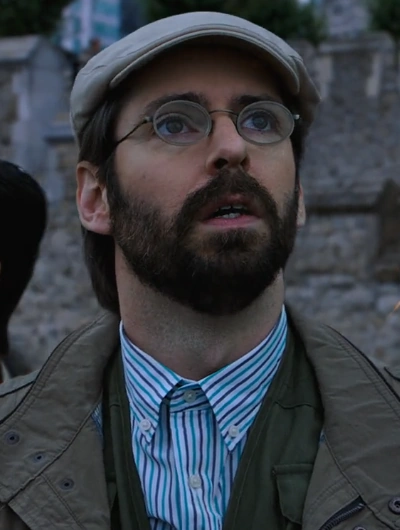
(Credit for this image goes to the user DrStrange177 at the Spanish Marvel Cinematic Universe wiki at https://marvelcinematicuniverse.fandom.com/es/wiki/Roger_Harrington?file=Roger_Harrington.png)

Yes, strange though it may sound, one of the characters in 'Spider- Man: Far From Home' who stuck out for me the most was Mr. Harrington, Peter Parker's long- suffering science teacher. He makes for one of quite a few great and hilarious comic- relief characters in this funny and thrilling sequel.
This is a man who's had life kick dirt in his face so many times, and it's continuing to do so as he helps chaperone his class on a tour of Europe over the summer. We learn on the flight over that his wife pretended to have been among those wiped out in Thanos's "Snap" at the end of 'Avengers: Infinity War,' when she really just ran off with another man (As he sadly explains, "We had a fake funeral for her and everything... Well, the funeral was real. 'Cause we thought she was really dead."). He accidentally drops his camera in a river at their very first stop. The museum in Venice that he intended to take his class to was in fact closed and would be for several more months (This is why you do a little more research before the trip, and make contingency plans).
 Still, Mr. Harrington puts on the best face he can and takes the most optimistic attitude he can in order to make the most of the trip for his students' sake, and make it as fun for them as possible. His optimism in the face of such hardship is rewarded ultimately, as he and the students end up having the second half of the trip be quite enjoyable (Other than almost getting killed as a result of the villain's actions, that is). Even during the life- threatening moments, Mr. Harrington stays as optimistic and calming as possible and remains a good leader to the class, putting more priority on protecting the students entrusted to him than on whining about the problems he's gone through. Just like what a good teacher should do in such circumstances.
Keeping a positive outlook even when facing bad luck the way Mr. Harrington does is a Biblical concept. Psalm 30:5 says that "...Weeping may last through the night, but joy comes with the morning." Furthermore, Romans 8:18 says "For I consider that the sufferings of this present time are not worth comparing with the glory that is to be revealed to us." It's about holding out when hardships come, knowing that happy times will eventually return, and not letting our current hardships stop us from serving God and our fellow man.
It's rather strange that, for a science teacher, the most valuable lesson Mr. Harrington would have to teach us would have nothing to do with science. That's part of why he's such a fun character who's earned his place on my list.

We now go from a high school teacher to a high school student (Albeit one who was in high school about forty years earlier):

2. Daniela, 'Annabelle Comes Home.'


(Credit for this image goes to the site/ article https://blackgirlnerds.com/meet-the-cast-of-annabelle-comes-home/)
The terrifying 'Conjuring' cinematic universe (Including not just the actual 'Conjuring' movies, but also spinoffs like the 'Annabelle' series, 'The Curse of La Llorona,' and 'The Nun') just keeps growing, and the latest entry in it, 'Annabelle Comes Home,' is one of my favorites of it. Scary, exciting, funny at times, it has great performances, and I could see it helping to spawn even MORE spinoff films to help reveal the origins of some of the cursed/ haunted objects in Ed and Lorraine Warren's occultic artifacts room that come to life in various freaky ways in this film. In particular, the suit of Japanese samurai armor in it I could see having a really fascinating backstory that could potentially make for a great spinoff movie, and don't get me started on the creepy wedding dress in it (Let's just say those who put it on appear to give new meaning to the phrase "'Til death do us part.").

Anyway, on to Daniela. When the Warrens are going out of town for a few days and put teenage babysitter Mary Ellen (Madison Iseman, I swear it's just a coincidence that she keeps popping up in my Favorite Movie Characters lists in one way or another!) in charge of watching their daughter Judy, and shortly after they're gone, Mary Ellen's outgoing friend Daniela invites herself over to the house. She sneaks into the artifacts room and begins curiously examining and even touching several of the items there, such as the demonic "Annabelle" doll. We soon learn that she does this because she recently lost her father in a car accident that she wrongfully blames herself for, and she wants badly to contact his spirit and apologize to him for it, and upon learning of the Warrens' connection to the afterlife, figures that they and the various occultic artifacts they possess can enable her to do so. While in the artifacts room, she at one point actually says, "If there is a presence here in this room, please give me a sign. Any sign at all."
Unfortunately, as you can probably guess, that was a REALLY bad idea. This invitation enables the various evil and demonic spirits connected to the artifacts to come out and play, with the Annabelle doll at the forefront.
Even though the horrible things that the heroes are put through in the film are pretty much entirely Daniela's fault, it doesn't impact her likability as much as you'd think. We still see she's a nice enough girl who's funny, outgoing, and a good friend to Mary Ellen who encourages the latter to come out of her shell more and talk to a guy she likes (She's sort of like a gender- swapped version of my best friend Jon in that way). She also helps Judy learn to be more resilient towards the bullying she faces from her classmates over what her parents do, via a nice pep talk she gives while Judy is feeding chickens. Plus, again, learning about the reason why she was so interested in the Warrens' occult artifacts, and that it wasn't just a simple matter of stupid "Ooh, ghosts are cool, lemme see" curiosity, helps her become more sympathetic. Lastly, in the end, she does manage to help end the horror by aiding in getting the Annabelle doll locked back up where it belongs, and even helps ensure that Judy's upcoming birthday party proves to be a big success. Combine that with a great performance by Katie Sarife, and you have a very effective character who brings a lot to the movie.
The theological point that Daniela helps to bring up is the vital importance of not fooling around with the occult. While it is understandable that she'd want closure relating to her father's death and even to want to talk to him one final time and tell him how sorry she is over the role that she believes that she may have played in his death, her making the incredibly foolish decision to try and use the cursed/ haunted objects in the artifact room and the unclean spirits they contain to do so sets into motion a nightmarish ordeal that nearly gets herself and several others killed or worse.
 I believe that there is indeed an "Other side," but that it is something that REALLY shouldn't be messed with, as the potential to inadvertently release something truly evil in that way is through the roof. That includes consulting with supposed "Psychics" or "Mediums"; Most are just frauds who know a few parlor tricks to con tourists out of their money, but the few who have actual power get it from VERY dark and undesirable sources that can demand a major price. Even fooling around with things like Ouija boards can be a gateway to evil forces.
Leviticus 19:31 says clearly, "Do not turn to mediums or spiritists; do not seek them out to be defiled by them. I am the Lord your God." For another example, King Saul's seeking out the services of a witch to try and contact the spirit of the deceased prophet Samuel ended up costing him and his sons their lives, and leading to Israel's army being defeated by the Philistines.
Attempting to contact the dead or get involved in anything supernatural not Godly in nature is a really bad idea. It won't help anyone, and it can produce truly horrific consequences, especially if done by a complete amateur like Daniela.
Still, Daniela made for a very enjoyable, sympathetic character who brought a lot to her movie. Let's just hope she stays away from cursed and haunted artifacts from now on.

For the next entry on the list, we'll be looking at someone who has a lot in common with Daniela: Similar generation (Teenager in the late 1960's- mid 1970's), same interest in creepy things that gets her and others into a lot of trouble, and same struggle with guilt. Heck, her first name even rhymes with Daniela!

3. Stella Nicholls, 'Scary Stories to Tell in the Dark.'

StellaNicholls-SSTTITD
(Credit for this pic goes to the user Dalvin98 on the Heroes Wiki at https://hero.fandom.com/wiki/Stella_Nicholls?file=StellaNicholls-SSTTITD.jpg)
I really did enjoy the 'Scary Stories to Tell in the Dark' movie (Based on the controversial book series of the same name), for a lot of reasons. It had decent scares for a PG- 13 movie, good characters, GREAT creature effects (The assorted monsters look just like they did in the original book's frightening yet gorgeously- drawn illustrations, with my hands- down favorite being the vengeful scarecrow Harold), nice twists, and even some pretty astute and well- handled social commentary. One of the best parts of it is the main character, Stella.
 An aspiring writer with a love of scary stories, Stella and a group of her friends get a lot more than they bargained for when, in a house rumored to be haunted by the ghost of a woman named Sarah Bellows, she discovers a book full of scary stories written by Sarah and soon finds some of them coming to life in VERY unpleasant ways. While she had already been wrestling with things like being bullied, feeling guilt over her mother running off when she (Stella) was a little girl, dealing with writer's block, and her starting to develop feelings for the charming town newcomer, NOW she also has to concern herself with protecting her friends and herself from the story monsters coming to life.

She still proves to be smart, witty, brave, a good leader, and manages to prevail against the dark powers stalking her, and even wins the scary- story- writing contest she had entered!
As for the theological point to be taken from Stella, that makes for an interesting point. 'Scary Stories to Tell in the Dark' deals with themes of stories and the power they can have to reveal or conceal things, truth, and handling guilt. Stella faces struggles relating to all of these, and they are Biblical concepts as well. We eventually see that the book and the stories contained therein were written by Sarah Bellows as a way of helping to bring to light the truth about something horrible that her rich, influential family had done and then covered up. In the film's climax, Stella manages to pacify Sarah's angry spirit and bring all this horror to an end by openly revealing this dangerous family secret that Sarah had wanted to expose to the world. Some people believe her, some don't, but what matters is that she became an agent of truth, using her talent for writing and creating stories to help reveal it.
 The pursuit of truth is very important to followers of Jesus. He Himself said in John 8:32 that "and you (Followers of Jesus) will know the truth, and the truth will set you free." It might be easier or more palatable to accept a lie, but knowing and revealing the truth is what genuinely liberates people and lets them live in Jesus to the fullest. The Apostles and other leaders in the early church believed this so strongly that they were willing to endure persecution, imprisonment, torture and death for the sake of bringing the truth of the Gospel to those who needed to hear it. Much like with Stella revealing the Bellows family's dirty secret, some believed them about Jesus, and some didn't, but what matters is that those early heroes of the faith did what they were supposed to do: Talk about Jesus, and share His truths to the world. May we all be willing to do the same.

This "Creepy train" portion of my list has one more stop to make before heading into slightly more cheerful territory, so let's keep on chuggin':

4. Wednesday Addams, 'The Addams Family.'

Wednesday Addams 2019
(Itay66647  https://hero.fandom.com/wiki/Wednesday_Addams?file=Wednesday_Addams_2019.jpg)
The new 'Addams Family ' animated movie was a real mixed bag for me. Some parts of it worked great (i.e. the humor, most of the voice acting), others didn't (i.e. the message was a little too preachy, and I'm not fond of Gomez's physical appearance in it). Fortunately, one thing about it that worked perfectly was Wednesday!
They pretty much nail every part of her perfectly. Her animated design looks great (One detail about her that I love is we see her braids are styled to resemble nooses; That's a really creative touch and fitting for her), I knew even before seeing the movie that Chloe Grace Moretz would be a marvelous choice for voicing her and indeed she was, and we also get some pretty deep looks at Wednesday's personality.
We soon see that, while Wednesday is content in her current environment, staying in the massive Addams mansion with her family, she also harbors some curiosity as to the outside world beyond the house, which she has never seen before.
Wednesday ultimately adjusts to this outside world in a great way. She becomes open- minded as to some of what it can offer, finds ways to change it for the better (i.e. A scene where she is in a biology class and hilariously turns the tables on the school's nasty "Queen bee"), and yet remains at heart an Addams, refusing to submit to the ideas of blind conformity that the town tries to force on her and still devoted enough to her family that she helps to save them from an angry mob in the film's climax.

Wednesday maintaining this balance between getting out and trying things with curiosity and open- mindedness yet remaining true to who she is inside reminds me of the important guidance we as Christians receive to be IN the world, but not OF the world. We cannot just shelter ourselves from the world and all the good it can offer, yet we also must remain committed to what we believe in and not compromise for the sake of fitting in. Colossians 3:2 advises believers "Set your minds on things above, not on things of this world." Jesus said in John 15:19 that "If you were of the world, the world would love you as its own; but because you are not of the world, but I chose you out of the world, therefore the world hates you." We need to be out and active in the world, but know that it's not our eternal home, and be true to ourselves as Christians.
That’s my take on Wednesday Addams. I guess you could say her making my list was a real “Snap.”
https://www.youtube.com/watch?v=zOYpduX68js


Now, we go from someone dark and spooky, to someone clean- cut and wholesome:

5. Prince Phillip, 'Maleficent: Mistress of Evil.'

Maleficent Mistress of Evil 38
(Sorry, this was the best picture of him I could easily get. Credit for this image goes to the user Valyrian Wildfire on the Maleficent wiki at https://maleficent.fandom.com/wiki/Prince_Phillip?file=Maleficent_Mistress_of_Evil_38.jpg)
As great a movie as the first 'Maleficent' was, Prince Phillip was honestly just kind of an afterthought in it. In the sequel, 'Maleficent: Mistress of Evil,' in contrast, he's a quite well- handled supporting character. We see his kingdom, his parents, and get more of an idea of how he feels relating to Maleficent. We also see how torn he becomes over the various loyalties he has, to his family, to his kingdom of Ulstead, to his love Aurora, and so on.
Phillip especially earns my praise for the film's climax. We see him caught in the middle of a bloody battle between his kingdom's army, headed by his scheming and bigoted mother Queen Ingrith, and Maleficent's race of Dark Fey. Phillip quickly realizes that he, as a soon- to- be ruler, has a responsibility to try and bring an end to all this pointless fighting and bloodshed and bring about peace.
During the battle, after pretty awesomely leaping off a tower and gliding down to the ground with a kite- thing, Phillip comes across his friend Percival, the Captain of the Guard, and convinces him to stand down, but then they are interrupted by the aggressive Fey warrior Borra. Phillip holds his sword to Borra’s neck to keep him from attacking Percival, and tells Borra “Stand down! This is not my fight! My mother wanted a war, and you are giving it to her. I won’t allow her hatred to ruin my kingdom or yours! (Lowering his sword from Borra’s neck) There will be no Fey blood on my hands.” At this, he drops his sword. Borra (Whose hatred of humans up to that point rivaled Queen Ingrith’s hatred of the Fey) is moved by this display of mercy and goodwill from a human, and he flies off, helping to convince his people to bring an end to the fighting while Phillip and Percival do the same to the royal soldiers on their side. So, a bloody war is averted and an alliance is formed between Ulstead and the Fey, all because of Phillip’s courageous commitment to peace.
In that sense, I’d say Prince Phillip made a perfect demonstration of Jesus’s remark in the Sermon on the Mount in Matthew 5:9, that “Blessed are the peacemakers, for they shall be called children of God.”
We too should strive to bring peace where we go. We may not be called upon to get warring faction leaders in a battle to lay down their arms, but we could be called upon to help arguing relatives, coworkers, or friends to help bury the hatchet with each other and become more civil.
Civility is becoming an increasingly rare commodity nowadays, but we as followers of Jesus need to help bring more of it to the world as a sign that we serve Jesus.

So, there we have Prince Phillip. A great character who helps set a great example on working for peace. Ulstead is in good hands with him preparing to be king.
Now, we go from someone who becomes a force for peace and justice, to someone who becomes a force for terror and chaos:

6. Arthur Fleck/ The Joker, 'Joker.'

Joker
(Credit for this pic goes to the user NerdWithAKeyboard at https://villains.fandom.com/wiki/Joker_(2019)?file=2019Joker.png)

Many iconic characters, as time goes on, are portrayed in vastly different ways as different writers and actors come up with their own interpretations of them, and Batman's nemesis the Joker is a perfect example of this. Some versions of Joker have made us laugh (i.e. Caesar Romero in the Adam West series), some versions have made us scream and cringe in fear (i.e. Heath Ledger's version in 'The Dark Knight'), and some versions manage to effectively balance the two extremes (i.e. Mark Hamill's version in the animated series and the 'Arkham' video games). Joaquin Phoenix's version of Joker, however, is the only version I've seen that could make us cry.

We see that he had been a man named Arthur Fleck, a clown/ aspiring stand- up comic with a whole laundry list of problems plaguing his life; Career issues, an aging and rather unbalanced mother, a neurological condition that causes him to burst out laughing at inopportune moments, a practically neverending list of people who bully and mistreat him in one way or another, and a lifelong struggle with depression and mental illness that nobody in his life seems to care about or really want to help him through. Unlike with the previous example of Mr. Harrington on this list, though, none of these problems are played for laughs. Indeed they shouldn't be, considering that these all cause him to slowly turn into one of the most monstrous characters in all of fiction.
The tipping point is when, shortly after being fired from his clowning job, Arthur is accosted on a subway train by a group of Wall Street- types. When their harassment of his crosses the line into physically attacking him, Arthur finally has enough and kills them all. When Gotham's public learns that someone dressed as a clown killed those guys, he's seen as a kind of figurehead that unwittingly launches an Occupy Wall Street- esque social activism movement that quickly gets violent and chaotic, and things just kind of go from there.
Joaquin Phoenix gives an honestly brilliant performance throughout the movie, as we see Arthur trying so hard to make something of himself and do some good in his life and bring laughter and happiness to others, only to slowly slide into madness due to a variety of factors. I'll really be rooting for him to hopefully win the Oscar for Best Actor in a couple weeks.

The important theological lesson to be taken from Arthur Fleck concerns the dangers of apathy, especially when it comes to those with already troubled minds or emotions like him. He shows the kind of person who most clearly needs someone to reach out to him with Godly love and compassion. A little real kindness or care shown to Arthur could very easily have helped to save him and make his life turn out differently. As it is, though, the people's apathy and cruelty towards him pushes Arthur completely over the edge.
 A scene that sums this up is near the end of the movie, when he appears on the talk show of his comedian idol, Murray Franklin (Another excellent character in the film, played by Robert De Niro). Arthur has completely become the Joker by this point, and while openly reveling in the brutal things he's already done/ been driven to do, he tells a "joke" which essentially acts as the film's main message: "What do you get when you cross a mentally ill loner with a society that abandons him and treats him like trash? I'll tell you what you get: YOU GET WHAT YOU ****ING DESERVE!"
In the multiple mass- shootings that the US has been plagued by in recent years, I've observed that there is one common factor that unites nearly all of them: In nearly every case, the shooter wasn't some regular, happy- go- lucky guy who one day just suddenly snapped out of nowhere. Rather, it was someone who had amply demonstrated symptoms of severe mental illness and the warning signs that a person was at risk of committing a violent act (Much like Arthur did in the movie), but nobody cared enough to do anything about it until it was too late. It was someone whose friends and family KNEW he was dangerous, but they didn't lift a finger to get him the help he needed.
The Bible is littered with condemnations of such apathy. In Psalm 17:10, it says "(The wicked) close their hearts to pity; With their mouths they speak arrogantly." 1 John 3:17- 18 says "But if anyone has the world's goods and sees his brother in need, yet closes his heart against him, how does God's love abide in him? Little children, let us not love in word or talk but in deed and in truth." Our caring for others, especially those who are needy and hurting, is how people can tell that we have God's love within us.
 If we look closely and mindfully, most if not all of us can see someone around us who is hurting, and in desperate need of love, sympathy and understanding. They need us to help point out to them through our example that there ARE people who love them, ESPECIALLY Jesus, who thought they were so worth loving and worth saving that He suffered and died for them. By doing this, we just might help God save someone in real life who could have otherwise become like Arthur Fleck, someone who views life as just one big, sick joke waiting for him to provide it with a horrific punchline.

For the next character on my list, we look at another lost soul, but unlike Arthur, this is one who actually DOES end up getting the help she needed:

7. Gabby Gabby, 'Toy Story 4.'

Gabby Gabby 02
(Credit for this image goes to the user Markim99 on the Villains Wiki at  https://villains.fandom.com/wiki/Gabby_Gabby?file=Gabby_Gabby_02.png)
Alas, poor Thanos. The same thing happened regarding him in 'Avengers: Endgame' that happened last year regarding 'Avengers: Infinity War': Just when he seemed a shoo- in to win the title of being my favorite movie villain of that year, he got booted from the top spot by a newcomer with the initials of G.G.. Last time, it was by Gellert Grindlewald, this time it's by a talking doll named Gabby Gabby.
'Toy Story 4' makes for a very good film, and a nice way to end the 'Toy Story' saga, and one of the most intriguing elements of it was definitely this troubled doll.
Gabby was an old- school talking doll, but unfortunately, while her record with all of her talking- doll phrases was fine, her voicebox was defective and gave her recorded phrases a really creepy sound. Because of this, no child would play with her and she spent decades living in an antique store, hoping that she might someday get an opportunity to be played with, preferably by the store owner's young granddaughter Harmony. Then, Woody comes along. As he is a talking doll made in around the same time period as her, she realizes his voicebox would likely be a perfect replacement for her own defective one. She becomes determined, one way or another, to get that voicebox.
Eventually, Woody agrees to let her have it, partly because in exchange she returns to him "Forky" (Another delightful new character who had become Bonnie's new favorite toy, and whom Gabby had been sort- of holding hostage, though they seemed to be on pretty friendly terms throughout it), and partly because he realizes Gabby meant no real malice, but merely wanted to know what it felt like to be loved by a child and to help build the kinds of happy memories for them that Woody had built for Andy and then for Bonnie.
Her recorded phrases now sounding clear as a bell, they arrange for Gabby to be put somewhere that Harmony will find her. When given the opportunity to take her home, though, Harmony decides not to and callously tosses Gabby aside.
Harmony's rejection leaves Gabby heartbroken, but Woody reminds her that there are so many children out there who would love and cherish her. Gabby decides to help Woody and his friends with the rest of their quest any way she can, and along the way, she meets a lost girl at a fair, someone who much like her, is feeling sad and alone. Woody and the others help the girl to discover Gabby. The girl instantly takes a liking to her and keeps her, at long last providing Gabby Gabby with the love of a child that she had dreamed of for so long.

 Gabby Gabby sticks out as being, unquestionably, THE most sympathetic antagonist of any Pixar film. Even when she gets a little cuckoo in some scenes, she's never really evil, and you can easily see where she's coming from. Christina Hendricks's soft, soothing voice fits Gabby like a glove; When she is antagonistic towards Woody and co. early in the film, it makes her lines sound more creepy and menacing, but when we eventually see her more sympathetic side and how desperately she just wants to be loved, it makes her sound all the more heart- meltingly poignant. If the scene of her finally getting that wish granted near the end doesn't have you in tears, I strongly suggest someone check you for a pulse.

The Biblical lesson that can be taken from Gabby Gabby is on second chances. After being rejected by Harmony, Gabby miserably tells Woody, "She was my chance; My time is over."
As someone who similarly went through an extremely painful loss this last year, I was left feeling initially a LOT like how Gabby felt at that moment, like I had just lost my one and only chance at love and happiness. However, similar to how Woody assures her that she can have plenty of fresh chances to find a child who will accept her, we serve a God who always has love and mercy towards us, and is always ready to provide us with another chance. Lamentations 3:21- 23 says "But this I call to mind, and therefore I have hope: The steadfast love of the Lord never ceases; his mercies never come to an end; they are new every morning; great is your faithfulness." Now, without going too much into detail, I like Gabby have learned that there is fresh hope for me to find love and joy in life.

That about sums up Gabby Gabby; Who would have guessed that a damaged (Physically and emotionally) doll could convey such a beautiful message of hope and redemption?
Some of my other picks for memorable 2019 villains include the aforementioned Thanos from 'Avengers: Endgame,' Pennywise from 'It: Chapter 2,' Mysterio from 'Spider- Man: Far From Home,' the Martinez brothers from 'Rambo: Last Blood,' and Queen Ingrith and ESPECIALLY her twisted servant Gerda from 'Maleficent: Mistress of Evil.'

Now, for the next character on this list, we'll be looking at someone who, like Gabby, is a real pessimist turned optimist:

8. Grandpa Eddie Gilpin, 'Jumanji: The Next Level.'

(Credit for this image goes to the user Son of Andross on the Jumanji wiki at https://jumanji.fandom.com/wiki/Eddie_Gilpin?file=Jumanji_Eddie.jpg)
Like the previous entry in the 'Jumanji' series, 'The Next Level' was a fun, amusing thrill ride of a movie. Also like the previous film, it deals a lot with the concept of people developing new perspectives and ways of looking at the world through the characters' adventures in the video game world of Jumanji. In this case, the character whose perspective changes the most is definitely the main boy Spencer's crabby Grandpa Eddie, played by Danny DeVito. Grandpa Eddie is staying with Spencer and his mom while recovering from a hip replacement, and also finds himself having to deal with a surprise visit from his ex- business partner and ex- best friend Milo (Danny Glover). We learn that the two of them used to run a diner together for a long time, but Milo ultimately wanted to retire, and sold the diner against Eddie's wishes, forcing Eddie (Who was the kind of person who believed a man should stick with his job until literally the day he dies) to go into retirement as well. Their relationship deteriorated after that.
When the now- malfunctioning 'Jumanji' game draws some of the characters into it, Grandpa Eddie and Milo are both pulled into it as well. Eddie takes on the game- character Avatar of Dr. Smolder Bravestone (Dwayne Johnson), the mighty powerhouse of an archaeologist. He's not very good at using that character, though, as his cranky, short- fused personality (Kind of comes with the territory with a Danny DeVito role) combined with Bravestone's strength and fighting skills causes the group to be dragged into one unnecessary fight after another and costs the group all but one of their lives. Eventually, the group learns that a game glitch can let them switch their characters, so they have Grandpa Eddie instead take on the game character of master thief/ cat burglar Ming Fleetfoot (Awkwafina), who proves to be a much better fit for him.
   For the in- game scenes, both Dwayne Johnson and Awkwafina give spectacular performances as him (And for me to say that about a female rapper with such a ridiculous name, you KNOW that's saying something), truly acting like the spirit of a cranky old man transferred into such vastly different bodies. Seeing Grandpa Eddie learn new things about both Milo and himself, and gradually repair their old friendship, is really nice.

One great example of just how much Grandpa Eddie has changed through his time in Jumanji is his philosophy about aging. For much of the movie's first half, he had the sort- of catchphrase that "Growing old sucks, don't let anybody tell you different!" In the end, in contrast, while hanging out with Spencer, he says, "You want to know something about growing old? (Spencer: "It sucks?") It's a gift." This is a Biblical viewpoint. While the world teaches us that aging is something to be feared and avoided as much as possible (Ernest Hemingway committed suicide for that very reason; He couldn't handle the fact that his great physical strength he had always prided himself on was fading as he grew old), the Bible teaches us that aging can be a very good thing, providing us with experience, wisdom, and the knowledge that God will still be with us, love us, and provide for us. 2 Corinthians 4:16 says "Therefore we do not lose heart. Though outwardly we are wasting away, yet inwardly we are being renewed day by day." Job 12:12 points out "Is not wisdom found among the aged? Does not long life bring understanding?" Psalm 92:14 says that "(The righteous) will still bear fruit in old age, they will stay fresh and green."
In all my time in various churches, I've seen so many elderly people who refuse to let their age stop them from faithfully serving Jesus, and remain strong and active in that way regardless of their years. I've also had many elderly people in my life whose wisdom and guidance have greatly helped shape who I am today, ESPECIALLY in terms of my faith as a Christian.
For those who know Jesus, growing old really can be a blessing. If surly old Grandpa Eddie can come to grasp this truth and use it to change his outlook on life, then so can we.

Now, we go from one character named Eddie, to another:


9. Eddie Kaspbrak, 'It: Chapter 2.'
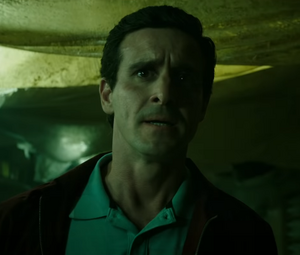
Adult-Eddie-IT-CH-2
(Credit for this image goes to the user Dalvin98 on the Heroes Wiki at https://hero.fandom.com/wiki/Eddie_Kaspbrak?file=Adult-Eddie-IT-CH-2.png)

In the first 'It' film, in which we see the heroic Loser's Club confront the evil Pennywise as kids, the character I liked the most and took the most from was Richie. In this sequel, however, things went a little differently. While the adult version of Richie is great, the character who stole the show for me was the adult version of the Losers' resident hypochondriac, Eddie Kaspbrak.

While there are some senses in which Eddie remains the same kind of person he was when he was a boy (Still terrified of germs/ sickness, married to a woman who's almost a perfect copy of his overprotective mother right down to being played by the same actress, and still keeps using his inhaler even though he knows it's a placebo), we find that he has grown and matured in a lot of ways, most notably in becoming much braver than the frail, paranoid little boy we saw in the first film. We see Eddie demonstrating some amazing courage over the course of the movie. When all alone about halfway through the film, he is attacked by It in the horrifying form of a hideous leper that It had first used against Eddie as a kid in order to kind of embody Eddie's fear of disease, yet adult Eddie marvelously stands up to the monster, and even getting puked in the face by it (The musical accompaniment to this makes it go from revolting to hilarious in a heartbeat) isn't enough to make him back down as he fights it off. Later in the film, the Losers' old enemy Henry Bowers, now even more insane and dangerous than he was as a teen, attacks Eddie and even stabs him in the cheek, yet Eddie manages to fend him off as well by pulling out that same knife and driving it into Henry's chest (You gotta admit, that takes REAL toughness), and even throws in a zinger about Henry's hairstyle in the process. Lastly, in the climactic final showdown between the Losers' Club and It, we see Eddie land a wonderfully effective blow against It, before sadly being mortally wounded. Even while dying, though, Eddie manages to be a hero one last time, revealing to the remaining Losers the way that they can destroy It for good.

That kind of selfless courage, and from someone who was generally known for his cautious nature, is very much a Biblical trait. In 1 Joshua 1:9, it says "Have I not commanded you? Be strong and courageous. Do not be afraid; do not be discouraged, for the LORD your God will be with you wherever you go.” 1 Corinthians 16:13 says "Be on your guard; Stand firm in the faith; be courageous; be strong." Sometimes, scary moments in our lives can come upon us when we don't expect it (As Eddie's encounters with the leper and Henry happen in 'It: Chapter 2'), yet through trusting in God and His deliverance, we, like Eddie, can find the courage to prevail.
From a cautious little boy afraid to so much as wade into a sewer pipe for fear of contracting a disease from the water, to a brave, strong man who valiantly stands up to a force of pure evil multiple times and dies a hero's death helping to stop it once and for all. RIP, Eddie Kaspbrak.

Now, then, let's finish this list on a positive note, and I can think of no better way to do this than through the use of a great take on one of the most beloved characters Disney has ever created:


10. Genie, 'Aladdin.'

Genie
(Pic comes from the user Majorboy123 @ https://hero.fandom.com/wiki/Genie_(2019)?file=Gennie%202019.png)
Come on, it's Genie! Easily one of the best characters in any Disney animated movie, and that greatness transitions well into the live- action version.
The live- action remake of 'Aladdin' nailed most of its elements, and Will Smith's performance as Genie was easily one of the best parts of it (I also really liked the way they handled the parrot Iago in it). While he's not iconic as Robin Williams was, he still truly nails the role. He honors Williams's legacy, yet still finds ways to make the role his own. He also gives a magnificent performance of the iconic song "A Friend Like Me," really knocking it out of the park on that number. His funny moments will have you shrieking with laughter, while a moment near the climax when he tells Aladdin "You're breaking my heart here, kid; You're breaking my heart" will have you near tears.

I'd say a good theological lesson that Genie helps teach is on lovingly correcting a friend. See, one scene in the remake that noticeably differs from the original yet still works well is the scene about two- thirds into the movie when Aladdin and Genie have a bit of an argument when Aladdin decides that he doesn't think he should use his third wish to grant Genie his freedom the way he initially planned to. In the original animated film, the main source of conflict in that scene is how hurt/ betrayed Genie feels over the fact that Aladdin, who he had come to see not just as a master but as a good friend, went back on his word with him like that. In the remake, in contrast, Genie isn't all that bothered by the fact that he apparently won't be getting his freedom, but IS bothered by the fact that Aladdin is becoming too immersed in the false identity he created as Prince Ali. Genie points out that Aladdin has started to build his entire life around a lie, which is obviously a VERY unstable foundation. Genie calls him out on this firmly, not mincing words, but at the same time does so in a patient, kind way as a concerned friend looking out for Aladdin's well- being.

The Bible stresses the importance of believers, when they notice a friend or loved one starting to stray from the right path, to assertively but lovingly correct them on it just as Genie tried to do to Aladdin in that scene. Galatians 6:1 instructs believers that “…if anyone is caught in any transgression, you who are spiritual should restore him in a spirit of gentleness.” Also, in Matthew 18:15, stresses that you should try if possible to keep it a private matter between the erring loved one and yourself (Again, just as Genie did towards Aladdin), saying that “If your brother sins against you, go and tell him his fault, between you and him alone. If he listens, you have gained your brother.”
So, that about sums up Genie, a marvelous new interpretation of an already- marvelous character. Whether in helping a “Diamond in the Rough” save a kingdom and win the heart of a princess or in helping us learn how to carefully call out a straying loved one, we’ve truly never had a friend like him.

A few of my honorable mentions on 2019 characters are the aforementioned Murray Franklin from ‘Joker’ and Forky from ‘Toy Story 4,’ Billy Batson/ Shazam and all of his foster siblings (Especially the adorable Darla) from ‘Shazam,’ Theresa “Tree” Gelbman from ‘Happy Death Day 2U’ (She was also an honorable mention a couple years ago for the previous film in that series), Tommy from ‘Scary Stories to Tell in the Dark’ (This bully nearly made the list instead of Stella from the same film, as a cautionary lesson on how people as vicious and mean- spirited as him end up reaping what they sow), and Sir Lionel Frost from ‘Missing Link' (That movie deserved to do so much better in the box office than it did).
That's it for this edition of the Nightcrawler Experience. Keep an eye out for future entries.
Until then, may God bless you all!

Friday, December 27, 2019

Godly Action, and Never Tiring of What's Right: A Faith- Based Look at 'Olive, the Other Reindeer.'

Hi there everyone, and welcome to another edition of the Nightcrawler Experience!
Here's hoping everyone had a very merry Christmas!
Even though it has passed, I still feel I should put out this Christmas entry that God inspired me on.
I'll be looking at what I consider to be a criminally- underrated Christmas gem, the 2009 animated TV special 'Olive, the Other Reindeer.' So, pull up a chair, pour out the last bit of eggnog or cocoa, and let's take a look at it.
This was based on the 1997 children's book by Vivian Walsh but greatly expands on its story, and was made by Matt Groening and his creative team for 'The Simpsons' and 'Futurama.'

As things start, we quickly meet Olive (Voice of Drew Barrymore), a plucky, warm- hearted little dog who deeply loves Christmas. During this particular Christmas, however, Olive is worried that her owner Tim may be disappointed in her because she doesn't chase cars or dig up flowerbeds like other dogs do. On top of all that, Olive and her pet flea Fido (Yes, you read that right) learn through a radio broadcast that Santa may have to cancel his Christmas Eve flight and present deliveries because Blitzen has injured his leg.


(Say hello to Olive; Credit for this picture and the next one go to the user Ngh93 on the Heroes Wiki, in this case at https://hero.fandom.com/wiki/Olive_(Olive,_the_Other_Reindeer)?file=Olive_the_Other_Reindeer.png)

 Olive hears Santa saying in the broadcast that the only way he can pull off the flight now is if "All of the other reindeer" chip in and help. She mishears "All of" as "Olive," and thinks it's referring to her, even though she's obviously a dog and obviously can't fly. So, she sets out on a trip to the North Pole to at least try to lend a hand in saving Christmas. She meets and befriends a rather shifty yet kind ex- zoo penguin named Martini (Voice of Joe Pantoliano) who decides to accompany her, taking along a suitcase full of phony Rolexes and zoo pens and stationary that he had been selling.


(Martini with his "Merchandise"; This image can be found at https://hero.fandom.com/wiki/Martini?file=Martini_watch_selling.png)

Not everyone is so eager to see Olive succeed, however. Enter the special's villain, an evil postman (Voice of Dan Castellaneta, who's best known for his work as the voice of Homer Simpson) who hates Christmas because of all the extra mail he has to deliver. As the special goes on, you discover he also holds a spiteful grudge against Santa for putting him on the Naughty List as a kid. He's delighted at the prospect of Christmas being potentially canceled, and when he learns of Olive's intent, he does all he can to try and stop her from reaching the North Pole and ensure that Santa's sleigh remains grounded.


(The Postman, looking quite pleased at the idea of Christmas being cancelled; This image comes, again, from the user Ngh93, this time from the Villains Wiki @ https://villains.fandom.com/wiki/Postman?file=Postman_%28Olive_the_Other_Reindeer%29.jpg)

Olive and Martini make it to the Arctic Junction, but the Postman causes her to miss the connecting bus to the North Pole. So, she goes into a pretty unsavory Arctic dive bar to see if any of the guys there would be willing to give her a ride the rest of the way. While they initially are mean and mocking of Olive, they quickly soften towards her, especially a flightless reindeer named Schnitzel (Voice of former REM frontman Michael Stipe, who of course sings a song in this; The opening to that song even sounds a little like the opening to REM's song "Everybody Hurts") and a trucker with the quite amusing name of Round John Virgin. The latter of the two gets Olive and Martini up to the North Pole in his rig.

Olive meets Santa (Voice of Ed Asner) and the reindeer, and while they are a little skeptical, they're still willing to give her a chance. Meanwhile, though, the Postman tries one last time to sabotage Christmas, by swapping Santa's bag of toys with a bag of junk mail and abducting Martini.
Olive of course stops him, recovers the presents, and it leads to a very merry Christmas for everyone.


"Olive, the Other Reindeer" remains easily one of my favorite "Off the beaten path" Christmas classics. In the twenty years since it premiered, I've never let a Christmas season go by without watching it.

There is so much to like about it, I hardly know where to start! One of the first things that sticks out is the animation style. It uses a fascinating animation style that I've never seen done before or since: The best way to explain it is, while the characters look flat and two- dimensional, the backgrounds and environments all look three- dimensional. It has the effect of making the characters look like storybook illustrations come to life, which fits, considering that it's based on a children's storybook (Though this is one of the few cases in which the adaptation is actually better than the book it's based on, as it has much more of a plot and better use of characters than the book had).
There are loads of incredibly funny and at times subtle sight- gags throughout the special, such as amusingly- named store- fronts and a sign in the Arctic dive bar that says "All icicles MUST be surrendered at door!" Another great one is when Olive at one point escapes from the Postman's clutches by finding a package addressed to her from "Deus Ex Machina" (Look it up), which contained a tool she used to help get away.
The songs in this special are all wonderful, too, very well- written and fun to listen to. Olive's opening song is great at putting you in a Christmas mood, right from the first notes of it. My favorite songs, though, are Schnitzel the reindeer's song "We're Not So Bad," and "Merry Christmas After All," sung by Olive and the reindeer (With the reindeer's vocals marvelously provided by the modern big- band group Big Bad Voodoo Daddy) in the end while they're delivering the presents all over the world (Speaking of whom, some of the recipients we see getting gifts from them in this scene are VERY funny, especially when we see them giving a gift to someone in Tokyo).

Now, let's talk characters. Olive herself makes for a truly wonderful unlikely heroine, VERY easy to root for. Drew Barrymore's naturally cheerful- sounding voice was a perfect fit for her. Even though so many characters in the special, even including Martini, openly tell her that she's deluding herself, is not a reindeer, and can't make a difference, she not only keeps going, but even manages to convince them of the importance of what she's doing and inspire them to cheer her on and help when they can. As Martini tells her near the climax when they've made it to the North Pole, "I don't know why, but you've even got ME believing this is gonna work!"

Speaking of whom, Martini proves to be a great supporting character. He ends up having most of the funniest lines in the special (i.e. When he learns that his old friends from the zoo saw his exploits with Olive on TV, he responds, "I hope it was a color set; Black and white doesn't do me justice!"). He also is extremely resourceful. It's really fun seeing the various ways he uses his suitcase full of "Merchandise" to aid Olive, from rolling a bunch of his zoo pens along the ground to make the Postman slip, to an honestly pretty brilliant way he tricks a North Pole guard into deactivating the place's alarm system so Olive can sneak in. Joe Pantoliano's voice works well at giving him a slightly sleazy tone, yet also one capable of showing care and goodness when the occasion calls for it. Its rather nasal tone also kind of fits with the squawking voice I could picture from a talking penguin.

The Postman makes for one of the best Christmas- special villains I've ever come across. He's one of the few I've seen who actually has a pretty valid reason for not being a fan of Christmas. Usually, those kinds of baddies just hate the holiday because they're jerks, but the fact is, Christmas is a VERY difficult time to be working in the mail/ parcel delivery service (I speak from personal experience, as someone who worked as a loader at a UPS hub for two consecutive Christmas seasons a few years ago; Basically, picture the "I Love Lucy" candy conveyor belt scene, with large heavy packages instead of chocolates), so I can definitely picture a postman not being fond of Christmas for that reason. He alternates between sinister and hilarious perfectly. Also, Dan Castellaneta does an amazing job with his voice (He in fact won an Annie Award for it, very well- deserved), making him sound kind of like a cross between Homer Simpson and Vincent Price.


I can easily think of a couple great theological lessons that we can learn from 'Olive, the Other Reindeer.' One I can think of involves acting to help meet needs that we see. When Olive is in the Arctic dive bar, the various patrons there initially laugh at and deride Olive for her plan (One even says, "Let's take her up on the roof and see how she flies!"). Olive assertively replies to them, "Maybe I'm just a little runt with no antlers, but it looks like I'm the only one who's trying to save Christmas! You could at least wish me luck!... If you want me to fail, then I guess it's too late to save Christmas; It's already gone."
 That is a very important lesson for us as followers of Jesus to learn. We're called upon to serve Jesus actively through our lives, not just sit on the sidelines (Or, even worse, become stumbling- blocks for those who are actually trying to make a positive difference for Christ). For instance, James 4:17 says, "So whoever knows the right thing to do and fails to do it, for him it is sin." Deliberately refraining from doing what's right, what God calls us to do, is directly disobeying Him, which is most definitely a sin. Earlier than that, James 1:22- 25 tells believers "But be doers of the Word, and not hearers only, deceiving yourselves. For if anyone is a hearer of the Word but not a doer, he is like a man who looks intently at his natural face in a mirror. For he looks at himself and goes away and at once forgets what he was like. But the one who looks into the perfect law, the law of liberty, and perseveres, being no hearer who forgets but a doer who acts, he will be blessed in his doing." We can't just learn good lessons but then move on and not act on them; That will indeed ensure we'll be likely to forget them as time naturally passes and memories become fuzzy. So, we need to all we can to carry out what we have learned, producing Godly actions that can produce fruit that lasts through eternity. It's just a matter of having the courage, dedication and faith to turn words into actions.


Another great theological lesson to take from "Olive, the Other Reindeer" concerns the importance of not getting weary of doing good, using the Postman as a "Don't be like him" cautionary example. As I said earlier, his dislike of Christmas is rather understandable, and something I can relate to a bit due to my own time working in the UPS hub around the holidays. However, when you listen to his (Pretty catchy) villain- song early on, "Christmas: Bah, Bug and Hum," it becomes clear how completely selfish he has let himself become. He focuses exclusively on the pain and discomfort that delivering all those cards and packages causes himself, and doesn't care in the slightest about the happiness and joy he's playing a part in and helping to bring others by delivering their Christmas gifts to them.
 He's let his own inconveniences make him resentful of the good he was actually doing. In contrast, while my time working at UPS was downright horrific at times with the heavy workloads I faced, I got through it and kept a positive outlook because I kept in mind that, through what I was doing in that job, I was playing a role in helping other people to build some really happy Christmas memories. In fact, one of my mother's favorite Christmas memories concerns one Christmas when I was about five years old, in which my Christmas was saved as a gift she secretly ordered for me which I had really wanted but was frequently delayed, finally was delivered at the last minute, right on Christmas Eve. That miraculous delivery, and the great memory it brought my family, came about partly because of a loader at a delivery hub somewhere, a lot like what I did during my time at UPS. I came to realize I was essentially doing the same for a new generation of children and families, and that enabled me to not just endure in my job, but often do so with a smile on my face.
 One day, when the Christmas season was starting to make our workload at the UPS hub really heavy, I opened one shift by telling my nearby coworkers, "As of this moment, WE are Santa's elves!" They laughed and conceded I had a point.
This is all most definitely a Scriptural message. Galatians 6:9 says "Let us not grow weary in doing good, for at the proper time we can reap a harvest if we do not give up." Also, 2 Thessalonians 3:13 says, "And as for you, brothers and sisters, never tire of doing good."
It can be easy to get worn out in the work we are doing for the Lord, especially as it becomes more stressful and burdensome for us. However, if it is what God wants for us, we must endure, and I've found a good way to help with this is to keep our focus off our own inconvenience and on all the people we'll be helping with our good work.
So, there we have 'Olive, the Other Reindeer,' a marvelous hidden Christmas treasure which teaches valuable lessons on Godly action and endurance. Here's a link to a Youtube video of it, check it out if you want:
https://www.youtube.com/watch?v=s54sLlRNmHc

That wraps up (No pun intended) this belated- Christmas edition of the Nightcrawler Experience. Keep an eye on this site for the next month or so, my annual Top 10 Favorite Movie Characters list is coming soon. Until then, merry Christmas, happy New Year, and may God bless you all!

Saturday, November 30, 2019

Humility and Heroism: A Faith- Based Look at 'Avengers: Endgame.'

Hi everyone, and welcome back to the Nightcrawler Experience!
It's taken a long time for me to make, but here it finally is!
I helped take the St. Johns youth group to see 'Avengers: Endgame,' and then used the movie to give the message at their weekly youth worship service.
People liked what I said in it, so I decided to tweak it a little and make it into an entry on the Nightcrawler Experience! After all, such a magnificent movie deserves another look!
SPOILER WARNING!
First, let's start with a brief look at the previous film in the series, last year's 'Avengers: Infinity War.' In that, the Avengers, the Guardians of the Galaxy, and the other heroes in the Marvel Cinematic Universe so far at last have to confront Thanos (Josh Brolin), the genocidal intergalactic tyrant who has been the "Bigger Bad" in the Marvel Cinematic Universe for years now. Thanos seeks the Infinity Stones, a group of six stones from all over the universe which each offer some form of unlimited power (One stone enables its bearer to instantly travel to anywhere in the universe, another lets its user control and manipulate time, and so on), and which could together make whoever had them all become essentially a god. Thanos wants to use this power to wipe out half of the life in the universe because he believes this kind of culling is the only way to stop those races and life forms from completely dying off due to overpopulation. The Avengers and other heroes put up an amazing fight, and kill Thanos's generals, but ultimately, Thanos wins. He gets all the Stones, and uses their power to kill billions of life forms all over the universe in an event known as "The Decimation" or "The Snap," including several of the Marvel heroes. Not exactly a feel- good ending.

Now then, in 'Endgame,' the Avengers manage to track down Thanos with help from the new heroine Captain Marvel and kill him, but the damage has been done and Thanos used the Stones to destroy each other so it can't be undone. Things fast forward to five years later. Ant- Man (Who had survived the Decimation) returns, and through his story and what he had been through, the remaining heroes learn that there can be a way to potentially reverse what Thanos did; If they, through a rather complicated exploitation of the space- time continuum and the use of Pym Particles, can travel back to certain points in time and certain areas of the universe, they can get past versions of all the Infinity Stones, bring them back to the present, and use them together to undo what Thanos did and restore all the Decimation's victims to life. Things take all kinds of fascinating turns from there, leading up to an ultimate showdown with Thanos (A past/ alternate version of him) and his army in which the fate of the entire universe is at stake.

I only had a few, very small problems with 'Avengers: Endgame.' One was with the heroine Captain Marvel. I just felt like they were trying too hard to make her WAY too powerful, borderline invincible. Also, during the final battle with all the heroes returned, I was kind of disappointed that they never had Drax (From 'Guardians of the Galaxy') directly confront/ attack Thanos. I would have loved to see Drax personally land just a couple hits on Thanos, to avenge the deaths of his wife and daughter (They had been killed by Thanos's army many years earlier). I feel like it would have been nice to see him get that kind of closure. Lastly, again in the final battle, there is a point in which they make a big deal about a group of female heroes all charging in to attack Thanos's army. Don't get me wrong, I'm all for empowering women and everything, and the Marvel Cinematic Universe has done an awesome job with showing that its female heroes can be every bit as effective as their male allies, but the way that particular scene was shown felt like it crossed the line from commendable female empowerment to blatant pandering.

All of that out of the way, WHOOOOOOOO!
I cannot tell you how deeply I loved 'Avengers: Endgame'! It's easily one of the best things the Marvel Cinematic Universe ever created, and will almost certainly have a cemented place somewhere on my Top Greatest Films of All Time list (At LEAST Top 15, probably Top 10). It does a wonderful job with character development for each of the major characters in it (Which is saying something, considering what an enormous cast it has). We even see the return of some past characters, such as Thor's mother Freya and Dr. Strange's mentor the Ancient One, and they too have some excellent scenes.
 There are a lot of extremely moving moments throughout it, such as Tony Stark talking with a past version of his father and Thor having a sweet conversation with his mother taking place mere minutes before her death in 'Thor: The Dark World.' We see some characters' series- long story arcs come to a satisfying end, and others' stories coming to an exciting new chapter (Let's just say I'm very interested in what they'll do with 'Guardians of the Galaxy: Volume 3'). All the performances are as wonderful as they've ever been, especially Robert Downey Jr., Chris Evans, and Josh Brolin.
The action sequences and fight scenes are brilliantly staged. In particular, the epic final battle against Thanos's army is truly magnificent to behold. There is also a great deal of humor thrown in, especially from Thor (The first glimpse of him after the five- year lapse and the less- than- ideal condition he's now in is hysterical), Hulk, and the always- hilarious Rocket Raccoon.

As I said at the start, I found a whole cornucopia of Scriptural messages in 'Avengers: Endgame.'
One of the first concerns the subject of memory: There is a key scene near the climax of the film. Thanos proclaims that, when he regains the Infinity Stones, rather than merely wiping out half the living beings in the universe, he will wipe out ALL of them. Then, he'll build a new universe in which nobody remembers the past and what was lost, to make it so that the remainders would see him as a hero rather than as the genocidal monster and tyrant that he truly was. That part really stuck out to me. See, all throughout the Old Testament, the people of Israel would often find their great empire invaded and conquered by outside nations. The reason for this? They forgot. Specifically, they would become so complacent with their lives that they forgot all the great things God did for them and their ancestors, became ungrateful for all His blessings upon them, and so they began worshiping false idols and committing other sins, so God withdrew His support from them. Memory of the past is a very important thing, especially for us as Christians. It can guide us, teach us important lessons, and remind us of the ways God has helped us and strengthen us. It’s especially important to remember the lessons of the past when we’re facing hard times. I’ve definitely been through a lot these last few months, and one of the main things that got me through them was remembering the times that the Lord has helped me in the past. Like Thanos in the movie, Satan desires for us to forget what God has done for us and not lean on Him, but we are called to always remember God as our deliverer and the source of our strength.

Another message concerns my favorite Avenger and favorite superhero in general, Captain America. One of 'Endgame''s highlights is definitely near the start of the final battle with Thanos, when it's just Cap, Iron Man, and Thor fighting him. Thanos knocks down Thor and is about to finish him off, when to everyone's surprise and exhilaration, Captain America is able to lift Thor's hammer Mjolnir (A magic artifact which can only be lifted by those whom the hammer deems to be worthy, which isn't a whole lot of people), and uses it to go to town on Thanos, dealing a ton of damage to him. I cannot tell you how thrilled I was at that moment! I knew in the comics that Cap was one of the few who could lift Mjolnir, and liked the way they portrayed Cap in the films so much that I couldn't wait to see the moment when that would be shown, and it ended up being every bit as magnificent as I knew it would be! It had me cheering in the theater aisle!
This moment is particularly important because it reminded me of a scene from an earlier Avengers film, 'Age of Ultron'; At one point, the Avengers have some downtime, and are talking about Mjolnir and how to lift it. The other Avengers try to lift it with no avail, to Thor's smug amusement. Then, Captain America takes his turn. As he begins lifting, we see the hammer briefly move about an inch or so (Instantly evaporating Thor's smugness), yet Cap apparently can't lift it either and gives up. Anyway, seeing Cap lift the hammer and use it against Thanos in 'Endgame' made me realize something; In 'Age of Ultron,' when Cap seemingly couldn't lift Mjolnir, he was FAKING IT! He could have lifted it all along, but he was humble enough that he didn't want to show off or shame the others who couldn't lift it. That humility is a big part of what causes Captain America to truly have the heart of a hero, and that was what enabled him to be deemed worthy to lift and wield Mjolnir and use it so well against Thanos. In fact, I did a mini- binge of several ‘Avengers’- related movies in preparation for the youth group screening of ‘Endgame,’ and even before he became Captain America, back when he was just frail, wimpy Steve Rogers in the first movie with him, it was his humble, kind, noble nature that first impressed the scientists enough that they chose him to have the honor of going through the procedure that turned him into a super soldier. Humility is a VERY important virtue to have if you seek to follow Jesus. Proverbs 29:23 says that “Pride brings a person low, but a lowly spirit gains honor.” When we become too proud of our abilities or our accomplishments and brag too much about them or view ourselves as better than others because of them, we’re really setting ourselves up for a fall. It's us focusing more on ourselves than on God, which will inevitably lead to us getting a rude awakening. Arrogant people driven by their pride and their egos are some of the most obnoxious people you’ll ever meet, but people who remain humble and down to earth tend to be very easy to get along with and support, and those people generally go far. Jesus always uses people who are humble enough to recognize His control over their lives rather than their own.

Another Biblical lesson that can be taken from ‘Avengers: Endgame’ is that it actually confirmed a prediction I had when I gave my ‘Infinity Wars’ message last year: The reason why Thanos won in the previous film was because the heroes let themselves be split up and divided and spread out all through the universe, and often fighting amongst each other; The reason why the heroes prevail in ‘Endgame,’ in contrast, is because there, all of the heroes banded together against Thanos, and worked together. They set aside their differences and united in the name of the greater good of stopping Thanos and saving all of existence. When I first saw that final battle scene, with all the restored heroes and warriors leaping through the portals to join in the battle, I remember thinking to myself, “Well, Thanos, you might as well start picking out your coffin now!” When all those heroes, from all corners of the Earth and the universe in general, united against Thanos, it was clear that he was finished. He and his forces may have been strong, but all of the heroes together were stronger, because of how much they all brought to the table and combined together. In much the same way, we can do incredible things for the Lord when we work together. We need to set our differences aside and combine our skills and gifts to help build God’s Kingdom and bring more people to know Him. 1 Peter 3:8 shows this by saying “Finally, all of you, have unity of mind, sympathy, brotherly love, a tender heart, and a humble mind.” I’ve seen this plenty of times in all the missions trips and other church events I’ve aided in. For instance, I and a few others from my church are involved in a kind of social outreach/ activism group called PEACE, which involved a bunch of churches from all over the county uniting together in spite of our differences to help spread God’s love to those most in need of it and encouraging our public officials to aid us in meeting the needs of the less fortunate, and this group has already done so much to help our community and God’s larger kingdom. Together, we represent an incredibly diverse mixture of races, religious denominations, and likely political views as well, yet we see past our differences to our common calling as followers of Jesus to do His will to the least of these.

A final Scriptural point to be taken from 'Avengers: Endgame' concerns rising above hardship and failure. At the end of ‘Infinity Wars,’ things really did seem doomed. Thanos had won, and wiped out so many billions of lives throughout the universe. But, our heroes didn’t give up. They kept on doing as much good as they could for five years (i.e. Captain America ran a support group for survivors of the Snap, Black Widow began leading and coordinating superhero efforts with the heroes they had, Tony Stark married and had a daughter, etc.), and when Ant- Man emerged and gave them the opportunity to gain the Stones and fix the damage Thanos did, they took it. Psalm 37:7-9 sums this up pretty well: “Be still before the Lord and wait patiently for Him; Do not fret when people succeed in their ways, when they carry out their wicked schemes. Refrain from anger and turn from wrath; Do not fret- It only leads to evil. For those who are evil will be destroyed, but those who hope in the Lord will inherit the land.” We may come across times in our own lives when it really feels like we’re in a pit, and there’s no hope of getting out. We can see evil people in our own world who seem to win. But, God loves us enough that He hates seeing all this evil in the world even more than we do, and when He knows the time is best, He will bring down the Devil and his followers, and lift up those of us who fully trust in Him. It’s just a matter of clinging to hope, and the promise of the better day that God will bring to us.
At times, though, that victory can come with a price. In the movie, we had Black Widow giving her life to help provide the Avengers with the Soul Stone, and of course, Iron Man dying to help wipe out Thanos and his army. We, too, may have to sacrifice things that are important to us in the name of doing what’s right. There are people who’ve given up everything to serve in overseas missions, and some who’ve even sacrificed their lives for the sake of the Gospel. But, God has ensured that what we may lose is NOTHING compared to the rewards He has waiting for us in Heaven.
So, now, as we go out, we should all do what we can to help shine God’s light to all around us, remember what He has already done for us, stay humble in our efforts, be willing to unite with our brothers and sisters in Christ regardless of our differences, and bring His peace and salvation to all in need of it. Christians, assemble!
That's it for this edition of the Nightcrawler Experience. Keep your eyes peeled, as we're nearing Christmastime and I'll have a couple special editions in store for that. Until then, may God bless you all!
Thursday, October 31, 2019

Temptation, Faith, and Strength through Christ: How to Be One of God's "Dream Warriors."

Hi everyone, and welcome back to the Nightcrawler Experience!
Happy Halloween! To conclude this blog's two- part Halloween special, I'll be looking at a great horror film sequel which was traditional Halloween night viewing for me for a few years before I discovered 'Trick 'r Treat' (Maybe I'll look at that gem next year); The 1987 film 'A Nightmare on Elm Street 3: Dream Warriors.'
USUAL DISCLAIMERS!
There will be some spoilers in discussing the film, and the film obviously contains some graphic content (Violence, language, and a brief scene of nudity), so be careful before seeing it if you're squeamish or letting children see it.

(Credit for this image goes to the user Andrewjan on the Nightmare on Elm Street wiki at https://nightmareonelmstreet.fandom.com/wiki/A_Nightmare_on_Elm_Street_3:_Dream_Warriors_(film)?file=1987_poster.png)

First, though, a little backup on the storyline behind the films to prepare you for it; The 'Nightmare on Elm Street' films (The first of which, btw, was the very first film role for a then- unknown actor by the name of Johnny Depp) center around teens being attacked in their dreams by the evil razor- gloved Freddy Krueger (Robert Englund), with the condition that if he kills them in their dreams, they die for real. In life, Freddy was a serial killer who killed dozens of children in the town of Springwood. He was eventually caught and put on trial, but the judge was forced to acquit him on a technicality. This infuriated the parents in the area, as they knew he did it and knew he'd do it again if not stopped. So, they tracked him down to an abandoned boiler room where he took his victims, and burned it to the ground with him locked inside, hence why he looks so horrifically burned. As he was burning, though, he offered his soul to a group of Aztec dream demons in exchange for their ability to enter people's dreams.  He quickly used this to continue his reign of terror, now worse than before through the newfound power he gained.

In 'Dream Warriors,' the third film in the series, we see Nancy Thompson (Heather Langenkamp), the teenage heroine from the first film, now return as a young woman who has just gotten her degree and some renown for her research into night terrors. She has just been hired to a local hospital, to intern in the teen Psych Ward, to work with teens there who all have sleep- related conditions, all stemming from them each having recurring nightmares about a boogeyman- figure (Guess who?).

The Psych Ward kids make for quite a colorful group; There's wheelchair- bound Dungeons & Dragons geek Will, troubled punk girl and ex- junkie Taryn, sweet but rather simple- minded aspiring actress Jennifer, artistic yet cynical Philip, antisocial hothead Kincaid, lovestruck and nearly- mute Joey, and the latest addition, Kristen (Patricia Arquette), who comes from a wealthy but rather neglectful home- life and who we soon discover has the ability to draw other people into her dreams.
Nancy quickly bonds with the kids, especially Kristen, and also starts to develop what appears to be a possible relationship with the other psychiatrist in the ward, the supportive Neil Gordon. Shortly after Nancy arrives, some of the kids die in what are believed to be suicides, but actually the work of Freddy. Nancy and Neil soon realize the these kids are the last of the Elm Street kids whose parents burned Freddy alive (And, indeed, I could definitely envision Kristen's mother as being among those who were there for his death), so he's out for payback. To help the kids better protect themselves from Freddy, Nancy teaches the kids through group hypnosis to channel their "Dream powers," special abilities that they possess in their dreams (Kincaid is incredibly strong in his dreams, Kristen becomes a master gymnast in addition to her aforementioned skill of bringing others into her dreams, and so on). In addition, Neil learns from a mysterious nun a little more about Freddy's backstory and that he can only be stopped for good if his remains (Which were buried in an unmarked grave by the parents) are properly consecrated. So, Neil eventually sets out to do this with help from Nancy's estranged father who knows where Krueger was buried, while Nancy herself and the remaining kids enter the Dream Realm to save one of them who's gone into a coma and face Freddy in an ultimate showdown.

One of the only real problems I have with 'Dream Warriors' is that, while Nancy, Neil and the Psych Ward kids are all cool characters (More on that shortly), a few of the adults are real jerks, yet nothing bad happens to them. The worst offender in this regard is the head psychiatrist at the hospital, Dr. Simms. She comes across as so cruel, apathetic and unsupportive of the kids, trying to diagnose what she sees as the root of their problems without caring in the slightest about how they feel or what they are actually going through, and pooh- poohing all of Neil and Nancy's suggestions on how to help them. I honestly found myself wishing SHE would get butchered by Freddy instead of the kids! Yet, to the best of my knowledge, she survives and doesn't suffer any kind of retribution for how she acted. That didn't seem fair to me.

All that being said, I absolutely LOVED 'A Nightmare on Elm Street 3: Dream Warriors'! I'd say it is easily the best of the sequels (Not counting 'Wes Craven's New Nightmare,' a great film which is kind of a separate film with its own storyline rather than a straightforward sequel). The sequels got progressively worse, largely because they made Freddy Krueger increasingly less scary and more comedic. 'Dream Warriors' I think portrayed him in an excellent middle- ground balance between scary (He has a LOT of terrifying moments, such as one in which he attacks Kristen in the form of a hideous giant snake) and funny (He has a few darkly amusing one- liners that help to break the tension, including one for a scene involving a TV set that has become one of his all- time most popular lines from the series).
Also, as I said before, the Psych Ward kids, who come to be known as Dream Warriors, are all great characters. Usually in a horror movie with a group of teens, there's at least one teen who's really obnoxious and whom the audiences hope will die. That is not the case with the seven Psych Ward kids from 'Dream Warriors'; They're all interesting, likable characters who you want to see survive and destroy Freddy for good. A few particularly neat characters are Kristen obviously, Taryn (She could have made for a good spinoff movie, learning more about her backstory), and Joey. That likability, in turn, makes it that much sadder when some of them do die. When you see some of them weeping and mourning over the deaths of their friends, you almost feel like mourning alongside them as their grief and desperation spreads to you. Speaking of which, the death scenes in this were all great and very creative, especially the first one which is scary and quite disturbing yet fascinating to watch (Let's just say it's one which involves puppets). In addition, the set designs(Especially for scenes in an abandoned house that Nancy used to live in) and special effects (Especially for the aforementioned scene with Freddy as a giant snake) are all awesome.
As far as performances go, they're all very good for a horror sequel. Robert Englund plays Freddy as well as he always has. As I again said before, 'Dream Warriors' provided a nice balance between the terrifying, psychotic killer that we see in part 1, and the increasingly funny, almost cartoonish figure seen in the final sequels. Heather Langenkamp once again does a wonderful job with Nancy, who now appears to have more inner strength than before, and it's cool to see her reaching out to these kids who are going through pretty much the same thing she went through in the first film. As far as the actors playing the kids go, one particular standout for me was Rodney Eastman as Joey. Even though he only has a couple spoken lines in the movie due to Joey being almost completely mute, Eastman's facial expressions and body language are more than enough to convey the emotions he's  showing in each of his scenes. Lawrence Fishburne (Who at the time was early enough in his career that he was still referred to as "Larry Fishburne") also shines in a small but quite cool role as Max, a friendly orderly in the hospital. Lastly, the film's ending was great. Krueger's death had more of a sense of permanence/ finality to it than it did in any of the other sequels, and if the series had ended there, 'Dream Warriors' would have made a great final chapter to the series.


'Dream Warriors' is also a film with some surprisingly strong theological messages. One of the first is on the need for solid faith to confront evil and face hard times. When Neil first meets the strange nun at the funeral of one of the kids, she asks him what he believes in. Neil answers "Science, I guess," the nun responds, "A sad choice," and Neil concedes that it provides him with little to no comfort or strength in stressful times like this. Then, in a later scene, after telling Neil that Freddy can be destroyed by consecrating his remains, she points out that, "If your only faith is science, Doctor, it may be YOU who's laid to rest." Eventually, Neil sets aside his skepticism, and gains enough faith in God that his consecration destroys Freddy. The Biblical truth to be taken from this is obvious; Only faith in Jesus can give us the strength to endure the storms of life. Attempting to trust in lesser things for strength in such times (i.e. Technology, progress, drugs or alcohol, vain secular philosophies, etc.) will disappoint and fail. It calls to mind Isaiah 40: 29- 31, which says that "He gives strength to the weary and increases the power of the weak. Even youths grow tired and weary, and young men stumble and fall; but those who hope in the LORD will renew their strength. They will soar on wings like eagles; they will run and not grow weary, they will walk and not be faint."


Another VERY important theological point I took from 'Dream Warriors' involves two characters who I believe can be seen as Biblical allegories. First and most obviously, Freddy Krueger can be easily seen as representing Satan. He seeks to brutally kill and destroy all, especially innocent kids. He attempts to prey on the Psych Ward kids by using their fears, temptations, and other weaknesses (i.e. He lures Joey astray by magically disguising himself as a nurse that the boy had a crush on, goes after Taryn by exploiting her past as a recovering heroin addict, stalks Will using a blade- covered wheelchair that kind of symbolizes Will's fear of being crippled for the rest of his life, etc.). He seeks to consume his victims' souls to become stronger. He is defeated by Neil's faith in God, with the consecration burning a cross onto his forehead just before he vanishes. I could go on forever!
 Satan similarly seeks to steal, kill and destroy. Satan tries to prey on people by using their temptations, guilt, fear, and weaknesses. Satan desires to corrupt people and seize and torment their souls for eternity. Satan is foil in his attacks against us by our relying on our faith in God. I'd say the comparison is pretty clear.

The other allegorical figure I found in 'Dream Warriors' was Nancy. She, I believe, acted as a bit of an allegory for Jesus. She reached out to these troubled kids and teens, many of whom are misfits and outcasts for various reasons, and offered them hope. She helped them discover and develop powerful gifts to aid them against their enemy. The gifts she offered through their dream powers included the wheelchair- bound Will being able to walk again, and the nearly- mute Joey regaining his voice and using it to develop a "Sonic Scream" type of power that helped against Freddy. She dies in the end, yet through her heroic death helps to defeat Freddy (She uses her last ounce of strength to grab Freddy by the arm and plunge his own razor- glove into his chest, distracting him enough to give Neil enough time to perform the consecration in the real world). Even after her death, Nancy's legacy continues to strengthen others, as what she taught the Dream Warriors about discovering their dream powers and pulling others into their dreams to help them would continue to be important points in the following sequels, so that whenever Freddy returned, the next heroes would be able to stand against him and defeat him thanks to the foundation that Nancy helped set.
In much the same ways, Jesus reached out to people who were misfits and outcasts and offered them hope. He helps His children discover and develop spiritual gifts they can use in ministry and to stand against Satan. He, through His healing power, helped the lame to walk and the mute to speak. He died on the cross, yet His sacrificial death defeated Satan by breaking his power over us and giving us salvation. Even after His death and resurrection, Jesus continues to strengthen and empower people, helping His followers thousands of years later gain strength, peace, and hope, and discover their strengths through Him, so that whenever Satan and his demons return and try to bring more suffering and death to the world, Christians (God's own "Dream Warriors," in that sense) will be able to stand against him and defeat him.
Both of these allegorical comparisons can be summed up by Jesus's words in John 10:10: "The thief comes only to steal and kill and destroy; I have come that they may have life, and have it to the full."
So, that sums up 'A Nightmare on Elm Street 3: Dream Warriors,' an excellent film that I highly recommend, which teaches great lessons on faith and the natures of both our Enemy and our Savior.
That's it for this installment of the Nightcrawler Experience. Stay tuned in November when I finally bring in my look at 'Avengers: Endgame.' Until then, happy Halloween, and may God bless you all!

Thursday, October 17, 2019

Hypocrisy and True Justice: A Look at a Phony Believer's "Fitting Punishment."

Hello again, and welcome to another edition of the Nightcrawler Experience!
Unfortunately, my planned review/ look at 'Avengers: Endgame' will have to be postponed until November, so I can do my regular two- part Halloween edition. I can promise it'll be worth the wait, though!
In the meantime, I've got quite a "Treat" in store for you readers this time to help prepare you for the spookiest time of year:
Back in the Late 80's- mid 90's, the TV network HBO aired the cult- classic horror anthology series 'Tales From the Crypt.' Based on the EC horror and crime comics of the 1950s and directly adapting several of their stories, each episode had the terrifying yet hilarious undead host the Cryptkeeper (Voice of John Kassir) sharing with us a different tale of terror.
FPclosing
(Say hello to the Cryptkeeper; Handsome guy, isn't he? Credit for this image and the next one goes to SummerTaffy896 on the 'Tales From the Crypt' wiki at https://tftc.fandom.com/wiki/Fitting_Punishment?file=FPclosing.png)

 Sometimes the stories were supernatural, other times they were more grounded in reality. The show boasted a LOT of surprisingly heavy- duty talent, between actors like Kirk Douglas, Michael J. Fox, Demi Moore and Tom Hanks, and producers and directors like Robert Zemeckis, Joel Silver and Richard Donner.
It could often get pretty graphic in terms of its violence, language, and other such adult situations, though my first exposures to it when I was younger were the edited- for- television re- airings of it they did on networks like Fox and Sci- Fi Channel.
Now, you might think that a show like this could not ever hold any kind of theological message, even for someone like myself who has at times found such messages in other such unlikely sources, and even though many of the episodes function as dark morality tales.
However, I was recently reintroduced to an episode that changed all that, known as "Fitting Punishment."
WARNING! There will be heavy spoilers for the episode in question, and it's an episode that can be rather graphic, so use discretion before watching it or letting children watch it.

 (Imagine this being said in the Cryptkeeper's trademark voice) Now, come a little closer, kiddies, and let's get started. RA HA HA HA HA HA!

(In keeping with the show's roots in horror comics, each episode featured a title card showing something from that episode rendered in comic book style; This image was found at https://tftc.fandom.com/wiki/Fitting_Punishment?file=Fitting-Punishment-tales-from-the-crypt-41326221-720-540.png)
In this episode from the show's second season, we meet Ezra Thorntonberry (Played by the late Moses Gunn), the director of an inner- city funeral home. He presents himself to his clients as an honest, good- natured, Godly fellow who will treat their deceased loved ones with the dignity and care that they deserve. However, it soon becomes clear that this is all just a facade, and Ezra is in fact a despicable, corrupt, greedy old hypocrite only concerned with making as much money as possible with as little effort or personal expense as possible. He secretly cuts corners left and right in his work to save money (i.e. He uses regular tap water instead of embalming fluid to preserve the cadavers, and orders cheap undersized caskets from Taiwan which he presents to his clients as being American- made with the best materials), and doesn't even have a problem with swiping gold teeth from the cadavers he operates upon.

 A person unfortunate enough to be brought into Ezra's life early in the episode is his teenage nephew, Bobby. A nice enough young man with an affinity for basketball, Bobby just lost his parents in an accident and was thus sent to live with Ezra, his only living relative. As further proof of the sort of person Ezra is, rather than expressing any kind of grief at learning his only sister died in a likely- horrific car crash, he instead says with a little smile, "Head- on, huh? Messy, I'll bet. That's good for business. Charge a pretty penny to make their loved ones look presentable." While Ezra initially is not keen on taking his nephew in, he realizes that he can use the boy for free labor around the funeral home and agrees.

Sadly, as you can probably guess, Bobby's bad luck at losing his parents doesn't improve any when he goes to live with his uncle. Ezra treats his nephew horribly, giving him a wheeled metal gurney for a bed, constantly referring to him as "Boy," and treating him like a slave. When Bobby makes an apparent mistake that costs the funeral home a customer, Ezra brutally beats him with a crowbar in a fit of rage (It is very difficult to watch, as you can guess), paralyzing him from the waist down. When the bills for Bobby's consequent medical care start piling up, Ezra flat- out murders the poor boy and makes it look like an accident. Then, as one more insult, the twisted old creep cuts off his dead nephew's feet so Bobby's tall body will fit into one of the undersized Taiwanese coffins for burial.

However, as is often the case in episodes of 'Tales From the Crypt,' what goes around comes around. Also as is often the case on the show, the restless dead don't stay dead for very long before returning to seek a little payback. The episode's title ends up coming to full fruition, as Ezra ultimately receives an extremely "Fitting Punishment" for his many evil deeds. The Cryptkeeper closes the episode by giving probably the funniest (In a dark way, typical for him) summation monologue I can ever recall him doing on the show.

While "Fitting Punishment" is not my favorite episode of 'Tales From the Crypt' (That honor goes to the Season 4 episode "What's Cookin'," which featured Christopher Reeve as one of a pair of struggling restaurateurs who save their business by, shall we say, changing up the menu of what they serve), it's still pretty high up there on my list. The story is good and creepy, the music was extremely well- chosen as it ranged from a kind of somber Dixieland jazz for the scenes involving the funeral home and Ezra's work in it to then becoming more soft and mystical near the end, and the performances from the various actors are all great. Ezra makes for one of the vilest and most intentionally easy- to- hate characters the show has ever produced, but generally in an amusing way that makes you eager to see him ultimately get what he deserves. It also gets points for being the only episode of the series with a completely African- American cast.

There were definitely some theological messages to be taken from "Fitting Punishment." The first and foremost would be on hypocrisy and false faith. Jesus said in Matthew 7:21-23 that ""Not everyone who says to Me 'Lord, Lord' will enter the kingdom of Heaven, but only the one who does the will of My Father who is in Heaven. Many will say to Me on that day, 'Lord, Lord, did we not prophesy in your name and in your name drive out demons and in your name perform many miracles?' Then I will tell them plainly, 'I never knew you. Away from Me, you evildoers!'". Ezra in this episode was pretty much the embodiment of that sort of person. He may have been able to present himself outwardly as a righteous and Godly man, but this seeming piety was only skin- deep. He frequently misquotes Scripture, and much of his pseudo- pious prattling consists of things that aren't even in the Bible at all! For instance, he at one point justifies his practice of using water instead of embalming fluid by pompously saying, "Like the Bible says, 'A penny saved is a penny earned,'" a quote which was actually first said by Benjamin Franklin. Then, of course, there's obviously the fact that the crooked ways Ezra runs his business and the heartless things he does to his nephew are hardly in keeping with one who really walks with the Lord. The Bible makes it clear that people of faith are to conduct their business with honesty and integrity, and treat their family with compassion, especially those like Bobby who have already gone through so much hardship. Simply going to church and saying some impressive- sounding words doesn't make a person a Christian any more than standing in a garage would make them a car. There are many people out there who are skilled at playing religion and claim to know Jesus, yet whose hearts are far from Him. I must appeal to all of you to make sure that you truly have Jesus as your Lord and Savior in your hearts and let your lifestyles be a reflection of this, and not become self- righteous, hypocritical phonies like Ezra.

Another Scriptural lesson to be taken from this episode is on not associating with ungodly people. Near the end of the episode, shortly before Ezra meets his well- deserved end, his assistant Clyde, whom he treated almost as badly as he treated Bobby, abruptly resigns. The reason Clyde gives for why he quits is because he knows full well that Bobby's death was no accident, and while he doesn't have enough substantial proof to get the authorities involved, he can't in good conscience bring himself to work for someone as immoral and frankly evil as Ezra another minute. The Bible frequently points out that believers should not associate with people who are known to be unrepentantly wicked. In 1 Corinthians 5:11, it says "But now I am writing to you not to associate with anyone who bears the name of brother if he is guilty of sexual immorality or greed, or is an idolater, reviler, drunkard, or swindler- not even to eat with such a one." In Psalm 26:4-5, the psalmist says "I do not sit with men of falsehood, nor do I consort with hypocrites. I hate the assembly of evildoers, and I will not sit with the wicked." We need to be careful to not connect too closely with people who we know are deeply involved in sinful, ungodly things. Such people can become really bad influences on us, and hinder both our Christian witness, and our personal relationship with God. Bad friends can easily lead good people astray and bring a lot of trouble down on them. For a personal example, when I was in college, the leader of the local fraternity at one point approached me with the offer to join. Something about the way he presented things set off a bit of a red flag for me, so I didn't accept his offer and politely avoided him afterwards. That ultimately proved to be a wise decision for me, as a year later, that fraternity was forcibly shut down by the university when details of a highly inappropriate hazing ritual came to light. Had I joined the fraternity and connected with its members, my reputation would have been damaged along with theirs when that happened. I'm not saying completely shun everyone who isn't perfect in every way, as we all have sinned, just to recognize that there are some people in our lives who we need to steer clear of and not associate with due to the corrupting influence they can have on us and our faith.

So, that's my look at "Fitting Punishment," a great episode of a classic show and an equally great cautionary tale about having a true Christian faith, not being religious frauds or hypocrites, and avoiding those whose ungodly lifestyles can lead us astray.
With that, I wrap up this edition of the Nightcrawler Experience. Come back on the 31st when I'll hopefully have part 2 of this year's Halloween special ready for you. Until then, may God bless you all!

Friday, August 2, 2019

The Power of Prayer and Divine Grace: A Look at 'War Room.'

Hi everyone, welcome back to the Nightcrawler Experience!
For this entry, we will be wrapping up this blog's annual collaboration with St. John's United Methodist Church for their Summer at the Movies series. In finishing up our look at Christian films, we will now be looking at the 2015 film 'War Room.'
In this film, Tony and Elizabeth Jordan seemingly have a good life together. They have a big house, good jobs (Tony's a pharmaceutical salesman, Elizabeth's a realtor), and a loving daughter, Danielle. Behind that facade, though, there's a lot of trouble brewing with their marriage. Tony has no time for Danielle and no interest in supporting her jump roping team, is at times impatient with Elizabeth, and has a bit of a wandering eye.
Help for the troubled family is on the way, though, from a slightly unlikely source. Elizabeth is hired to help sell the house of the elderly Miss Clara. As the two develop a friendship over the course of this, Clara learns of Elizabeth's marriage problems. In order to help save her friend's marriage, Clara teaches Elizabeth about the importance of prayer and drawing close to God.
She shows Elizabeth that she uses one of her closets as a "War Room" for in- depth prayer.
Elizabeth starts taking Clara's advice to heart, and just in time, as Tony is about to face serious temptations that could completely destroy their fragile family if left unchecked.

'War Room' was a marvelous Christian film. It was the perfect balance of humor and heart, extremely inspirational, and had a lot of great performances. They even fit in a couple pretty exciting moments, too.

Miss Clara was easily the best character in the film. Longtime fans of this blog may recall that when I first did my "Top Ten Favorite Movie Characters of the Year" list back in January 2016, Clara made the list, and everything I said about her then still holds true now upon repeat viewings. She is a wonderfully powerful and insightful character, wise and yet also incredibly funny when the occasion calls it. As I said the last time I talked about her, she's like if Yoda from the 'Star Wars' series was a black Christian woman. Karen Abercrombie (Who actually was just in her early fifties when she did this role; It's a testimony to the great makeup effects for the film that they can make her look like she's in her mid- seventies) gives a wonderful performance as her, especially for a scene when she bravely stands up to a mugger, and the end when she gives a spirited prayer for the nation.

The most prominent Scriptural message to be taken from 'War Room,' which I discussed in the devotional passed out at the screening, concerns obviously the power of prayer. I show how James 5:16 and 1 Timothy 2:1-2 both drive home the miraculous things that can happen when followers of Jesus sincerely pray.
Another message from the film that I noticed concerned grace. There is a scene in which Clara is talking with Elizabeth about her husband. Elizabeth admits that, as much as Tony's faults drive her nuts, she still loves him, and so does God, and that she still sees good in him. Clara points out that what Tony is in need of is grace. Elizabeth says she's not sure if Tony deserves grace, and Clara responds "What about you? Do YOU deserve grace?" She points out that ALL of us have sinned and are unworthy of God's forgiveness (Romans 3:10 observes "As it is said, there is none righteous, no, not one."), but He granted it anyway.  That's the perfect description of what grace is: Sparing us the punishments we deserve, out of His love for us. We could never earn or deserve God's forgiveness, but He grants it anyway. That's why they call God's grace "Amazing."
There you have my look at 'War Room.' It remains a wonderful film which teaches wonderful messages about prayer and grace.
That's it from the Nightcrawler Experience for now. Keep your eyes out, I'll be returning to the entry I was working on before I started this series, and I know you'll like it (Let's just say you'll all be "Assembling" to take a look at it). Until then, may God bless you all!

Friday, July 26, 2019

Trust, patience and revival:A Look at 'Facing the Giants.'

Hi everyone, welcome back to the Nightcrawler Experience!
We're now on week three of this year's collaboration with St. John's United Methodist Church for their Summer at the Movies series, continuing to look at Christian films.
This week, we'll be looking at what I'd say is the one that kind of "Started them all," the 2006 inspirational sports- drama 'Facing the Giants.'
This movie centers around Grant Taylor, who is currently the football coach at Shiloh Christian Academy, and is facing a seemingly endless series of obstacles in his life. Their team, the Eagles, has never had a winning season since he's been coach there, and his current season has begun with a three- game losing streak, prompting some of the players' fathers to try and get him fired. Things at home aren't much better. His car's a piece of junk, his house and appliances are in bad shape, and worst of all, his wife Brooke is having no luck in becoming pregnant.
At the end of his rope, Grant begins seeking God's guidance through prayer and studying Scripture. He hits upon a whole new philosophy on coaching, and uses it to motivate his players: He reminds them and himself that they need to always praise God, regardless of whether they win or lose, and put a lot greater effort into everything they do, on the field and off. He tells them that they CAN win through hard work and faith in what God can do through them.
It works wonderfully. Not only does the team begin winning games, but they start making a positive impact on the school as a whole, prompting an amazing revival throughout the school.
As the team continues winning, they enter the playoff season, and must prepare to eventually go up against the reigning champions, the practically unbeatable Richland Giants.

While there have of course been Christian films for decades, I feel like 'Facing the Giants' was the one that really brought about the current wave of mainstream Christian films we've seen since then, ones made with real effort that are good enough to get full theatrical releases and perform well at the box office.It was also the first really successful film to come from the company that would go on to direct films like 'Fireproof' and the previously- reviewed 'Courageous.'
To that end, it was indeed a worthy figurehead- movie to launch this wave. The fact that it ended up making over $10 million at the box office with a $100,000 budget speaks for itself.
The acting is for the most part very good, and it had loads of inspirational moments, with one of my favorites being when the school's revival occurs on the athletic field. We see kids praying in the field and bleachers, to the accompaniment of the beautiful Josh Bates song "Never Give Up on Me." From my first time seeing this film in theaters all the way to now, that scene never fails to leave me on the brink of tears. What's more, as should be the case for a football movie, the game scenes are really exciting and engaging, and the wisecracking assistant coaches provide for some pretty good comic relief.
One character that I really liked was the team's defensive lineman, Brock. He is one of the characters, certainly among the players on the team, who experiences the most drastic change over the course of the movie. He goes from someone who was lazy, apathetic and rude, to eventually becoming a good, decent young man and a real leader among the team. Another of the film's more memorable moments involves him, one of the moments which really brings about this change in him is when Coach Grant puts him through a grueling training exercise known as the "Death Crawl" to inspire him to give his absolute best by trusting in God's guidance. Between the way this scene was shot/ filmed, and the performances of Jason McLeod as Brock and Alex Kendrick (Who also directed the film) as Coach Grant, it is another scene which will keep you on the edge of your seat AND on the edge of tears.

Another thing I like about the film, though it's a rather strange thing to like, is simply the title of it. It can be seen as referring not only to Coach Grant and the team preparing to face the team the Giants on the football field, but also to the more figurative "Giants" that Grant faced in his personal life, such as the problems in his house and the difficulties from him and his wife trying for so long to conceive a baby. I thought calling the movie that was a very good, clever touch.
All in all, 'Facing the Giants' is a very good Christian film, sports film, and movie in general.

As with the other films we've looked at in this series, there are countless Scriptural messages that can be taken from 'Facing the Giants.' The first and most obvious one, which I discussed in the devotional flyer that was passed out at the screening tonight, relates to the importance of trusting and praising God at all times, regardless of circumstances. I show how Proverbs 18:10 and Psalm 46:1-3 both point out that the Lord provides refuge and strength to believers.

I think another important lesson to be taken from 'Facing the Giants' concerns what Godly patience can look like. A rather minor yet important character in the film is an older man named Mr. Bridges, who gives Coach Grant some important advice midway through the film. Mr. Bridges walks down the hallways each day after the students have left, praying for them and for the school. You get the feeling he's probably been doing this for a VERY long time, without much answer to his prayers due to the state the school had been in for so long. Still, he kept right on doing it, because he KNEW that God would eventually bring about the revival to the school that he had been praying for, and so He eventually did! Mr. Bridges never let himself get discouraged simply because things didn't happen when he wanted them to, and he eventually teaches Coach Grant to do the same. This brings to mind Galatians 6:9, which says "Let us not become weary in doing good, for at the proper time we will reap a harvest if we do not give up." It's easy to become frustrated when our efforts don't seem to yield much in the way off results right away, I certainly know a lot about that, but if we continue to do good and faithfully serve the Lord, the time WILL come when our efforts and our faith will come to fruition.
One final Scriptural lesson to be taken from 'Facing the Giants' concerns the matter of revival. The school as a whole is rather underperforming at the start of the movie (Indeed, for a supposedly "Christian" school, there wasn't a whole lot of evidence at first that it was a school intended to help kids learn to walk with Jesus), but when the revival in it occurs, starting with the football team and gradually spreading to the rest of the school, it brings about a complete, glorious turnaround for everyone involved. They strive to devote themselves more to serving the Lord, and He in turn helps to bless and provide for them in a multitude of ways. This calls to mind 2 Chronicles 7:14, which says that "If my people, which are called by My name, shall humble themselves, and pray, and seek My face and turn from their wicked ways, then I will hear from Heaven, and will heal their land." God can bring about incredible, miraculous healing and restoration to our schools, our families, our churches, our cities, our country, and our world, but for Him to do it, we must turn from things that can distract us or hinder our walk with God, and turn our focus back to Him through prayer, worship, and studying His word. That is when true revival can happen.
So, there we have 'Facing the Giants,' and its lessons on trusting God, being patient for His work to be accomplished, and following Him to bring about change. A true cinematic and theological touchdown!
That's all for this edition of the Nightcrawler Experience. Come back next week when we finish up this series (And the final film will be a REALLY good one). Until then, may God bless you all!