Hi everyone, welcome back to the Nightcrawler Experience!
We're continuing this blog's partnership with St. John's United Methodist Church for their "Summer at the Movies: Around the World Edition" Series.
You may remember we figuratively visited Mexico with our screening of 'Coco' last week. Well, trade in your sombrero for a beret, because for this edition, we'll be going to Paris for a look at another Pixar film, the 2007 masterpiece 'Ratatouille'!
In this film, a Parisian rat named Remy (Voice of Patton Oswalt) finds himself somewhat at odds with the other rats in his clan in terms of his views on food; While everyone else in his clan is content to just scavenge and eat any garbage they can get their paws upon, Remy has an interest in more elegant cuisine, and develops a talent for fine cooking. He eventually finds himself at the once- legendary restaurant Gusteau's, and helps a rather unlucky yet good- natured young man named Linguini (Voice of Lou Romano) become its star chef. Still, he feels torn between two worlds. All the while, quite a lot of intrigue is going on behind the scenes at Gusteau's; It begins increasingly looking like Linguini's connection to the restaurant's now- deceased founder, Chef Gusteau, may in fact be much deeper than anyone thought, leading to even more pressure to succeed being piled on the young man, causing him to rely on both his "Little chef" and the fiery but fetching fellow chef Collette he's begun falling in love with to restore the restaurant to its former glory and prepare for a visit from the dreaded food critic Anton Ego.
'Ratatouille' is an amazing film, though one thing I'd personally change about the film is I thought it had too much focus on the rat characters and not enough focus on the human characters. The humans prove to be a great deal more developed and interesting than the rats, and many of the human characters could have brought a lot more to the film if they were given more screen- time, ESPECIALLY the restaurant's other staff members. In one scene, Collette tells Linguini a little about each of them, and they appear to be quite a colorful bunch. Using them so little in the film then seems like kind of a waste.
Other than that quibble, I'd consider 'Ratatouille' to be easily one of Pixar's best films. While Pixar's films of course are mainly made with children audiences in mind, 'Ratatouille' seems like one which was actually aimed more at adults than at kids. The plot is much deeper and more sophisticated than most kids- movie fare, while still featuring enough simple humor and colorful images to interest the kids.
Another great thing about 'Ratatouille' is that it succeeds perfectly at what I believe all films which center around cooking should aspire to do: Not only does watching it make you feel hungry, it also makes you feel like cooking something yourself rather than simply throwing a frozen dinner in the microwave. While it'll be a bit late tonight for me to properly cook something for myself after the movie's done, I'm thinking tomorrow night I'll prepare a homemade Italian meat pie for my dinner while humming "Le Festin," the lovely tune from the ending of 'Ratatouille.'
The main characters, Remy and Linguini are both great protagonists. Each is struggling with a lot (Remy with the fact that he feels pulled towards both his rat world and family and also towards human society that lets him use his talent for cooking to its most appreciated level, Linguini with initially feeling like a failure just trying to do something good with his life and later with the immense pressure he comes under when he becomes a famous chef), and it all works out well.
Collette is a lot of fun to watch, too. She is short- fused, aggressive, and even a little vicious towards Linguini while helping to instruct him on the finer points of cooking, but you can kind of see why; She explains that, as a woman in a male- dominated industry, she had to become tougher than anyone else in order to advance. She also has not one but two of the film's funniest lines:
"Keep your station clean, or I will kill you!"
(To a group of reporters when trying to suddenly break up a press conference Linguini is in, due to needing him in the kitchen) "I hate to be rude, but, hey, we're French!"
The food critic Anton Ego is an immensely fascinating character, even though he's only really in it for the last third or so of the movie. While not a really cruel person, he is very cold and cynical (Easy traps for a critic to fall into), and you can tell that worldview heavily influences his reviews. A scathing review he gave to Gusteau's restaurant some years earlier was a big part of what caused the restaurant's initial popularity to greatly decline (You get the feeling that this probably wasn't the first restaurant to be sunk by one of Ego's reviews), and almost certainly helped to cause Chef Gusteau's death.
One very amusing scene that says a lot about Ego as a character is when his servant in his house approaches him while he (Ego) is sipping a glass of wine. When the servant tells him that Gusteau's restaurant is popular again, Ego is so surprised that he almost spits out his wine, but quickly looks at the bottle as if reminding himself that it's a particularly good vintage which shouldn't be wasted in such a way, and instead merely forces himself to swallow it. I thought that was so funny and such a great, subtle way of conveying Ego's appreciation of fine food and drink, and also just a creative twist on the classic "Spit take" routine.
The voice acting in this film is magnificent. Patton Oswalt injects a lot of honesty and sincerity into his work as Remy's voice, and Lou Romano gives Linguini the perfect combination of goofiness and heart. Many of the other voice actors in this film gave such amazing performances, I couldn't even tell it was them even though they were actors whose other work I was familiar with, such as Janeane Garofalo as Collette and Brad Garrett as Chef Gusteau.
One Biblical message that can be taken from 'Ratatouille' which I pointed out in my devotional that was passed out at the screening is on the notion of unlikely heroes who can do great things, which both Remy and Linguini end up becoming. I point out that they can thus be compared to another great unlikely hero from the Old Testament, Gideon in Judges 6:6-40. He has long been easily one of my favorite Biblical figures, and I could easily compare him to Remy and especially to Linguini.
Another very important Biblical message in 'Ratatouille' is on releasing our cynicism by remembering our childhood and stopping to view the world through a child's eyes when we can. This is shown in the film through Anton Ego in the film's climax. As I said earlier, Ego comes across as a very cynical and bitter man for most of the film, but what ultimately changes his mind and even his entire outlook on life is the meal that the heroes present to him for his scrutiny in the climax, a simple bowl of ratatouille. While it is far from an impressive dish, of the sort that one would expect from a restaurant like Gusteau's (Collette refers to it as a "Peasant's dish"), it heavily appeals to Ego. When he tastes it, he is immediately reminded of a memory from when he was a very young boy, and his mother offered him a bowl of homemade ratatouille to comfort him when he was feeling down. A truly brilliant visual appears in this scene to further cement Ego's change: When Ego gets the eye- opening taste of the ratatouille, we see his pen (As a critic, he of course keeps a pen and pad handy for notes), which he had been holding, drop to the floor. This can be seen as symbolizing Ego metaphorically "Dropping" his former cold, cynical worldview.
Ditching cynicism and viewing the world with more of a humble, childlike perspective is often listed as an important trait of followers of Jesus Christ. In fact, Jesus said in Matthew 18:3-4 that "Truly I tell you, unless you change and become like little children, you will never enter into the Kingdom of Heaven. Therefore, whoever humbles himself like this little child is the greatest in the Kingdom of Heaven." Also, Ephesians 5:1 says "Follow God's example, therefore, as dearly loved children." While we all must grow up and mature, we must not let ourselves become cynical even as the world around us seems to insist that we should; We must maintain a little of the humble, childlike senses of wonder, open- mindedness and love we had when we were little and use them to guide our hearts and help us get the most out of the life that God has given us.
Another great theological message that the film contains is on the importance of doing the good work that God has called us to, regardless of what the world might say about it. In the very end of the film, Ego opens his review of his experience at Gusteau's with the comment that "In many ways, the work of a critic is easy. We risk very little, yet enjoy a position over those who offer up their work and their selves to our judgment. We thrive on negative criticism, which is fun to write and read. But the bitter truth we critics must face is that in the grand scheme of things, the average piece of junk is probably more meaningful than our criticism labeling it so."
This brings to mind many verses from Scripture. First and foremost, Colossians 3:23 says that "Whatever you do, work heartily, as for the Lord and not for men." Also, Galatians 1:10 says "For am I now seeking the approval of man, or of God? Or am I trying to please man? If I were still trying to please man, I would not be a servant of Christ." Lastly, 1 Thessalonians 2:4 says, "But just as we have been approved by God to be entrusted with the Gospel, so we speak, not to please man, but to please God who tests our hearts."
In all that we do, especially things done with our faith as Christians clearly guiding it, there will be those who will criticize us. That's a simple, unfortunate fact. However, we must not let that stop us from doing what God has called us to do. I was reminded of this recently, as I learned that the movie star Chris Pratt (From films such as 'The Lego Movie,' the 'Guardians of the Galaxy' series, and the 'Jurassic World' series) is a Christian, who has shown to clearly not be afraid of being open about his faith. I discovered that a few months ago, Pratt went on Twitter in support of actor/ filmmaker Kevin Smith (Best known for his 'Jay and Silent Bob' films), who had just recently suffered a severe heart attack that nearly killed him. Pratt said in his Tweet that although he didn't know Smith well personally, he was a big fan of Smith's work and was praying hard for him because "I believe in the healing power of prayer," and he encouraged others to pray as well. This, sadly, led to many on Twitter openly insulting Pratt for his faith. One such responder wrote "Great, now I won't enjoy your films as much knowing you're a Jesus nut." In spite of this vicious backlash, Chris Pratt remained strong and outspoken in his faith, including giving an awesome and very brave acceptance speech at last month's MTV Movie & TV Awards, in which, while he made some funny comments and jokes, he also told the audience that "You have a soul; take good care of it," and "There is a God, He loves you, and He has a great plan for your life." For him to make such a declaration on MTV of all networks was proof that he has learned to care more about what God has called him to do than about criticisms that the secular world might throw at him for it. May we all have the same desire, to glorify God and do His will for us in spite of what the naysayers may tell us.
There we have 'Ratatouille'; An animated masterpiece which can help teach the valuable lessons of following the examples of unlikely heroes, letting go of cynicism and embracing a childlike wonder at the world, and pursuing the Lord and what He would have us do with our lives regardless of what this world's critics would say. Put all those together, and you have a marvelous recipe of how to follow the Lord. C'est magnifique!
That wraps up this edition of the Nightcrawler Experience. Come back next week as I conclude this series. Until then, God bless you all!
Friday, July 13, 2018

Friday, July 6, 2018
Living on forever, being there for our loved ones, and properly following our dreams: A Faith- Based Look at 'Coco.'
Hello everyone, and welcome to another installment of the Nightcrawler Experience!
This is the second of the four- part series I'm doing in partnership with St. John's United Methodist Church's "Summer at the Movies, Around the World" series.
Last week, we were in China for Disney's 'Mulan.' This week, put on your Huarache sandals, because we're going to Mexico for a faith- based look at Pixar's recent smash hit 'Coco.'
In this story, a little boy named Miguel who lives with his large extended family in a small Mexican village finds himself rather torn. His family has outlawed music on the grounds that his great- great- grandfather apparently abandoned his wife and daughter in pursuit of a musical career. In spite of this, Miguel secretly develops a real interest in music and teaches himself how to play guitar, largely driven by the example of a legendary old- school music and film star named Ernesto de la Cruz. Things come to a header during Mexico's famous Day of the Dead celebration, as Miguel comes to strongly suspect that his disgraced, deadbeat great- great- grandfather and his famous musical inspiration/idol may have in fact been the same man! Through a strange twist of events, Miguel finds himself in the Land of the Dead. In order to get back in time to keep from becoming a permanent resident, Miguel goes on a search through the Land of the Dead with help from a mysterious dog named Dante and the down- and- out spirit of a man named Hector, intent on finding the spirit of Ernesto de la Cruz and getting a family blessing from him that will enable Miguel to return home and again pursue his musical dreams. Miguel ultimately helps to right a past wrong, reconcile with his family, and learn what it means to live a life worth remembering.
'Coco' is quite an impressive film. When I first went into it, I was afraid it would be a ripoff of the film 'The Book of Life' (Another animated film in which Mexico's Day of the Dead and their concept of the afterlife play a big role in the plot) from a few years ago. I'm so glad to say I was wrong about that. It proved to be quite original, and one of Pixar's more memorable films.
One admitted problem I had with 'Coco' was that I thought Miguel's grandmother, Mama Elena, was not a very likable character AT ALL. I could understand her continuing the family's opposition to music even if I didn't agree with it, but she goes WAY too far in that regard. She harasses random street musicians and even physically attacks them at times, and I think the ways she tried to bring a stop to Miguel's interest in music crossed the line from mere "Tough love" and overprotectiveness into malice and viciousness, especially early on when she heartlessly smashes Miguel's guitar right in front of him. It makes me question why the other members of Miguel's family (i.e. his parents) didn't do more to try and get Elena to be more reasonable. Though, in her defense, she did have the pretty funny line of "Go get my shoe!"
Now that that's out of the way, there is a TON of great things to love about 'Coco.' For one thing, the animation is absolutely gorgeous. In particular, the Land of the Dead's visuals are so bright and colorful. It was an unbelievably heartwarming film, great at hitting all the right emotions and making you genuinely feel for the characters. I also thought it was extremely gutsy of the filmmakers to address the subject of dementia/ Alzheimer's Disease in the movie, and for them to do so in a way which was age- appropriate for the kids who are this film's main audience was truly brilliant on their part. The characters other than Mama Elena were very likable and sympathetic, especially Hector, a wonderful character who steals every scene he's in.
The songs in the movie are great, too (This movie contains easily more songs than any past Pixar film). Obviously, the one most likely to stay in your head after the movie is over is "Remember Me," which won an Oscar for Best Song. It is quite a beautiful song, and versatile too, as we heard it used in a lot of different styles and for a lot of different functions all through the film. A couple others that I really liked were the quite funny and catchy "Un Poco Loco" and the gorgeous ending song "My Proud Corazon."
'Coco' is a film with quite a few Scriptural messages, as well, that can teach us more on how to walk with Jesus. In my devotional which was passed out at the screening, I pointed out that the film's questions on how we can live on and be remembered echo what the thief on the cross next to Jesus wondered about in Luke 23:39- 43, and the beauty of the Lord's Kingdom.
There's also a great message on the importance of family. Past visitors to this blog may recall that I named the character Hector in it as being one of my top 10 favorite movie characters from 2017, and brought up that in his regrets over not being there for his family as much as he knew he should have when he was alive, he reminds me of 1 Timothy 5:8, which says that "Anyone who does not provide for their relatives, and especially for their own household, has denied the faith and is worse than an unbeliever.". It is certainly a Biblical truth that we have an obligation to love and care for our families. After all, if we can't show Godly love and support and kindness to our own families, how can we expect to do a good job of showing it to the rest of the world as Jesus called us to do?
Another excellent message on living for Jesus in 'Coco' can be found in how to properly follow your dreams and goals. Miguel learns that, while it is certainly important to follow and pursue our dreams and goals in life, he shouldn't sacrifice the most important things in his life, such as the love of his family, in pursuit of them. This calls to mind Psalm 37:4, which encourages believers to "Delight yourself in the Lord, and He will give you the desires of your heart." It is a great thing to have goals and dreams for what we'd like to do with our lives, and to actively follow them, but we shouldn't become so consumed with following them that we lose sight of what should be most important to us, such as our relationship with the Lord. If we can actively follow Him, and use our dreams and passions to serve Him, He will grant us success if it's what He has truly called us to do.
So, there we have 'Coco,' a magnificent film about what truly living on forever can look like, the importance of family, and pursuing our dreams the right way. To put it another way, this movie is muy bueno!
So, that wraps up this edition of the Nightcrawler Experience. Check back with me next week, as I'll be looking at the third entry in this series. Until then, God bless you all!
This is the second of the four- part series I'm doing in partnership with St. John's United Methodist Church's "Summer at the Movies, Around the World" series.
Last week, we were in China for Disney's 'Mulan.' This week, put on your Huarache sandals, because we're going to Mexico for a faith- based look at Pixar's recent smash hit 'Coco.'
In this story, a little boy named Miguel who lives with his large extended family in a small Mexican village finds himself rather torn. His family has outlawed music on the grounds that his great- great- grandfather apparently abandoned his wife and daughter in pursuit of a musical career. In spite of this, Miguel secretly develops a real interest in music and teaches himself how to play guitar, largely driven by the example of a legendary old- school music and film star named Ernesto de la Cruz. Things come to a header during Mexico's famous Day of the Dead celebration, as Miguel comes to strongly suspect that his disgraced, deadbeat great- great- grandfather and his famous musical inspiration/idol may have in fact been the same man! Through a strange twist of events, Miguel finds himself in the Land of the Dead. In order to get back in time to keep from becoming a permanent resident, Miguel goes on a search through the Land of the Dead with help from a mysterious dog named Dante and the down- and- out spirit of a man named Hector, intent on finding the spirit of Ernesto de la Cruz and getting a family blessing from him that will enable Miguel to return home and again pursue his musical dreams. Miguel ultimately helps to right a past wrong, reconcile with his family, and learn what it means to live a life worth remembering.
'Coco' is quite an impressive film. When I first went into it, I was afraid it would be a ripoff of the film 'The Book of Life' (Another animated film in which Mexico's Day of the Dead and their concept of the afterlife play a big role in the plot) from a few years ago. I'm so glad to say I was wrong about that. It proved to be quite original, and one of Pixar's more memorable films.
One admitted problem I had with 'Coco' was that I thought Miguel's grandmother, Mama Elena, was not a very likable character AT ALL. I could understand her continuing the family's opposition to music even if I didn't agree with it, but she goes WAY too far in that regard. She harasses random street musicians and even physically attacks them at times, and I think the ways she tried to bring a stop to Miguel's interest in music crossed the line from mere "Tough love" and overprotectiveness into malice and viciousness, especially early on when she heartlessly smashes Miguel's guitar right in front of him. It makes me question why the other members of Miguel's family (i.e. his parents) didn't do more to try and get Elena to be more reasonable. Though, in her defense, she did have the pretty funny line of "Go get my shoe!"
Now that that's out of the way, there is a TON of great things to love about 'Coco.' For one thing, the animation is absolutely gorgeous. In particular, the Land of the Dead's visuals are so bright and colorful. It was an unbelievably heartwarming film, great at hitting all the right emotions and making you genuinely feel for the characters. I also thought it was extremely gutsy of the filmmakers to address the subject of dementia/ Alzheimer's Disease in the movie, and for them to do so in a way which was age- appropriate for the kids who are this film's main audience was truly brilliant on their part. The characters other than Mama Elena were very likable and sympathetic, especially Hector, a wonderful character who steals every scene he's in.
The songs in the movie are great, too (This movie contains easily more songs than any past Pixar film). Obviously, the one most likely to stay in your head after the movie is over is "Remember Me," which won an Oscar for Best Song. It is quite a beautiful song, and versatile too, as we heard it used in a lot of different styles and for a lot of different functions all through the film. A couple others that I really liked were the quite funny and catchy "Un Poco Loco" and the gorgeous ending song "My Proud Corazon."
'Coco' is a film with quite a few Scriptural messages, as well, that can teach us more on how to walk with Jesus. In my devotional which was passed out at the screening, I pointed out that the film's questions on how we can live on and be remembered echo what the thief on the cross next to Jesus wondered about in Luke 23:39- 43, and the beauty of the Lord's Kingdom.
There's also a great message on the importance of family. Past visitors to this blog may recall that I named the character Hector in it as being one of my top 10 favorite movie characters from 2017, and brought up that in his regrets over not being there for his family as much as he knew he should have when he was alive, he reminds me of 1 Timothy 5:8, which says that "Anyone who does not provide for their relatives, and especially for their own household, has denied the faith and is worse than an unbeliever.". It is certainly a Biblical truth that we have an obligation to love and care for our families. After all, if we can't show Godly love and support and kindness to our own families, how can we expect to do a good job of showing it to the rest of the world as Jesus called us to do?
Another excellent message on living for Jesus in 'Coco' can be found in how to properly follow your dreams and goals. Miguel learns that, while it is certainly important to follow and pursue our dreams and goals in life, he shouldn't sacrifice the most important things in his life, such as the love of his family, in pursuit of them. This calls to mind Psalm 37:4, which encourages believers to "Delight yourself in the Lord, and He will give you the desires of your heart." It is a great thing to have goals and dreams for what we'd like to do with our lives, and to actively follow them, but we shouldn't become so consumed with following them that we lose sight of what should be most important to us, such as our relationship with the Lord. If we can actively follow Him, and use our dreams and passions to serve Him, He will grant us success if it's what He has truly called us to do.
So, there we have 'Coco,' a magnificent film about what truly living on forever can look like, the importance of family, and pursuing our dreams the right way. To put it another way, this movie is muy bueno!
So, that wraps up this edition of the Nightcrawler Experience. Check back with me next week, as I'll be looking at the third entry in this series. Until then, God bless you all!
Friday, June 29, 2018
Integrity, putting others first, and rooting for the underdog: A faith- based look at 'Mulan.'
Hi everyone, and welcome back to the Nightcrawler Experience!
Like I said at the end of my last entry, I had some new ideas on the way very soon, and here they are.
It's that time of year again: Time for my blog to renew its partnership with St. John's United Methodist Church as they do their 'Summer at the Movies' series in which they air a movie, their great pastor David Averill incorporates it into his sermon that Sunday, and I make a devotional for the screening and an accompanying entry on the Nightcrawler Experience explaining even more Scriptural messages that can be found in it.
This year, the movies selected will have an "Around the World" feel to it, and we're kicking it off with Disney's 'Mulan,' a movie which is actually celebrating its 20th anniversary this year!
Taking place in Imperial China, our story revolves around Fa Mulan (Voice of Ming- Na Wen), a young woman who desperately seeks to look after and bring honor to her family, but has little success. Everything changes when the Huns, led by the brutal Shan- Yu, begin an invasion of China, and the Emperor announces a conscription to gain more troops. In order to save her aging father from being drafted, Mulan disguises herself as a man and joins the army in his place. She is helped in her quest by Mushu (Voice of Eddie Murphy), a motormouthed dragon who used to be one of her family's guardians, and figures that by helping Mulan survive and become a hero in the war, he may be able to get his old position back. Mulan soon succeeds in her training, and through her courage and wit, manages to save all of China.
While this movie was made near the tail- end of the "Disney Renaissance" of the 90's, and thus was not as unforgettable as some of the films that came before it, 'Mulan' is still a great film that I always like watching when it comes on.
Probably the only real problem I had with 'Mulan' was with Shan- Yu. A lot of Disney fans regard him as one of the best Disney villains ever, but I always found him to be very overrated, all shine and no substance. His physical design is creepy and intimidating, and his theme music adds to his threatening presence, but he doesn't have anywhere near as much personality as truly great Disney villains like Ursula, Maleficent, Frollo, or Hades. Plus, he has easily one of the lamest, most anticlimactic death scenes of any Disney baddie; A disappointing end for a disappointing villain.
Like I said at the end of my last entry, I had some new ideas on the way very soon, and here they are.
It's that time of year again: Time for my blog to renew its partnership with St. John's United Methodist Church as they do their 'Summer at the Movies' series in which they air a movie, their great pastor David Averill incorporates it into his sermon that Sunday, and I make a devotional for the screening and an accompanying entry on the Nightcrawler Experience explaining even more Scriptural messages that can be found in it.
This year, the movies selected will have an "Around the World" feel to it, and we're kicking it off with Disney's 'Mulan,' a movie which is actually celebrating its 20th anniversary this year!
Taking place in Imperial China, our story revolves around Fa Mulan (Voice of Ming- Na Wen), a young woman who desperately seeks to look after and bring honor to her family, but has little success. Everything changes when the Huns, led by the brutal Shan- Yu, begin an invasion of China, and the Emperor announces a conscription to gain more troops. In order to save her aging father from being drafted, Mulan disguises herself as a man and joins the army in his place. She is helped in her quest by Mushu (Voice of Eddie Murphy), a motormouthed dragon who used to be one of her family's guardians, and figures that by helping Mulan survive and become a hero in the war, he may be able to get his old position back. Mulan soon succeeds in her training, and through her courage and wit, manages to save all of China.
While this movie was made near the tail- end of the "Disney Renaissance" of the 90's, and thus was not as unforgettable as some of the films that came before it, 'Mulan' is still a great film that I always like watching when it comes on.
Probably the only real problem I had with 'Mulan' was with Shan- Yu. A lot of Disney fans regard him as one of the best Disney villains ever, but I always found him to be very overrated, all shine and no substance. His physical design is creepy and intimidating, and his theme music adds to his threatening presence, but he doesn't have anywhere near as much personality as truly great Disney villains like Ursula, Maleficent, Frollo, or Hades. Plus, he has easily one of the lamest, most anticlimactic death scenes of any Disney baddie; A disappointing end for a disappointing villain.
Now that that’s out of the
way, there is a LOT to like about ‘Mulan.’ The story is quite engaging, it does
a marvelous job with its action sequences and fight scenes (Especially a scene
about 2/3rds of the way into the film involving a massive avalanche), the animation is great, there are
a lot of funny moments, and the characters other than Shan- Yu are quite
enjoyable to watch.
Mulan makes for a wonderful heroine. She earnestly wants to protect and honor her family, but is hampered by the fact that her status as a woman in China in those days keeps her from being able to shine as much with her talents. Seeing her make up for her relative lack of physical strength with her brains and resourcefulness is quite inspiring. Shang’s a pretty good male lead, too. You can tell how much pressure he’s under as the new captain of this regiment of troops, between trying to whip his rather incompetent recruits into shape, deal with the criticisms of an obnoxious bureaucrat who’s monitoring him on behalf of the Emperor, and live up to the example and expectations of the general of the army (Who happens to be his own father). Mushu is funny and pretty likable, and generally keeps from getting too annoying, a good supporting character all in all. I also LOVED the three soldiers Mulan befriends over the course of the film: Hotheaded Yao, wisecracking Ling, and the food- obsessed gentle giant Chien- Po. These guys are a hoot to watch, like a Chinese version of the Three Stooges, and they have a lot of chemistry together: You really get the sense that they’re old buddies who were drafted together and are trying to make the best of it. Also, although he is only a minor character, the Emperor of China demonstrates the sort of quiet dignity, wisdom and inner strength that you'd imagine him to have, thanks largely to the late Pat Morita's performance as his voice. Morita appears to be channeling a little of his famous role as Mr. Miyagi in the 'Karate Kid' movies into his work as the Emperor's voice here, and it works well.
Mulan makes for a wonderful heroine. She earnestly wants to protect and honor her family, but is hampered by the fact that her status as a woman in China in those days keeps her from being able to shine as much with her talents. Seeing her make up for her relative lack of physical strength with her brains and resourcefulness is quite inspiring. Shang’s a pretty good male lead, too. You can tell how much pressure he’s under as the new captain of this regiment of troops, between trying to whip his rather incompetent recruits into shape, deal with the criticisms of an obnoxious bureaucrat who’s monitoring him on behalf of the Emperor, and live up to the example and expectations of the general of the army (Who happens to be his own father). Mushu is funny and pretty likable, and generally keeps from getting too annoying, a good supporting character all in all. I also LOVED the three soldiers Mulan befriends over the course of the film: Hotheaded Yao, wisecracking Ling, and the food- obsessed gentle giant Chien- Po. These guys are a hoot to watch, like a Chinese version of the Three Stooges, and they have a lot of chemistry together: You really get the sense that they’re old buddies who were drafted together and are trying to make the best of it. Also, although he is only a minor character, the Emperor of China demonstrates the sort of quiet dignity, wisdom and inner strength that you'd imagine him to have, thanks largely to the late Pat Morita's performance as his voice. Morita appears to be channeling a little of his famous role as Mr. Miyagi in the 'Karate Kid' movies into his work as the Emperor's voice here, and it works well.
Most of the songs in ‘Mulan’
are awesome, too. “Reflections” is quite pretty, and conveys the inner struggle
that Mulan is going through. The marching song “A Girl Worth Fighting For” has
funny lyrics and a quite catchy melody, I could imagine everyone involved in
that song having a lot of fun making it. Best of all, though, is unquestionably
the training song “I’ll Make a Man Out of You.” There is so much intensity and
strength to this song, you’d never guess it was Donny Osmond of all people
singing it. It makes for easily one of the best “Training Montage” scenes I can
ever recall seeing in any film.
As for Scriptural messages
that can be found in ‘Mulan,’ one I discussed in my devotional passed out at
the screening was comparing Mulan’s struggles with the Huns to David’s facing
Goliath in 1 Samuel 17:45- 50.
Another Scriptural message I
can think of is on integrity, living out our true inner natures. The song “Reflections” is
all about Mulan struggling with the fact that he can’t do well in the
assignments and gender roles she has been given, and that the person she sees
in the mirror (The role she takes to fit into her society) isn’t a reflection
of her true inner self. Her attempting to put on the facade of a man doesn't work well, either. It's when she's honest and relies on her own gifts and true nature that she manages to shine and do great things. This is a struggle that we as Christians face all the
time. We know that we need to be honest with ourselves and not try to put on false fronts to mislead people about who we truly are, and especially not about our faith. We should be consistent in how we act, so that our outer conduct is a good reflection of our inner selves and the role the Lord plays in shaping our hearts. In Matthew 23:27- 28, Jesus called out the corrupt Pharisees who were not doing this. He points out that they "Outwardly appear righteous to men, but inwardly you are full of hypocrisy and lawlessness." May we all strive to avoid living in such a way, but rather, let how we act be a reflection of who we truly are inside.
I'd say another important lesson to take from 'Mulan' is on selflessness. A key scene is near the film's climax, when Mulan believes she has failed. Mushu comes clean to her that he wasn't actually sent by her ancestors, that he was just hoping to impress them so he could get his old job back, and says "You risked your life to help the people you love. I risked your life to help myself. At least you had good intentions." Mulan retains that selfless nature as she then learns that the Emperor's life and the freedom of all China are in danger, and wastes no time in again putting her own life on the line to do what's right and save a nation. One of my favorite verses of Scripture, Philippians 2:3-4, reminds us as believers to "Do nothing out of selfish ambition or vain conceit. Rather, in humility value others above yourselves, not looking out for your own interests but each of you to the interests of others." As followers of Jesus, we need to make a point of always trying to act in the best interests of others, putting their needs ahead of our own immediate, selfish desires. In this way, we can model the true servant's heart that Jesus showed when He came down to Earth and died for us all.
So, there we have 'Mulan,' a wonderful movie that helps us learn to root for underdogs, put others' needs ahead of our own, and live with honor and integrity that reflects our true inner selves.
That's it for this edition of the Nightcrawler Experience. Come back next week as I take a look at the next movie they'll be showing. Until then, God bless you all!
I'd say another important lesson to take from 'Mulan' is on selflessness. A key scene is near the film's climax, when Mulan believes she has failed. Mushu comes clean to her that he wasn't actually sent by her ancestors, that he was just hoping to impress them so he could get his old job back, and says "You risked your life to help the people you love. I risked your life to help myself. At least you had good intentions." Mulan retains that selfless nature as she then learns that the Emperor's life and the freedom of all China are in danger, and wastes no time in again putting her own life on the line to do what's right and save a nation. One of my favorite verses of Scripture, Philippians 2:3-4, reminds us as believers to "Do nothing out of selfish ambition or vain conceit. Rather, in humility value others above yourselves, not looking out for your own interests but each of you to the interests of others." As followers of Jesus, we need to make a point of always trying to act in the best interests of others, putting their needs ahead of our own immediate, selfish desires. In this way, we can model the true servant's heart that Jesus showed when He came down to Earth and died for us all.
So, there we have 'Mulan,' a wonderful movie that helps us learn to root for underdogs, put others' needs ahead of our own, and live with honor and integrity that reflects our true inner selves.
That's it for this edition of the Nightcrawler Experience. Come back next week as I take a look at the next movie they'll be showing. Until then, God bless you all!
Friday, June 15, 2018
Tests of a Believer: A Faith- Based Look at 'Indiana Jones and the Last Crusade.'
Hi everyone, welcome back to the Nightcrawler Experience!
I've been working on this entry for quite a while, things have been pretty crazy for me.
First up, let me say that this entry is dedicated to the memory of two friends of mine who both passed from this world and into the embrace of Jesus in the last few months: John Knapp, and Joseph "Teak" Black. While on the one hand they were quite different (John lived in Polk County while Teak lived in Collier County, John was 54 when he passed while Teak was just a few weeks shy of 23), they had a lot in common too. Both were good, honorable men who I'm proud to have called my friends, both did a lot of good for their respective churches (I remember John playing Santa at the Lake Alfred youth group's Christmas parties and helping with the youth group in a lot of other ways for quite a while, and going with Teak on the Cat Island missions trips for the North Naples church, with the kids there nicknaming him "Fanta" due to his fondness for the soda), and both will be deeply missed by all who knew them, myself included. Rest in peace, guys. I know I'll be seeing you both in Heaven some day, but for now, this one's for you.
I recently happened to catch on TV one of my all- time favorite films: 'Indiana Jones and the Last Crusade.'

In case any of you haven't seen it yet (Shame on you), here's a brief rundown:
In 1938, archaeology professor and adventurer extraordinaire Henry "Indiana" Jones Jr. (Harrison Ford) is informed by a wealthy antiquarian that new clues have recently been discovered which reveal that, not only does the legendary Holy Grail (The cup that Jesus drank from at the Last Supper, believed to have mystical powers of healing/ revitalization that can extend into immortality) actually exist, but that its location is on the verge of being found. Indy learns that his father (Sean Connery), who had been researching the Grail and attempting to discover it all his life, recently disappeared while in pursuit of it. On top of all that, he learns that the Nazis are in hot pursuit of the Grail as well, and that there's no telling who he can trust. Indy rescues his father, and the pair slowly reconcile from their past frosty relationship as all involved parties grow closer to the temple where the Grail is hidden, and a truly unforgettable climax.
While my list of my all- time favorite movies tends to vary a lot, 'Last Crusade' is always in at least my top 10, as well as being easily my favorite of the Indiana Jones films. It nails every note perfectly for an Indiana Jones film: The action sequences are brilliant, there's loads of humor, the environments are diverse (From deserts to Vienna to the heart of Nazi- run Germany to the temple where the Grail is hidden, with many in between) and gorgeously presented, the characters are all great, and it bests the other films in the series with how much heart and emotional depth it can have, between seeing the relationship between Indy and his father, learning more of Indy's backstory through a great opening in which we see Indy as a teen, and the poignancy of the Holy Grail being discovered.
One of the best parts of the movie is unquestionably Sir Sean Connery's performance as Indy's father, Professor Henry Jones Sr.. When thinking of great Connery roles, this is pretty much always the first that comes to mind for me. Nearly all of the movie's most memorable lines, either in a comedic sense, or in a serious, insightful sense, are spoken by him. A few examples:
(When he and Indy have snuck into a Nazi book- burning to retrieve his journal that can lead them to the Grail) "Well, boy, we're pilgrims in an unholy land."
(When a Nazi officer viciously asks him what his journal filled with his notes about the Grail tells him that it cannot tell any of them) "It tells me, sir, that goose- stepping morons such as yourself should try *reading* books instead of *burning* them!"
(After having destroyed an enemy jet by scaring a large flock of birds so they fly into the plane, causing it to crash) "I suddenly remembered my Charlemagne: 'Let my armies be the rocks, and the trees, and the birds in the sky.'"
The theological messages seen in 'Indiana Jones and the Last Crusade' are pretty much off the charts, especially in the last 15 minutes or so of the movie, beginning when everyone gets to the temple where the Grail is hidden. Indy must find the Grail quickly, as his father has been mortally wounded and only the Grail's regenerative power can save him. To get to the Grail, Indy must pass through three tests, each containing a potentially- lethal booby trap which ties in some way to an important element of the Christian walk:
First, is the Breath of God: A person seeking the Grail would feel a heavy wind passing through the thick cobwebs of a narrow passage, then have to quickly kneel in a prayer- like pose to avoid being decapitated by a pair of huge circular blades. This test symbolizes the virtue of humility, due to the necessity of bowing/ kneeling to keep from losing one's head and its clue suggesting that "Only the penitent man will pass." Humility is an incredibly important Christian virtue to possess, not thinking too much of ourselves and instead submitting to God. Many verses in the Bible deal with the subject. For just one example, Proverbs 18:12 says that "Before a downfall the heart is haughty, but humility comes before honor." We must all try to keep pride and self- promotion under control, and act in humble, gentle ways to live out our faith.
The next test is the Word of God: Here, there are a series of lettered tiles on the floor. A seeker of the Grail would have to step on the right tiles to spell out the name of God, Jehovah (Or, in its original Latin spelling, "Iehova"), as stepping on a wrong tile could cause the seeker to plunge through it and fall into a deep chasm. I believe this test symbolizes knowledge. The seeker must have enough of a knowledge of and respect for God, especially through study of God's Word, the Bible, to be able to know Him by name and proceed after Him. Indy himself points this out in this scene, as while trying to figure out how to proceed, he says to himself, "Proceed in the footsteps of the Word." God's Word is filled with instructions for believers to gain more knowledge, especially in the book of Proverbs. For instance, Proverbs 18:15 points out that "The heart of the discerning acquires knowledge, for the ears of the wise seek it out." We should all strive, through study of Scripture and of good Christian devotionals and commentaries, to learn more about the faith we follow, and thus deepen our knowledge of the nature of God.
The third test is the Path of God: The seeker must make a leap of faith across a vast canyon, to land on a hidden camouflaged path. This test, of course, symbolizes faith. I don't need to tell you how important faith is to the Christian walk. One verse that shows this is Hebrews 11:6, which states that "And without faith it is impossible to please God, because anyone who comes to Him must believe that He exists and that He rewards those who earnestly seek Him." Also, 2 Corinthians 5:7 says "For we walk by faith, not by sight." I believe this second verse is especially relevant for this section of the film, as the camouflaged path ensures the seeker acts through faith rather than through what their eyes tell them about their surroundings. We must believe and trust in the Lord, that He is who He says He is, and live out lives that are driven by our faith in Him.
Even after all that, though, upon arriving in the room with the Grail, Indy finds there is one final test: The entire room is filled with Grails of all different shapes and sizes and styles, and the ancient knight who had guarded the Grail for centuries informs Indy that only one of them is the true Holy Grail, and that while drinking from it will grant life, drinking from any of the fake Grails will cause instant death. The villain Donovan enters shortly after Indy, and picks one of the potential Grails: A beautiful golden chalice, inlaid with jewels, which he refers to as "Truly a cup worthy of the King of Kings." However, upon drinking from this chalice, it becomes clear that it was one of the false Grails, and Donovan dies horribly from it. Indy, then, picks more carefully. Examining the potential Grails, he finds a small, simple- looking clay cup without any kind of adornment, and states that, "That's the cup of a carpenter." Sure enough, upon Indy drinking from it, the simple clay cup turns out to be the true Holy Grail. I believe that this final test symbolized the vital difference between knowing OF Jesus, and truly knowing Him. Kyle Idleman, in his book 'Not a Fan,' differentiated between the two by referring to them as "Fans" and "Followers," respectively. One can learn head- facts about Jesus, even go to church and do "Christian things," and still not actually know Him due to having never truly accepted Him into their hearts. Jesus spoke about such people in Matthew 15:8-9: “These people honor me with their lips, but their hearts are far from me. They worship me in vain; their teachings are merely human rules." The Lord seeks those who don't just perform religious acts and know facts about Him, but who actively seek after Him and put their whole trust in Him as their Savior and Lord.
I'd say another important message to be taken from 'Indiana Jones and the Last Crusade' is on the importance of valuing and protecting that which is sacred, not letting it be profaned or exploited. Donovan and the Nazis in 'Last Crusade' are much like the other villains in the 'Indiana Jones' films: They see priceless, sacred artifacts and vessels, and desire them not for spiritual enlightenment, but as a prize to be exploited and profit from (In the case of Donovan, rather than being interested in the Grail for the fact that it was the cup that the Son of God drank from, all he cares about is the immortality it can offer to those who continually drink from it). In contrast, Indy, his father, and the other heroic characters in the film series realize that such objects are sacred, and meant to be protected from falling into the hands of those who would exploit them, especially people as corrupt and degenerate as Donovan, the Nazis, and the other baddies in the series. Many of the most righteous of people in Scriptures felt the same way about what is sacred. It's why King David was so happy to reclaim the Ark of the Covenant from the invaders who had stolen it that, when he brought the Ark back to Israel in 2 Samuel 6, he did so through a grand parade with himself wildly dancing with joy at the front of the line! It's also why Jesus cast out the moneychangers from the temple in Matthew 21:12- 13, because he recognized that the temple was a holy place which shouldn't be profaned by corrupt merchants seeking to turn it into basically a glorified strip- mall. We too, as Christians, need to know that things associated with our faith are sacred. They should be treated with reverence, not cheapened or exploited for inappropriate purposes.
So, there we have 'Indiana Jones and the Last Crusade': A magnificent film which can teach us great principles to grow in our faith and help us find the greatest treasure of all; The gift of peace in life and eternal salvation through faith in Jesus Christ.
That's all for this edition of the Nightcrawler Experience. Keep your eyes peeled, I'm working on a series of new entries now which should be out VERY soon.
Until then, God bless you all!
I've been working on this entry for quite a while, things have been pretty crazy for me.
First up, let me say that this entry is dedicated to the memory of two friends of mine who both passed from this world and into the embrace of Jesus in the last few months: John Knapp, and Joseph "Teak" Black. While on the one hand they were quite different (John lived in Polk County while Teak lived in Collier County, John was 54 when he passed while Teak was just a few weeks shy of 23), they had a lot in common too. Both were good, honorable men who I'm proud to have called my friends, both did a lot of good for their respective churches (I remember John playing Santa at the Lake Alfred youth group's Christmas parties and helping with the youth group in a lot of other ways for quite a while, and going with Teak on the Cat Island missions trips for the North Naples church, with the kids there nicknaming him "Fanta" due to his fondness for the soda), and both will be deeply missed by all who knew them, myself included. Rest in peace, guys. I know I'll be seeing you both in Heaven some day, but for now, this one's for you.
I recently happened to catch on TV one of my all- time favorite films: 'Indiana Jones and the Last Crusade.'
In case any of you haven't seen it yet (Shame on you), here's a brief rundown:
In 1938, archaeology professor and adventurer extraordinaire Henry "Indiana" Jones Jr. (Harrison Ford) is informed by a wealthy antiquarian that new clues have recently been discovered which reveal that, not only does the legendary Holy Grail (The cup that Jesus drank from at the Last Supper, believed to have mystical powers of healing/ revitalization that can extend into immortality) actually exist, but that its location is on the verge of being found. Indy learns that his father (Sean Connery), who had been researching the Grail and attempting to discover it all his life, recently disappeared while in pursuit of it. On top of all that, he learns that the Nazis are in hot pursuit of the Grail as well, and that there's no telling who he can trust. Indy rescues his father, and the pair slowly reconcile from their past frosty relationship as all involved parties grow closer to the temple where the Grail is hidden, and a truly unforgettable climax.
While my list of my all- time favorite movies tends to vary a lot, 'Last Crusade' is always in at least my top 10, as well as being easily my favorite of the Indiana Jones films. It nails every note perfectly for an Indiana Jones film: The action sequences are brilliant, there's loads of humor, the environments are diverse (From deserts to Vienna to the heart of Nazi- run Germany to the temple where the Grail is hidden, with many in between) and gorgeously presented, the characters are all great, and it bests the other films in the series with how much heart and emotional depth it can have, between seeing the relationship between Indy and his father, learning more of Indy's backstory through a great opening in which we see Indy as a teen, and the poignancy of the Holy Grail being discovered.
One of the best parts of the movie is unquestionably Sir Sean Connery's performance as Indy's father, Professor Henry Jones Sr.. When thinking of great Connery roles, this is pretty much always the first that comes to mind for me. Nearly all of the movie's most memorable lines, either in a comedic sense, or in a serious, insightful sense, are spoken by him. A few examples:
(When he and Indy have snuck into a Nazi book- burning to retrieve his journal that can lead them to the Grail) "Well, boy, we're pilgrims in an unholy land."
(When a Nazi officer viciously asks him what his journal filled with his notes about the Grail tells him that it cannot tell any of them) "It tells me, sir, that goose- stepping morons such as yourself should try *reading* books instead of *burning* them!"
(After having destroyed an enemy jet by scaring a large flock of birds so they fly into the plane, causing it to crash) "I suddenly remembered my Charlemagne: 'Let my armies be the rocks, and the trees, and the birds in the sky.'"
The theological messages seen in 'Indiana Jones and the Last Crusade' are pretty much off the charts, especially in the last 15 minutes or so of the movie, beginning when everyone gets to the temple where the Grail is hidden. Indy must find the Grail quickly, as his father has been mortally wounded and only the Grail's regenerative power can save him. To get to the Grail, Indy must pass through three tests, each containing a potentially- lethal booby trap which ties in some way to an important element of the Christian walk:
First, is the Breath of God: A person seeking the Grail would feel a heavy wind passing through the thick cobwebs of a narrow passage, then have to quickly kneel in a prayer- like pose to avoid being decapitated by a pair of huge circular blades. This test symbolizes the virtue of humility, due to the necessity of bowing/ kneeling to keep from losing one's head and its clue suggesting that "Only the penitent man will pass." Humility is an incredibly important Christian virtue to possess, not thinking too much of ourselves and instead submitting to God. Many verses in the Bible deal with the subject. For just one example, Proverbs 18:12 says that "Before a downfall the heart is haughty, but humility comes before honor." We must all try to keep pride and self- promotion under control, and act in humble, gentle ways to live out our faith.
The next test is the Word of God: Here, there are a series of lettered tiles on the floor. A seeker of the Grail would have to step on the right tiles to spell out the name of God, Jehovah (Or, in its original Latin spelling, "Iehova"), as stepping on a wrong tile could cause the seeker to plunge through it and fall into a deep chasm. I believe this test symbolizes knowledge. The seeker must have enough of a knowledge of and respect for God, especially through study of God's Word, the Bible, to be able to know Him by name and proceed after Him. Indy himself points this out in this scene, as while trying to figure out how to proceed, he says to himself, "Proceed in the footsteps of the Word." God's Word is filled with instructions for believers to gain more knowledge, especially in the book of Proverbs. For instance, Proverbs 18:15 points out that "The heart of the discerning acquires knowledge, for the ears of the wise seek it out." We should all strive, through study of Scripture and of good Christian devotionals and commentaries, to learn more about the faith we follow, and thus deepen our knowledge of the nature of God.
The third test is the Path of God: The seeker must make a leap of faith across a vast canyon, to land on a hidden camouflaged path. This test, of course, symbolizes faith. I don't need to tell you how important faith is to the Christian walk. One verse that shows this is Hebrews 11:6, which states that "And without faith it is impossible to please God, because anyone who comes to Him must believe that He exists and that He rewards those who earnestly seek Him." Also, 2 Corinthians 5:7 says "For we walk by faith, not by sight." I believe this second verse is especially relevant for this section of the film, as the camouflaged path ensures the seeker acts through faith rather than through what their eyes tell them about their surroundings. We must believe and trust in the Lord, that He is who He says He is, and live out lives that are driven by our faith in Him.
Even after all that, though, upon arriving in the room with the Grail, Indy finds there is one final test: The entire room is filled with Grails of all different shapes and sizes and styles, and the ancient knight who had guarded the Grail for centuries informs Indy that only one of them is the true Holy Grail, and that while drinking from it will grant life, drinking from any of the fake Grails will cause instant death. The villain Donovan enters shortly after Indy, and picks one of the potential Grails: A beautiful golden chalice, inlaid with jewels, which he refers to as "Truly a cup worthy of the King of Kings." However, upon drinking from this chalice, it becomes clear that it was one of the false Grails, and Donovan dies horribly from it. Indy, then, picks more carefully. Examining the potential Grails, he finds a small, simple- looking clay cup without any kind of adornment, and states that, "That's the cup of a carpenter." Sure enough, upon Indy drinking from it, the simple clay cup turns out to be the true Holy Grail. I believe that this final test symbolized the vital difference between knowing OF Jesus, and truly knowing Him. Kyle Idleman, in his book 'Not a Fan,' differentiated between the two by referring to them as "Fans" and "Followers," respectively. One can learn head- facts about Jesus, even go to church and do "Christian things," and still not actually know Him due to having never truly accepted Him into their hearts. Jesus spoke about such people in Matthew 15:8-9: “These people honor me with their lips, but their hearts are far from me. They worship me in vain; their teachings are merely human rules." The Lord seeks those who don't just perform religious acts and know facts about Him, but who actively seek after Him and put their whole trust in Him as their Savior and Lord.
I'd say another important message to be taken from 'Indiana Jones and the Last Crusade' is on the importance of valuing and protecting that which is sacred, not letting it be profaned or exploited. Donovan and the Nazis in 'Last Crusade' are much like the other villains in the 'Indiana Jones' films: They see priceless, sacred artifacts and vessels, and desire them not for spiritual enlightenment, but as a prize to be exploited and profit from (In the case of Donovan, rather than being interested in the Grail for the fact that it was the cup that the Son of God drank from, all he cares about is the immortality it can offer to those who continually drink from it). In contrast, Indy, his father, and the other heroic characters in the film series realize that such objects are sacred, and meant to be protected from falling into the hands of those who would exploit them, especially people as corrupt and degenerate as Donovan, the Nazis, and the other baddies in the series. Many of the most righteous of people in Scriptures felt the same way about what is sacred. It's why King David was so happy to reclaim the Ark of the Covenant from the invaders who had stolen it that, when he brought the Ark back to Israel in 2 Samuel 6, he did so through a grand parade with himself wildly dancing with joy at the front of the line! It's also why Jesus cast out the moneychangers from the temple in Matthew 21:12- 13, because he recognized that the temple was a holy place which shouldn't be profaned by corrupt merchants seeking to turn it into basically a glorified strip- mall. We too, as Christians, need to know that things associated with our faith are sacred. They should be treated with reverence, not cheapened or exploited for inappropriate purposes.
So, there we have 'Indiana Jones and the Last Crusade': A magnificent film which can teach us great principles to grow in our faith and help us find the greatest treasure of all; The gift of peace in life and eternal salvation through faith in Jesus Christ.
That's all for this edition of the Nightcrawler Experience. Keep your eyes peeled, I'm working on a series of new entries now which should be out VERY soon.
Until then, God bless you all!
Saturday, January 13, 2018
My 10 Favorite Movie Characters from 2017, and What We Can Learn From Them!
Hi everyone, and welcome back to the Nightcrawler Experience!
We're now well into 2018, so it's time for my annual look at my 10 favorite movie characters from the previous year, as both a fanboy and a Christian.
All the same rules as in previous years apply: The characters are in no real order of preference. It can be any character from any movie from last year, be it a hero, a villain, or a supporting character. It can be an original character or a character adapted from some other media (Comics, tv shows, etc). It can be from any genre of movie. All of them, either in a "Be like them" way or as a "DON'T be like them" cautionary tale, help convey to me a valuable lesson on how to live for Christ, and hopefully I can do the same for all of you readers by telling you about them. However, there is one new element I'm adding this year: A couple characters on this year's list had appeared in previous films, but we learn more about them in the portrayals I talk about here.
Also, two other notifications I must put in:
1) DISCLAIMER! A couple of the movies I'll be mentioning are not fit for children, so do your homework before letting kids see them.
2) SPOILERS! I try not to give away too much to ruin the movies, but in some cases, I sadly needed to reveal key plot points to better show why I like these characters.
So, let's get started!
1. Billy Cranston, aka the Blue Ranger, 'Power Rangers.'
(Credit for this image goes to "Jamestheawesomefool13" on the Heroes Wiki)
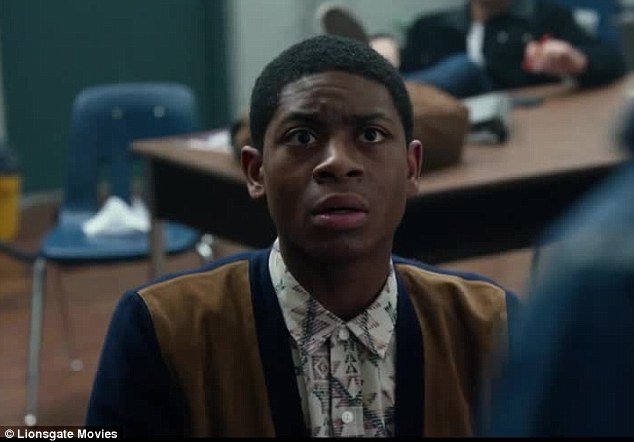
I honestly did not particularly like the original 'Power Rangers' show as a kid. The Rangers as depicted in that were so annoying and one- dimensional, I remember as a kid I found myself rooting for the show's villains to find a way to kill them! Fortunately, in 2017's 'Power Rangers' movie, they avoided that. All of the Rangers in that were much more developed and easy to cheer on, and Billy most of all. Rather than just the stereotypical nerd he was in the original show, here he has a lot going for him; Yeah, he's still a tech genius and socially awkward, but he's also struggling with a lot, such as mourning the tragic death of his father, having an obsessive interest in the abandoned mine that his father died at, as well as the fact that he has Asperger's Syndrome with all the hardships that can come from that. As someone with Asperger's myself, I found including that detail about him in the movie was a wonderful touch. Plus, Billy ends up being the first of them to successfully "Morph" (Transform from his regular human form into his Power Ranger armor), owing to the compassion he feels for his new friends. He sees a couple of them have begun fighting among themselves for petty reasons, thrusts himself between them in order to break it up, and thus brings out his heroic nature and Morphs in the process. This can definitely communicate a theological message. Billy was the first one to Morph, not because of his courage or his brains (Though he did have both of those qualities in abundance), but because of his love and kindness within him shown by that act truly giving him the heart of a hero. Many verses in Scripture deal with this kind of love. Ephesians 4:2-3 says "Be completely humble and gentle; be patient, bearing with one another in love. Make every effort to keep the unity of the Spirit through the bond of peace." Proverbs 3:3-4 says "Let love and faithfulness never leave you; Bind them around your neck, write them on the tablet of your heart. Then you will win favor and a good name in the sight of God and man." So, there we have Billy, one character who'd make it easy for you to sing along with the theme song, "Go, go, Power Rangers!"
2. Diana/ Wonder Woman, 'Wonder Woman.'

(Credit for this image goes to "Catherinesebayang" on the Heroes Wiki)
Right from when I first saw her brief yet memorable appearance in 'Batman v. Superman: Dawn of Justice' (In fact, it was one of the only memorable things about that movie), I knew the current DC movie universe's version of Wonder Woman was going to be an amazing character, and in her own movie, she more than lived up to that. She was powerful, compassionate, and carried such a strong air through how she was written and especially Gal Gadot's performance. What I'd say is most prominent and unique about her is that she is a champion for peace. Her very existence and all her heroic acts were geared around spreading peace, bringing those who seek war and destruction to justice, and protecting mankind, especially the innocent and helpless. A really defining scene with her is when she and her allies find themselves on the German front in World War 1, on the edge of "No Man's Land." Her allies want to bypass the area because the German forces are so heavy, well- armed, and well- fortified there, but when Wonder Woman speaks to a woman whose village has been seized by those same German forces, she knows she must break right through it for the sake of helping all those people. In one of the most memorable film moments of last year, she pretty much single- handedly breaks through "No Man's Land," capturing the German trench there even as the enemy troops tried to concentrate all of their fire on her. Her courage, compassion, and devotion to serving humanity saw her through and ensured she wouldn't even let an entire army slow her down, and even inspired her allies and others to grow braver simply through watching her in action. This is pretty much a key example of putting into practice the lesson of Micah 6:8, in which we see that what God most desires from us as believers is to "Do justice, love kindness, and walk humbly with your God." Such should be how we strive to live, valuing justice, kindness, and humility in all that we do. An excellent lesson and example from an equally excellent heroine.
3. Rose Tico, 'Star Wars: The Last Jedi.'

(Credit for this image goes to "King Phelous" at the Heroes Wiki)
'The Last Jedi' was a great movie with a lot of incredible scenes and characters. One, however, who particularly stuck out for me was Rose Tico, a simple mechanic who becomes a pretty impressive hero in her own right (And considering that we've got the likes of Luke Skywalker and Princess Leia in this, that's saying something). She helped bring both humor and heart to the movie in a great way. While instructed to guard the main ship's escape pod and prevent deserters from escaping, she encounters the hero Finn from the previous 'Star Wars' film. Upon recognizing him, she hilariously geeks out over meeting him, as she had heard about his great deeds from the first film and was a big fan. However, when she realizes he was planning to flee the ship (Albeit for a good reason), she is disillusioned with him and even renders him unconscious to stop him from leaving! From then on, she is put into positions in which she herself experiences what it's like to be a hero, repeatedly risking her own life to aid others (Including Finn, who she comes to see, instead of as an idol, as a friend and possible lover) and keep the new Rebel Alliance alive. Her disillusionment with Finn ties into Psalm 146:3. This verse states "Do not trust in princes, in mortal man, in whom there is no salvation." It makes a good point; While we can of course have people we admire and look up to, from movie stars to politicians to athletes to ministers and priests, we must not put them on too high a pedestal, as they are flawed humans just like we are, and they often have their own skeletons in their closets. In the wake of the recent "Hollywood sexual harassment" movement that started last fall, a number of prominent figures in entertainment and politics (Including some whose work I greatly admire) were exposed as being capable of having major moral failings. We must know that salvation and deliverance can only truly come from God, and trusting in anything else is pointless. While Rose's fate in 'The Last Jedi' was left ambiguous so far, here's hoping she survives and appears in the next 'Star Wars' film to teach us more.
4. Yondu, 'Guardians of the Galaxy, Volume 2.'

(Credit for this image goes to "Darthranner83" on the Heroes Wiki)
Yondu may have appeared before, in the first 'Guardians of the Galaxy' movie, but I was so impressed with what they did with him in this sequel that I had to include him on the list. He on the one hand is much the same grumpy, short- fused space pirate that he was in the first film, but at the same time, he gains so much more depth in this one. We see more of the inner struggles he had. We learn that his fellow Ravagers (Basically, the kind of space pirate syndicate he was part of) view him as a disgrace, his own crew turn against him because they feel he's gone soft, he reveals his sad backstory, we discover that he sees a lot of himself in Rocket Raccoon and the two of them connect along those lines over the course of the film, and we see his heroic nature coming through and that he truly cared for Peter/ Star Lord all the time. We also gain a great scene of Yondu using his whistling- arrow weapon to wipe out his mutinous crew to the tune of the classic song 'Come a Little Bit Closer.' I've always said that song could make for a great, funny music video, and the way it's used in this awesome scene (Complete with a breathtaking full- chorus cover of its final refrain) is probably the closest I'll get to it. Plus, he gets to utter the now- famous line of "I'm Mary Poppins, y'all!" In the climax, Yondu ends up dying a hero's death to save the life of Peter, the young man he had come to view as a son. When word of his death spreads, the other branches of the Ravagers, including their highest commanders, come from all over the galaxy to honor Yondu's memory and give him a proper send- off. What follows is easily one of the best funeral scenes I can ever recall seeing in any movie. Between the gorgeous visuals, the emotional reactions from the characters (Peter's eulogy for him is simple and funny yet incredibly moving), and the brilliant use of Cat Stevens' song 'Father and Son,' it's a moment that would definitely necessitate having some tissues handy. Yondu's noble end and beautiful funeral evoke a couple important verses in Scripture. His brave self- sacrifice for Peter calls to mind my favorite Bible verse, John 15:13, "Greater love has no one than this, than to lay down one's life for his friends." His funeral scene can also call to mind a little of the funeral given to King Saul and his sons in 1 Samuel 3:11- 13; After Saul and his sons were killed in battle by the Philistines, all the bravest men from Jabesh- gilead snuck into Philistine territory, retrieved their bodies that the Philistines had put on display, and brought them back to Jabesh to give them an honorable burial, culminating in a seven- day fast. They could have stayed comfortable where they were and let the bodies of Saul and his sons stay in the Philistine camp to rot, but they knew those brave men and noble leaders deserved better than that, so the warriors ensured they got the proper funeral that such great men deserved, just as the Ravagers in the film all dropped whatever they were doing and came from all over to honor Yondu for his courage and selflessness. So, RIP, Yondu Udonta. My only regret is that it would have been cool to see him joining the Guardians and the other Marvel heroes in their fight against Thanos in the upcoming 'Avengers: Infinity Wars' films.
I wasn't sure about including this next character, because it'll involve me making a potentially embarrassing admission, but this is such a neat character that I'll have to bite the bullet. Here goes, please don't judge me too harshly:
5. Capper, 'My Little Pony: The Movie.'

(Credit for this image goes to "Kyurem147" on the Heroes Wiki
Yes, you read that right: I am something of a "Brony" (A male fan of the animated series 'My Little Pony: Friendship is Magic'). Don't worry, though, I'm not the sort that buys the merchandise, cosplays as characters, or writes disturbing fanfics about it online. I just think it is a really good, funny, well- written show. It has well- developed and quite likable characters, great morals and messages including many that tie quite well into Scripture, incredibly humorous moments, surprising amounts of action at times, and loads of subtle in- jokes aimed directly at adults (i.e. How many kids' shows can you name that would include nods to the movies 'The Big Lebowski,' '300,' and 'The Shining'?). Plus, Weird Al Yankovic did a guest voice in one of the best episodes of it so far, and if you can't trust Weird Al, who CAN you trust? It's the ultimate epitome of the principle that you shouldn't judge a book by its cover, or in this case a show by its title. Anyway, the theatrical film made of it, 'My Little Pony: The Movie,' lived up to the great quality of the show, and while all the new characters introduced in it were wonderful, Capper was definitely my favorite, and one of my favorite parts of the movie in general. This charming anthropomorphic feline (described by my girlfriend as "Han Solo as a cat") starts out just pretending to be a helpful friend and guide for the six main ponies on a journey/ mission to gain help to save their kingdom, while secretly planning to sell them out in order to settle a debt he had. However, the kindness and generosity that one of the ponies, Rarity, shows to Capper causes him to have a change of heart. Capper makes up for his initial deception tenfold by repeatedly aiding our heroines over the course of their journey, from misleading the villains as to their location in order to buy the Mane Six some time, to giving the Mane Six a subtle but VERY effective pep talk when they're about to give up, to helping concoct a plan to sneak them into a city undetected, to doing a great job helping to fight off the evil Storm King's army in the climactic battle scene. He even at one point uses the little dragon Spike as a living flamethrower to drive back a whole crowd of enemy soldiers, that HAS to be worth some extra cool- points! Broadway and film star Taye Diggs does a wonderful job both with Capper's suave voice and with his toe- tapping song "I'm the Friend You Need." As for a Biblical message that can be taken from Capper, I'd say I could quite easily compare him to a well- known figure from the Old Testament; Jacob in the book of Genesis was similarly a shifty, dishonest type at first. He conned his own brother Esau out of his birthright and later out of getting their father's blessing. However, Esau's eventual forgiveness of him causes Jacob to turn his life around (Much like how Rarity's generous act led Capper to change his ways), as he would go on to father the twelve tribes of Israel, and Jesus Himself came from the lineage of this former schemer and con man. Whether in helping ponies to save their home, or helping to drive home the great Biblical point on how a scoundrel can become a hero, Capper is indeed "The friend you need."
By the way, I'd have to give honorable mention to another character in this movie, Captain Calaeno. This daring sky pirate was also a lot of fun to watch, and the song associated with her, "Time to be Awesome," is probably my favorite song in the movie.
6. Adrian Toomes, aka the Vulture, 'Spider- Man: Homecoming.'

(Credit for this pic goes to "LOLFOURZERO" on the Villains Wiki)
Spider- Man has always had quite an interesting collection of villains. In fact, I'd say the only superhero with a more memorable rogue's gallery than him would be Batman. Still, among Spidey's main foes, the Vulture has long been seen as a bit of a joke, little more than a crusty old man who happens to be able to fly. That said, the way Vulture was portrayed in 'Spider- Man: Homecoming' blew me away! I'd call him my favorite movie villain of 2017 (A few other memorable 2017 baddies in my book include Pennywise from 'It,' Gaston from 'Beauty and the Beast,' Rita Repulsa from 'Power Rangers,' Poppy Adams from 'Kingsmen: The Golden Circle,' and Ego from 'Guardians of the Galaxy, Volume 2'). His fight scenes with Spidey are quite intense, and Michael Keaton gives a typically awesome performance as him. He is a very sympathetic villain all the way through. He started as a friendly, working- class type who became a black- market arms dealer just in order to feed his family and help his crew similarly bring home paychecks after his legitimate salvaging business is forcibly shut down by one of Tony Stark's companies. Toomes/ Vulture has a surprisingly strong sense of honor, too; When he first discovers that Peter Parker is his hated foe Spider- Man, he could have put a bullet in Peter's head right then and there, but instead lets him off with a warning on the grounds that Spidey saved his daughter's life earlier in the film. He also has a very funny scene earlier in the movie, a bit of a twist on the whole "1. Incompetent henchman threatens to rat out villain, 2. Villain kills incompetent henchman to silence him" trope that's often seen in films. Nevertheless, in spite of the fact that the Vulture had good motives and sympathetic qualities deep down, that doesn't change the fact that his actions were evil and destructive, and that he needed to be stopped. We see him midway in the film attempting to sell futuristic weaponry to a gang leader, and if his main plan in the film's climax (Basically, hijacking a giant shipment of top- end Avengers tech in order to then make a massive fortune selling it all on the black market) were successful, a lot of very bad people would have acquired powerful weapons and tools that they would undoubtedly use to hurt a lot of innocent people. The Bible is clear that good intentions aren't worth a whole lot if our actions don't back them up, whether through failing to act on those intentions or through sinning to achieve those goals. Proverbs 6:30 says that "Excuses might be found for a thief who steals because he is starving." Proverbs 14:12 says that "There is a pathway that seems right to a man, but in the end it's a road to death." For one more example, Jesus said in Matthew 7:21 that "Not everyone that saith unto Me 'Lord, Lord' shall enter into the Kingdom of Heaven, but he that doeth the will of My Father which is in Heaven." So, there we have the Vulture: A great villain who helps show that evil means can drive even the best of intentions astray.
7. LeFou, 'Beauty and the Beast.'
(Credit for this pic goes to "Sergio208" on the Villans Wiki)
2017's 'Beauty and the Beast' was probably the best of the live- action Disney remakes I've seen so far. The performances were all great, the special effects were solid, it was a faithful adaptation of the original, and yet it still threw in enough of its own surprises and touches to keep it from getting too predictable (i.e. Beast's new song in it, 'Evermore,' was truly beautiful and deserves to be nominated for a 2018 Oscar for Best Song), including the great new treatment they gave to the villain Gaston's dopey companion LeFou. First up, I should probably address the "Elephant in the room" regarding the way LeFou's portrayed in it; Yes, it's somewhat implied in the new movie that LeFou is gay, and yes, I'm of course aware of the Bible's position on homosexuality. However, portraying LeFou in that way didn't bother me much because a) It was given a rather subtle treatment and the nods alluding to it were extremely brief, and b) Considering the way LeFou acted in the original film and how slavishly devoted to Gaston he was, imagining him as gay really isn't that much of a stretch. Now that that's out of the way, I definitely liked all of what they did with LeFou in this movie. He has a lot more depth than he had in the animated version, and Josh Gad was truly the perfect choice for playing him. He looks like a real- life version of LeFou, his voice sounds similar to the voice Jesse Corti used for him in the animated version, his skills as a Broadway veteran let him give a wonderful performance of the notoriously catchy song 'Gaston,' and he was simply hilarious all the way through! His delivery was perfect from start to finish. The Scriptural lesson that LeFou helps to teach is on the importance of steering clear of corrupting influences that can lead you into sin. All through the movie, as Gaston coerces and at times flat- out forces LeFou to assist him in increasingly despicable actions, we see how genuinely torn LeFou is between his loyalty to his friend and the pulling of his conscience. We see his guilt weighing more and more on him as he begins slowly seeing Gaston for the selfish, conniving, corrupting false friend that he is. The Bible is filled with warnings on avoiding false friends and bad influences. In 1 Corinthians 15:33, it warns believers "Do not be deceived: 'Bad company corrupts good morals.'" In addition, Proverbs 13:20 says "He who walks with wise men will be wise, but the companion of fools will suffer harm." That verse is especially relevant considering all the harm LeFou suffers over the course of the movie because of Gaston, especially in the big battle scene with Gaston at one point actually using him as a human shield. Quite an important and insightful message to teach, from a character whose name is a phonetic pun on the phrase "The Fool."
Now that I've mentioned someone who teaches the importance of avoiding false friends, the next character on my list is someone who, in contrast, demonstrates what it means to be a good friend:
8. Richie Tozier, 'It.'

(Credit for this pic goes to "King Phelous" on the Heroes Wiki)
I already talked a little bit about this character in my review of the original Stephen King novel last summer, and the movie features a wonderful portrayal of him. Although I stated in that review that my favorite member of the heroic "Loser's Club" in that story was the hefty yet warm- hearted Ben Hanscom, I thought Richie was the one who really stole the show in this version. "Stranger Things" star Finn Wolfhard gives an amazing performance of him that nails all of Richie's traits from the book; His great sense of humor (He has so many funny moments in this movie that nicely break up the tension), his snarky and at times foul- mouthed nature, his love of doing different voices and impressions, and ultimately, what a loyal friend he is to the others. One thing that the movie actually does better than the book is show how inwardly conflicted Richie is over everything. A scene that epitomizes him at his best is in the movie's climax (Which was noticeably different from that part of the book, which in this case was a good thing, as it kept me guessing how things would play out); The Loser's Club have been fighting It/ Pennywise in Its sewer lair, and It suddenly grabs the group's leader Bill, offering to let the rest of them get out alive if they let It take and consume Bill. Richie, who at that time was somewhat at odds with Bill, goes into an angry monologue seeming to indicate that maybe they should go along with this offer. He lists all the trouble and even mortal danger that Bill had gotten them into over this summer, growing angrier with each peril he brings up. Then, out of nowhere, in the midst of this ranting monologue, Richie grabs a baseball bat from a pile of rubble and says,"... and now, now we're gonna have to kill this ****ing clown. (To Pennywise) WELCOME TO THE LOSERS' CLUB, *******!" He then tears into Pennywise with the bat, the other Losers follow his lead, and the battle resumes, leading to It's defeat (Temporarily, at least). I have to say, I was flat- out cheering at that part in the theaters! If a creature as terrifying as Pennywise is offering you an out, even with such a horrible price, the temptation to take it would have to be pretty high, but Richie learned to care more about loyalty to his friends and stopping It from hurting anyone else than about his own safety. It calls to mind Proverbs 17:17, which points out that "A friend loves at all times, and a brother is born for times of adversity." It's one thing to stay true to your friends in good times, but the real test is staying true to them even in bad times or when you're at odds with them. Even when Richie is angry at Bill AND scared out of his mind, his loyalty gives him the courage to do what's right. That's the mark of a true friend. Way to go, Richie!
9. Bethany Walker/ Professor Shelly Oberon, 'Jumanji: Welcome to the Jungle.'


(Credit for these images goes to "Witnessme" and "MakeShift" on the Jumanji wiki)
This is kind of a "Two- in- one" character. In this great, entertaining entry in the 'Jumanji' series, the titular magic game morphs from a board game into a video game, and a group of high- schoolers in detention are sucked into it, assume the identities of the playable characters in the game, and must rely on each other as they make their way through the game to try and get home before they run out of extra lives. While each of the teenage protagonists change and grow a lot through their time in Jumanji, none change more than Bethany. This cell- phone- addicted Valley Girl, when brought to the game's character selection screen, selects the character Professor Shelly Oberon, described by the screen as a "Curvy genius." However, once pulled into the game, she finds that this character is in fact a pudgy middle- aged man played in the movie by Jack Black. She is, of course, horrified at this. This was such a fun character to watch. I consider it one of the best Jack Black roles I've ever seen, you'd truly believe he is indeed a flaky teenage girl trapped in the body of a middle- aged man. Many hilarious scenes are built around Bethany getting around in this new form, including a highlight of the film in which she, again still in the guise of the Professor, gives another more socially awkward girl, who had taken on the form of a comely heroine in the game, flirting advice to help get past some guards. To see Jack Black strutting around, giving demonstrations on how to walk, talk, flip hair, etc., had me practically rolling in the aisles! As I said, Bethany ends up being the character who changes and grows the most through the game. From a girl who initially only cared about herself, she finds herself sacrificing one of her own lives in order to save a fellow character from the ultimate "Game Over." From a girl who initially refused to ever step out of her own comfort zone or tear her eyes away from her phone, she develops a love of adventure and the outdoors and near the end is seen trying to convince one of her vapid friends to go with her on a wilderness camping trip. She truly reflects the advice given in Romans 12:2 (One of my favorite verses in Scripture) to "Conform not to the pattern of this world, but be transformed by the renewing of your mind. Then you will be able to test and approve what God's will is-- His good, pleasing and perfect will." Bethany starts the movie as one who is most definitely conformed to the pattern of this world, through both vanity and addiction to technology, but her experiences in Jumanji do indeed renew her mind and transform her entirely.
10. Hector, 'Coco.'

(Credit for this pic goes to "Silver Flight" on the Disney Wiki)
When I first saw the trailer for Pixar's newest film 'Coco,' I assumed it was just a ripoff of the film 'The Book of Life' from a few years ago, but was pleasantly surprised to learn that it wasn't, and was in fact a little better than that movie. Speaking of pleasant surprises, the character Hector in it is an example of a character that I didn't expect I would be all that fond of going into it, but who grew on me more and more with each moment of screen- time he had in this beautiful, heart- warming film. The film's main character, a young Mexican boy named Miguel, through a strange set of circumstances during the famous celebration of Dia de los Muertos, finds himself in the Land of the Dead. He has encounters with the spirits of his various deceased relatives, and sets out on a journey through there both to find a way home before it's too late and also to learn more about some of his ancestors. Along the way, he is aided by both the mysterious dog Dante (Fitting name for a character in a movie about a journey through the afterlife), and by the down- and- out spirit Hector. Hector offers to help Miguel find a way home in exchange for Miguel bringing a photo of Hector back with him so he can be remembered (In the movie's mythology, spirits can only enter the Land of the Living on Dia de los Muertos if there is a photo of them put on their family's ofrenda to ensure they are remembered, and if completely forgotten by everyone, they fade away forever). Hector was a funny, fascinating character to watch right from when you first meet him about halfway through the film. His shifty yet harmless schemes are fun to watch (i.e. He at one point sneaks into a Land of the Dead celebrity party by disguising himself as Frida Kahlo), he has quite an impressive singing voice thanks to his voice actor Gael Garcia Bernal, and it's really funny to see the ways that he takes advantage of his skeletal form such as launching his arm at a window to knock on it to gain someone's attention and letting his skull and torso bones leap all over the place to help a musical number become more entertaining for an audience. It's not all laughs and smiles, though; You come to find that in life, Hector was a man who, while often apart from his family, cared very deeply about them. An act of heartless cruelty by another robbed Hector of the chance to be there for them as much as he should have, and unjustly soured their memory of him. The importance of being there for your family and other loved ones cannot be overstated, including in the Bible. 1 Timothy 5:8 says that "Anyone who does not provide for their relatives, and especially for their own household, has denied the faith and is worse than an unbeliever." Indeed, the first and foremost way of showing love and Christ- likeness is in how you treat your family and other loved ones, which can at times mean sacrificing your own plans and desires in order to be there for them. This was a lesson I had to be reminded of by someone much wiser than myself last December (If you're reading this, Kim, I thank you for helping to set me straight on the matter). Who would have guessed that an animated skeleton could teach so much about being alive?
A few Honorable Mentions include the aforementioned Captain Calaeno from 'My Little Pony: The Movie,' Andrew Campbell from 'Fist Fight,' Mel the Minion from 'Despicable Me 3,' and Theresa "Tree" Gelbman from 'Happy Death Day.'
That's all for this edition of the Nightcrawler Experience. Hope you liked it! Keep your eyes peeled, as I have some ideas for future entries that I'm eager to get started on. Until then, God bless you all!
We're now well into 2018, so it's time for my annual look at my 10 favorite movie characters from the previous year, as both a fanboy and a Christian.
All the same rules as in previous years apply: The characters are in no real order of preference. It can be any character from any movie from last year, be it a hero, a villain, or a supporting character. It can be an original character or a character adapted from some other media (Comics, tv shows, etc). It can be from any genre of movie. All of them, either in a "Be like them" way or as a "DON'T be like them" cautionary tale, help convey to me a valuable lesson on how to live for Christ, and hopefully I can do the same for all of you readers by telling you about them. However, there is one new element I'm adding this year: A couple characters on this year's list had appeared in previous films, but we learn more about them in the portrayals I talk about here.
Also, two other notifications I must put in:
1) DISCLAIMER! A couple of the movies I'll be mentioning are not fit for children, so do your homework before letting kids see them.
2) SPOILERS! I try not to give away too much to ruin the movies, but in some cases, I sadly needed to reveal key plot points to better show why I like these characters.
So, let's get started!
1. Billy Cranston, aka the Blue Ranger, 'Power Rangers.'
(Credit for this image goes to "Jamestheawesomefool13" on the Heroes Wiki)
I honestly did not particularly like the original 'Power Rangers' show as a kid. The Rangers as depicted in that were so annoying and one- dimensional, I remember as a kid I found myself rooting for the show's villains to find a way to kill them! Fortunately, in 2017's 'Power Rangers' movie, they avoided that. All of the Rangers in that were much more developed and easy to cheer on, and Billy most of all. Rather than just the stereotypical nerd he was in the original show, here he has a lot going for him; Yeah, he's still a tech genius and socially awkward, but he's also struggling with a lot, such as mourning the tragic death of his father, having an obsessive interest in the abandoned mine that his father died at, as well as the fact that he has Asperger's Syndrome with all the hardships that can come from that. As someone with Asperger's myself, I found including that detail about him in the movie was a wonderful touch. Plus, Billy ends up being the first of them to successfully "Morph" (Transform from his regular human form into his Power Ranger armor), owing to the compassion he feels for his new friends. He sees a couple of them have begun fighting among themselves for petty reasons, thrusts himself between them in order to break it up, and thus brings out his heroic nature and Morphs in the process. This can definitely communicate a theological message. Billy was the first one to Morph, not because of his courage or his brains (Though he did have both of those qualities in abundance), but because of his love and kindness within him shown by that act truly giving him the heart of a hero. Many verses in Scripture deal with this kind of love. Ephesians 4:2-3 says "Be completely humble and gentle; be patient, bearing with one another in love. Make every effort to keep the unity of the Spirit through the bond of peace." Proverbs 3:3-4 says "Let love and faithfulness never leave you; Bind them around your neck, write them on the tablet of your heart. Then you will win favor and a good name in the sight of God and man." So, there we have Billy, one character who'd make it easy for you to sing along with the theme song, "Go, go, Power Rangers!"
2. Diana/ Wonder Woman, 'Wonder Woman.'
(Credit for this image goes to "Catherinesebayang" on the Heroes Wiki)
Right from when I first saw her brief yet memorable appearance in 'Batman v. Superman: Dawn of Justice' (In fact, it was one of the only memorable things about that movie), I knew the current DC movie universe's version of Wonder Woman was going to be an amazing character, and in her own movie, she more than lived up to that. She was powerful, compassionate, and carried such a strong air through how she was written and especially Gal Gadot's performance. What I'd say is most prominent and unique about her is that she is a champion for peace. Her very existence and all her heroic acts were geared around spreading peace, bringing those who seek war and destruction to justice, and protecting mankind, especially the innocent and helpless. A really defining scene with her is when she and her allies find themselves on the German front in World War 1, on the edge of "No Man's Land." Her allies want to bypass the area because the German forces are so heavy, well- armed, and well- fortified there, but when Wonder Woman speaks to a woman whose village has been seized by those same German forces, she knows she must break right through it for the sake of helping all those people. In one of the most memorable film moments of last year, she pretty much single- handedly breaks through "No Man's Land," capturing the German trench there even as the enemy troops tried to concentrate all of their fire on her. Her courage, compassion, and devotion to serving humanity saw her through and ensured she wouldn't even let an entire army slow her down, and even inspired her allies and others to grow braver simply through watching her in action. This is pretty much a key example of putting into practice the lesson of Micah 6:8, in which we see that what God most desires from us as believers is to "Do justice, love kindness, and walk humbly with your God." Such should be how we strive to live, valuing justice, kindness, and humility in all that we do. An excellent lesson and example from an equally excellent heroine.
3. Rose Tico, 'Star Wars: The Last Jedi.'
(Credit for this image goes to "King Phelous" at the Heroes Wiki)
'The Last Jedi' was a great movie with a lot of incredible scenes and characters. One, however, who particularly stuck out for me was Rose Tico, a simple mechanic who becomes a pretty impressive hero in her own right (And considering that we've got the likes of Luke Skywalker and Princess Leia in this, that's saying something). She helped bring both humor and heart to the movie in a great way. While instructed to guard the main ship's escape pod and prevent deserters from escaping, she encounters the hero Finn from the previous 'Star Wars' film. Upon recognizing him, she hilariously geeks out over meeting him, as she had heard about his great deeds from the first film and was a big fan. However, when she realizes he was planning to flee the ship (Albeit for a good reason), she is disillusioned with him and even renders him unconscious to stop him from leaving! From then on, she is put into positions in which she herself experiences what it's like to be a hero, repeatedly risking her own life to aid others (Including Finn, who she comes to see, instead of as an idol, as a friend and possible lover) and keep the new Rebel Alliance alive. Her disillusionment with Finn ties into Psalm 146:3. This verse states "Do not trust in princes, in mortal man, in whom there is no salvation." It makes a good point; While we can of course have people we admire and look up to, from movie stars to politicians to athletes to ministers and priests, we must not put them on too high a pedestal, as they are flawed humans just like we are, and they often have their own skeletons in their closets. In the wake of the recent "Hollywood sexual harassment" movement that started last fall, a number of prominent figures in entertainment and politics (Including some whose work I greatly admire) were exposed as being capable of having major moral failings. We must know that salvation and deliverance can only truly come from God, and trusting in anything else is pointless. While Rose's fate in 'The Last Jedi' was left ambiguous so far, here's hoping she survives and appears in the next 'Star Wars' film to teach us more.
4. Yondu, 'Guardians of the Galaxy, Volume 2.'
(Credit for this image goes to "Darthranner83" on the Heroes Wiki)
Yondu may have appeared before, in the first 'Guardians of the Galaxy' movie, but I was so impressed with what they did with him in this sequel that I had to include him on the list. He on the one hand is much the same grumpy, short- fused space pirate that he was in the first film, but at the same time, he gains so much more depth in this one. We see more of the inner struggles he had. We learn that his fellow Ravagers (Basically, the kind of space pirate syndicate he was part of) view him as a disgrace, his own crew turn against him because they feel he's gone soft, he reveals his sad backstory, we discover that he sees a lot of himself in Rocket Raccoon and the two of them connect along those lines over the course of the film, and we see his heroic nature coming through and that he truly cared for Peter/ Star Lord all the time. We also gain a great scene of Yondu using his whistling- arrow weapon to wipe out his mutinous crew to the tune of the classic song 'Come a Little Bit Closer.' I've always said that song could make for a great, funny music video, and the way it's used in this awesome scene (Complete with a breathtaking full- chorus cover of its final refrain) is probably the closest I'll get to it. Plus, he gets to utter the now- famous line of "I'm Mary Poppins, y'all!" In the climax, Yondu ends up dying a hero's death to save the life of Peter, the young man he had come to view as a son. When word of his death spreads, the other branches of the Ravagers, including their highest commanders, come from all over the galaxy to honor Yondu's memory and give him a proper send- off. What follows is easily one of the best funeral scenes I can ever recall seeing in any movie. Between the gorgeous visuals, the emotional reactions from the characters (Peter's eulogy for him is simple and funny yet incredibly moving), and the brilliant use of Cat Stevens' song 'Father and Son,' it's a moment that would definitely necessitate having some tissues handy. Yondu's noble end and beautiful funeral evoke a couple important verses in Scripture. His brave self- sacrifice for Peter calls to mind my favorite Bible verse, John 15:13, "Greater love has no one than this, than to lay down one's life for his friends." His funeral scene can also call to mind a little of the funeral given to King Saul and his sons in 1 Samuel 3:11- 13; After Saul and his sons were killed in battle by the Philistines, all the bravest men from Jabesh- gilead snuck into Philistine territory, retrieved their bodies that the Philistines had put on display, and brought them back to Jabesh to give them an honorable burial, culminating in a seven- day fast. They could have stayed comfortable where they were and let the bodies of Saul and his sons stay in the Philistine camp to rot, but they knew those brave men and noble leaders deserved better than that, so the warriors ensured they got the proper funeral that such great men deserved, just as the Ravagers in the film all dropped whatever they were doing and came from all over to honor Yondu for his courage and selflessness. So, RIP, Yondu Udonta. My only regret is that it would have been cool to see him joining the Guardians and the other Marvel heroes in their fight against Thanos in the upcoming 'Avengers: Infinity Wars' films.
I wasn't sure about including this next character, because it'll involve me making a potentially embarrassing admission, but this is such a neat character that I'll have to bite the bullet. Here goes, please don't judge me too harshly:
5. Capper, 'My Little Pony: The Movie.'
(Credit for this image goes to "Kyurem147" on the Heroes Wiki
Yes, you read that right: I am something of a "Brony" (A male fan of the animated series 'My Little Pony: Friendship is Magic'). Don't worry, though, I'm not the sort that buys the merchandise, cosplays as characters, or writes disturbing fanfics about it online. I just think it is a really good, funny, well- written show. It has well- developed and quite likable characters, great morals and messages including many that tie quite well into Scripture, incredibly humorous moments, surprising amounts of action at times, and loads of subtle in- jokes aimed directly at adults (i.e. How many kids' shows can you name that would include nods to the movies 'The Big Lebowski,' '300,' and 'The Shining'?). Plus, Weird Al Yankovic did a guest voice in one of the best episodes of it so far, and if you can't trust Weird Al, who CAN you trust? It's the ultimate epitome of the principle that you shouldn't judge a book by its cover, or in this case a show by its title. Anyway, the theatrical film made of it, 'My Little Pony: The Movie,' lived up to the great quality of the show, and while all the new characters introduced in it were wonderful, Capper was definitely my favorite, and one of my favorite parts of the movie in general. This charming anthropomorphic feline (described by my girlfriend as "Han Solo as a cat") starts out just pretending to be a helpful friend and guide for the six main ponies on a journey/ mission to gain help to save their kingdom, while secretly planning to sell them out in order to settle a debt he had. However, the kindness and generosity that one of the ponies, Rarity, shows to Capper causes him to have a change of heart. Capper makes up for his initial deception tenfold by repeatedly aiding our heroines over the course of their journey, from misleading the villains as to their location in order to buy the Mane Six some time, to giving the Mane Six a subtle but VERY effective pep talk when they're about to give up, to helping concoct a plan to sneak them into a city undetected, to doing a great job helping to fight off the evil Storm King's army in the climactic battle scene. He even at one point uses the little dragon Spike as a living flamethrower to drive back a whole crowd of enemy soldiers, that HAS to be worth some extra cool- points! Broadway and film star Taye Diggs does a wonderful job both with Capper's suave voice and with his toe- tapping song "I'm the Friend You Need." As for a Biblical message that can be taken from Capper, I'd say I could quite easily compare him to a well- known figure from the Old Testament; Jacob in the book of Genesis was similarly a shifty, dishonest type at first. He conned his own brother Esau out of his birthright and later out of getting their father's blessing. However, Esau's eventual forgiveness of him causes Jacob to turn his life around (Much like how Rarity's generous act led Capper to change his ways), as he would go on to father the twelve tribes of Israel, and Jesus Himself came from the lineage of this former schemer and con man. Whether in helping ponies to save their home, or helping to drive home the great Biblical point on how a scoundrel can become a hero, Capper is indeed "The friend you need."
By the way, I'd have to give honorable mention to another character in this movie, Captain Calaeno. This daring sky pirate was also a lot of fun to watch, and the song associated with her, "Time to be Awesome," is probably my favorite song in the movie.
6. Adrian Toomes, aka the Vulture, 'Spider- Man: Homecoming.'
(Credit for this pic goes to "LOLFOURZERO" on the Villains Wiki)
Spider- Man has always had quite an interesting collection of villains. In fact, I'd say the only superhero with a more memorable rogue's gallery than him would be Batman. Still, among Spidey's main foes, the Vulture has long been seen as a bit of a joke, little more than a crusty old man who happens to be able to fly. That said, the way Vulture was portrayed in 'Spider- Man: Homecoming' blew me away! I'd call him my favorite movie villain of 2017 (A few other memorable 2017 baddies in my book include Pennywise from 'It,' Gaston from 'Beauty and the Beast,' Rita Repulsa from 'Power Rangers,' Poppy Adams from 'Kingsmen: The Golden Circle,' and Ego from 'Guardians of the Galaxy, Volume 2'). His fight scenes with Spidey are quite intense, and Michael Keaton gives a typically awesome performance as him. He is a very sympathetic villain all the way through. He started as a friendly, working- class type who became a black- market arms dealer just in order to feed his family and help his crew similarly bring home paychecks after his legitimate salvaging business is forcibly shut down by one of Tony Stark's companies. Toomes/ Vulture has a surprisingly strong sense of honor, too; When he first discovers that Peter Parker is his hated foe Spider- Man, he could have put a bullet in Peter's head right then and there, but instead lets him off with a warning on the grounds that Spidey saved his daughter's life earlier in the film. He also has a very funny scene earlier in the movie, a bit of a twist on the whole "1. Incompetent henchman threatens to rat out villain, 2. Villain kills incompetent henchman to silence him" trope that's often seen in films. Nevertheless, in spite of the fact that the Vulture had good motives and sympathetic qualities deep down, that doesn't change the fact that his actions were evil and destructive, and that he needed to be stopped. We see him midway in the film attempting to sell futuristic weaponry to a gang leader, and if his main plan in the film's climax (Basically, hijacking a giant shipment of top- end Avengers tech in order to then make a massive fortune selling it all on the black market) were successful, a lot of very bad people would have acquired powerful weapons and tools that they would undoubtedly use to hurt a lot of innocent people. The Bible is clear that good intentions aren't worth a whole lot if our actions don't back them up, whether through failing to act on those intentions or through sinning to achieve those goals. Proverbs 6:30 says that "Excuses might be found for a thief who steals because he is starving." Proverbs 14:12 says that "There is a pathway that seems right to a man, but in the end it's a road to death." For one more example, Jesus said in Matthew 7:21 that "Not everyone that saith unto Me 'Lord, Lord' shall enter into the Kingdom of Heaven, but he that doeth the will of My Father which is in Heaven." So, there we have the Vulture: A great villain who helps show that evil means can drive even the best of intentions astray.
7. LeFou, 'Beauty and the Beast.'
(Credit for this pic goes to "Sergio208" on the Villans Wiki)
2017's 'Beauty and the Beast' was probably the best of the live- action Disney remakes I've seen so far. The performances were all great, the special effects were solid, it was a faithful adaptation of the original, and yet it still threw in enough of its own surprises and touches to keep it from getting too predictable (i.e. Beast's new song in it, 'Evermore,' was truly beautiful and deserves to be nominated for a 2018 Oscar for Best Song), including the great new treatment they gave to the villain Gaston's dopey companion LeFou. First up, I should probably address the "Elephant in the room" regarding the way LeFou's portrayed in it; Yes, it's somewhat implied in the new movie that LeFou is gay, and yes, I'm of course aware of the Bible's position on homosexuality. However, portraying LeFou in that way didn't bother me much because a) It was given a rather subtle treatment and the nods alluding to it were extremely brief, and b) Considering the way LeFou acted in the original film and how slavishly devoted to Gaston he was, imagining him as gay really isn't that much of a stretch. Now that that's out of the way, I definitely liked all of what they did with LeFou in this movie. He has a lot more depth than he had in the animated version, and Josh Gad was truly the perfect choice for playing him. He looks like a real- life version of LeFou, his voice sounds similar to the voice Jesse Corti used for him in the animated version, his skills as a Broadway veteran let him give a wonderful performance of the notoriously catchy song 'Gaston,' and he was simply hilarious all the way through! His delivery was perfect from start to finish. The Scriptural lesson that LeFou helps to teach is on the importance of steering clear of corrupting influences that can lead you into sin. All through the movie, as Gaston coerces and at times flat- out forces LeFou to assist him in increasingly despicable actions, we see how genuinely torn LeFou is between his loyalty to his friend and the pulling of his conscience. We see his guilt weighing more and more on him as he begins slowly seeing Gaston for the selfish, conniving, corrupting false friend that he is. The Bible is filled with warnings on avoiding false friends and bad influences. In 1 Corinthians 15:33, it warns believers "Do not be deceived: 'Bad company corrupts good morals.'" In addition, Proverbs 13:20 says "He who walks with wise men will be wise, but the companion of fools will suffer harm." That verse is especially relevant considering all the harm LeFou suffers over the course of the movie because of Gaston, especially in the big battle scene with Gaston at one point actually using him as a human shield. Quite an important and insightful message to teach, from a character whose name is a phonetic pun on the phrase "The Fool."
Now that I've mentioned someone who teaches the importance of avoiding false friends, the next character on my list is someone who, in contrast, demonstrates what it means to be a good friend:
8. Richie Tozier, 'It.'
(Credit for this pic goes to "King Phelous" on the Heroes Wiki)
I already talked a little bit about this character in my review of the original Stephen King novel last summer, and the movie features a wonderful portrayal of him. Although I stated in that review that my favorite member of the heroic "Loser's Club" in that story was the hefty yet warm- hearted Ben Hanscom, I thought Richie was the one who really stole the show in this version. "Stranger Things" star Finn Wolfhard gives an amazing performance of him that nails all of Richie's traits from the book; His great sense of humor (He has so many funny moments in this movie that nicely break up the tension), his snarky and at times foul- mouthed nature, his love of doing different voices and impressions, and ultimately, what a loyal friend he is to the others. One thing that the movie actually does better than the book is show how inwardly conflicted Richie is over everything. A scene that epitomizes him at his best is in the movie's climax (Which was noticeably different from that part of the book, which in this case was a good thing, as it kept me guessing how things would play out); The Loser's Club have been fighting It/ Pennywise in Its sewer lair, and It suddenly grabs the group's leader Bill, offering to let the rest of them get out alive if they let It take and consume Bill. Richie, who at that time was somewhat at odds with Bill, goes into an angry monologue seeming to indicate that maybe they should go along with this offer. He lists all the trouble and even mortal danger that Bill had gotten them into over this summer, growing angrier with each peril he brings up. Then, out of nowhere, in the midst of this ranting monologue, Richie grabs a baseball bat from a pile of rubble and says,"... and now, now we're gonna have to kill this ****ing clown. (To Pennywise) WELCOME TO THE LOSERS' CLUB, *******!" He then tears into Pennywise with the bat, the other Losers follow his lead, and the battle resumes, leading to It's defeat (Temporarily, at least). I have to say, I was flat- out cheering at that part in the theaters! If a creature as terrifying as Pennywise is offering you an out, even with such a horrible price, the temptation to take it would have to be pretty high, but Richie learned to care more about loyalty to his friends and stopping It from hurting anyone else than about his own safety. It calls to mind Proverbs 17:17, which points out that "A friend loves at all times, and a brother is born for times of adversity." It's one thing to stay true to your friends in good times, but the real test is staying true to them even in bad times or when you're at odds with them. Even when Richie is angry at Bill AND scared out of his mind, his loyalty gives him the courage to do what's right. That's the mark of a true friend. Way to go, Richie!
9. Bethany Walker/ Professor Shelly Oberon, 'Jumanji: Welcome to the Jungle.'
(Credit for these images goes to "Witnessme" and "MakeShift" on the Jumanji wiki)
This is kind of a "Two- in- one" character. In this great, entertaining entry in the 'Jumanji' series, the titular magic game morphs from a board game into a video game, and a group of high- schoolers in detention are sucked into it, assume the identities of the playable characters in the game, and must rely on each other as they make their way through the game to try and get home before they run out of extra lives. While each of the teenage protagonists change and grow a lot through their time in Jumanji, none change more than Bethany. This cell- phone- addicted Valley Girl, when brought to the game's character selection screen, selects the character Professor Shelly Oberon, described by the screen as a "Curvy genius." However, once pulled into the game, she finds that this character is in fact a pudgy middle- aged man played in the movie by Jack Black. She is, of course, horrified at this. This was such a fun character to watch. I consider it one of the best Jack Black roles I've ever seen, you'd truly believe he is indeed a flaky teenage girl trapped in the body of a middle- aged man. Many hilarious scenes are built around Bethany getting around in this new form, including a highlight of the film in which she, again still in the guise of the Professor, gives another more socially awkward girl, who had taken on the form of a comely heroine in the game, flirting advice to help get past some guards. To see Jack Black strutting around, giving demonstrations on how to walk, talk, flip hair, etc., had me practically rolling in the aisles! As I said, Bethany ends up being the character who changes and grows the most through the game. From a girl who initially only cared about herself, she finds herself sacrificing one of her own lives in order to save a fellow character from the ultimate "Game Over." From a girl who initially refused to ever step out of her own comfort zone or tear her eyes away from her phone, she develops a love of adventure and the outdoors and near the end is seen trying to convince one of her vapid friends to go with her on a wilderness camping trip. She truly reflects the advice given in Romans 12:2 (One of my favorite verses in Scripture) to "Conform not to the pattern of this world, but be transformed by the renewing of your mind. Then you will be able to test and approve what God's will is-- His good, pleasing and perfect will." Bethany starts the movie as one who is most definitely conformed to the pattern of this world, through both vanity and addiction to technology, but her experiences in Jumanji do indeed renew her mind and transform her entirely.
10. Hector, 'Coco.'
(Credit for this pic goes to "Silver Flight" on the Disney Wiki)
When I first saw the trailer for Pixar's newest film 'Coco,' I assumed it was just a ripoff of the film 'The Book of Life' from a few years ago, but was pleasantly surprised to learn that it wasn't, and was in fact a little better than that movie. Speaking of pleasant surprises, the character Hector in it is an example of a character that I didn't expect I would be all that fond of going into it, but who grew on me more and more with each moment of screen- time he had in this beautiful, heart- warming film. The film's main character, a young Mexican boy named Miguel, through a strange set of circumstances during the famous celebration of Dia de los Muertos, finds himself in the Land of the Dead. He has encounters with the spirits of his various deceased relatives, and sets out on a journey through there both to find a way home before it's too late and also to learn more about some of his ancestors. Along the way, he is aided by both the mysterious dog Dante (Fitting name for a character in a movie about a journey through the afterlife), and by the down- and- out spirit Hector. Hector offers to help Miguel find a way home in exchange for Miguel bringing a photo of Hector back with him so he can be remembered (In the movie's mythology, spirits can only enter the Land of the Living on Dia de los Muertos if there is a photo of them put on their family's ofrenda to ensure they are remembered, and if completely forgotten by everyone, they fade away forever). Hector was a funny, fascinating character to watch right from when you first meet him about halfway through the film. His shifty yet harmless schemes are fun to watch (i.e. He at one point sneaks into a Land of the Dead celebrity party by disguising himself as Frida Kahlo), he has quite an impressive singing voice thanks to his voice actor Gael Garcia Bernal, and it's really funny to see the ways that he takes advantage of his skeletal form such as launching his arm at a window to knock on it to gain someone's attention and letting his skull and torso bones leap all over the place to help a musical number become more entertaining for an audience. It's not all laughs and smiles, though; You come to find that in life, Hector was a man who, while often apart from his family, cared very deeply about them. An act of heartless cruelty by another robbed Hector of the chance to be there for them as much as he should have, and unjustly soured their memory of him. The importance of being there for your family and other loved ones cannot be overstated, including in the Bible. 1 Timothy 5:8 says that "Anyone who does not provide for their relatives, and especially for their own household, has denied the faith and is worse than an unbeliever." Indeed, the first and foremost way of showing love and Christ- likeness is in how you treat your family and other loved ones, which can at times mean sacrificing your own plans and desires in order to be there for them. This was a lesson I had to be reminded of by someone much wiser than myself last December (If you're reading this, Kim, I thank you for helping to set me straight on the matter). Who would have guessed that an animated skeleton could teach so much about being alive?
A few Honorable Mentions include the aforementioned Captain Calaeno from 'My Little Pony: The Movie,' Andrew Campbell from 'Fist Fight,' Mel the Minion from 'Despicable Me 3,' and Theresa "Tree" Gelbman from 'Happy Death Day.'
That's all for this edition of the Nightcrawler Experience. Hope you liked it! Keep your eyes peeled, as I have some ideas for future entries that I'm eager to get started on. Until then, God bless you all!
Monday, December 25, 2017
Christ- likeness in action through the life of a saint: A faith- based look at 'Santa Claus is Comin' to Town.'
Hi everyone, and merry Christmas from the Nightcrawler Experience!
Last year, I looked at a then- brand- new Christmas special (The 'Loud House' Christmas special), but this year, as the conclusion of my two- part Christmas edition, I'll look at an older one.
I really enjoy the old Rankin- Bass Christmas specials. For those not familiar with that title, they're the guys who did such classic stop- motion Christmas specials as 'Rudolph the Red- Nosed Reindeer,' 'The Year Without a Santa Claus,' 'The Little Drummer Boy' and its sequel, and many others. They're always so much fun, so heartwarming, and invoke such a great sense of nostalgia. They have a really timeless feel to them, which is why I'm glad that Freeform always airs them as part of their annual '25 Days of Christmas' lineup, so that the younger generations can be introduced to them and the older generations can be reminded of how great they were.
While my absolute favorite of these specials is 'The Year Without a Santa Claus' (Snow Miser and Heat Miser rule!), for the sake of this edition, I will be looking at my second favorite: Their 1970 special, 'Santa Claus is Comin' to Town.' So, pull up a seat, pour yourself some eggnog, and let's take a look:

In this special, an admittedly rather creepy- looking mailman voiced by Fred Astaire is telling Santa's backstory as a way of answering some of the questions kids have about Santa, such as why he goes down chimneys, why he leaves presents in stockings, why he has a beard, and so on.
It all begins when an abandoned baby wearing a little gold tag that says "Claus" winds up at the doorstep of the Kringles, a family of friendly toymaking elves. They take the baby in, name him Kris, and raise him as their own, teaching him the toymaking trade.
Some years pass, and as a young man, Kris (Voiced by the late, great Mickey Rooney, who would reprise this role as Santa in many later Rankin- Bass productions) decides to try and deliver the toys they have made to a city called Sombertown so that the children there can all play with them and feel happy.
Sombertown's kids are pretty miserable, mainly because the town's heartless mayor, Burgermeister Meisterburger (Gotta love that name), has completely outlawed all toys in the town and orders kids to instead fill their days by doing extra chores. Kris sets out to change all that by bringing both toys and happiness back into the children's lives while dodging the Burgermeister's attempts to stop or capture him.
Along the way, Kris makes quite a few new allies in his struggle to bring joy to the children of Sombertown. First, he befriends a lost penguin named Topper who helps him out of a couple jams and ends up being the reason why Santa goes down chimneys. Then, he runs into the seemingly vicious and cruel Winter Warlock, but through a kind gift and an uplifting song, Kris quickly convinces Winter to change his ways, and with his power he becomes quite an asset to Kris. Next, Sombertown's schoolteacher Jessica, while initially mistrustful of Kris, soon not only comes to see the good he does and aid him in his efforts, but eventually falls in love with him and marries him, becoming Mrs. Claus.
Eventually, of course, Kris overcomes the odds, and becomes the figure we all know and love today.
Ever since I first saw 'Santa Claus is Comin' to Town' as a kid, I have truly loved it!
The story is so much fun to watch, and offers good explanations as to the origins of the ways Santa works. The characters are all really likable (Other than the Burgermeister, of course, and even he's rather funny to watch with what a blustering windbag he is and some of the toy- related mishaps he suffers), especially Kris. Through a combination of how he's written and Mickey Rooney's performance as his voice, he shows such warmth, gentleness, compassion, cheer, and goodwill, just like how you'd imagine Santa as a young man being. Even the Internet series host the Nostalgia Critic, who doesn't normally like the Rankin- Bass specials, liked the way Kris was portrayed so much he included him on his Top 11 list of favorite Santa performances. Another character who really sticks out for me is Winter Warlock. They make him extremely developed with all the changes he goes through over the course of the special. Keenan Wynn does a wonderful job with his voice, making it gruff and scary when he's evil at the start, then noticeably soften after Kris helps melt his heart. You can feel sad along with him when he tearfully reveals later on that he's lost nearly all of his magic, then rejoice along with him when he finds out he still has some of it left and can still put it to good use.
The songs in the special are mostly very good (Though one of them, "A Kiss for a Toy," gives off kind of an awkward feel listening to it today), with my favorite of them definitely being "Put One Foot in Front of the Other," the song that Kris uses to help Winter Warlock learn he can turn his life around and become good. That song is so unbelievably catchy and sends such a great message. More than a few times, I find myself randomly humming it!
I can think of quite a few good Scriptural messages that can be found in 'Santa Claus is Comin' to Town.' One that sticks out right away is on persevering in righteous work, even when it gets tough. Even when Kris was hounded by the Burgermeister and viewed as a criminal for bringing toys to the children of Sombertown, he refused to let that stop him from doing what he knew was right; He kept on pushing, finding new and better ways to go about doing it. There are several Bible verses about the importance of this kind of endurance in righteous and holy acts. In James 1:2-3, it points out "Consider it pure joy, my brothers and sisters, whenever you face trials of many kinds, because you know that the testing of your faith produces endurance." Furthermore, Romans 2:7 says that "To those who by persistence in doing good seek glory, honor, and immortality, He will give eternal life." In doing good and actively pursuing our faith, we will encounter trials and opposition. It may be from despotic rulers like the Burgermeister in the special or from real- life tyrants throughout history who've tried stamping out the Gospel (From Nero to Stalin to modern Sharia and Communist rulers), or it may be from more mundane things like our schedules, technical problems, or other setbacks. What's important is to keep going, keeping in mind the good you are doing for God's Kingdom, and that you are doing it as an act of service to Him.
A second message that can be found is on the nature of grace and redemption. This is shown well by Winter Warlock's redemption and the message in the song "Put One Foot in Front of the Other." Kris starts it by telling Winter that "Changing from bad to good is as easy as taking your first step." The song points out that all it takes to change your ways is having the courage to start, then it gets easier as it goes along. This very much ties into the Biblical view of salvation found through God's grace, right down to the fact that Winter at one point in the song refers to it as "The chance to be reborn." Romans 10:9-10 has the apostle Paul pointing out that "If you declare with your mouth, 'Jesus is Lord,' and believe in your heart that God raised Him from the dead, you will be saved. For it is with your heart that you believe and are justified, and it is with your mouth that you profess and are saved." Through God's amazing grace and love, being saved and reborn really is as simple as that, and the Holy Spirit will help guide you from there.
A final, amazing theological message that can be taken from 'Santa Claus is Comin' to Town' is in its very end; As the mailman is finishing his story, he brings up that there are still people to this day who are opposed to Santa and Christmas, including taking the view that we shouldn't even talk about Santa in a world with so many problems and so much unhappiness in it. The mailman replies to this with an amazing monologue:
"Lots of unhappiness? Maybe so. But doesn't Santa take a little bit of that unhappiness away? Doesn't a smile on Christmas morning scratch out a tear cried on a Saturday? Not much, maybe. But, what would happen if we all tried to be like Santa, and learned to give as only he can give, of ourselves, our love, our talents, and our hearts? Maybe if we could all learn Santa's beautiful lesson, maybe there would finally be peace on Earth, and goodwill toward man."
That monologue was such a theological slam- dunk in my eyes. Basically replace "Santa" with "Jesus," and it all applies perfectly. Kris in this special gives a great picture of how Christians should live out their faith; He sets out to meet people's needs when he finds them (Bringing toys to Sombertown's kids), helps people gain a positive new outlook on things (Helping to open Jessica's eyes to the world around her), shows kindness to those who've fallen and gives them hope for redemption (As he did for Winter Warlock and tried to do for the Burgermeister), and shows reverence to the Lord in what he does (i.e. Why, when he got to the point that he could only do toy deliveries once a year, he decided that Christmas Eve would be the best time to do it). This goes along with 1 John 2:6's point that "The one who says he abides in Him ought himself to walk in the same manner as He walked." Also, it goes along with Ephesians 5:1-2's instruction for us to "Therefore be imitators of God, as beloved children; And walk in love, just as Christ also loved you and gave Himself up for us, an offering and sacrifice to God as a fragrant aroma."
So, there we have 'Santa Claus is Comin' to Town'; A timeless Christmas classic which helps to teach even more timeless Scriptural lessons on endurance, God's grace and salvation, and putting Christ- likeness into action.
That's it for this edition of the Nightcrawler Experience. I should hopefully have my 'Top 11 Movie Characters of 2017' entry up before too long. Until then, merry Christmas, and may God bless you all!
Last year, I looked at a then- brand- new Christmas special (The 'Loud House' Christmas special), but this year, as the conclusion of my two- part Christmas edition, I'll look at an older one.
I really enjoy the old Rankin- Bass Christmas specials. For those not familiar with that title, they're the guys who did such classic stop- motion Christmas specials as 'Rudolph the Red- Nosed Reindeer,' 'The Year Without a Santa Claus,' 'The Little Drummer Boy' and its sequel, and many others. They're always so much fun, so heartwarming, and invoke such a great sense of nostalgia. They have a really timeless feel to them, which is why I'm glad that Freeform always airs them as part of their annual '25 Days of Christmas' lineup, so that the younger generations can be introduced to them and the older generations can be reminded of how great they were.
While my absolute favorite of these specials is 'The Year Without a Santa Claus' (Snow Miser and Heat Miser rule!), for the sake of this edition, I will be looking at my second favorite: Their 1970 special, 'Santa Claus is Comin' to Town.' So, pull up a seat, pour yourself some eggnog, and let's take a look:
In this special, an admittedly rather creepy- looking mailman voiced by Fred Astaire is telling Santa's backstory as a way of answering some of the questions kids have about Santa, such as why he goes down chimneys, why he leaves presents in stockings, why he has a beard, and so on.
It all begins when an abandoned baby wearing a little gold tag that says "Claus" winds up at the doorstep of the Kringles, a family of friendly toymaking elves. They take the baby in, name him Kris, and raise him as their own, teaching him the toymaking trade.
Some years pass, and as a young man, Kris (Voiced by the late, great Mickey Rooney, who would reprise this role as Santa in many later Rankin- Bass productions) decides to try and deliver the toys they have made to a city called Sombertown so that the children there can all play with them and feel happy.
Sombertown's kids are pretty miserable, mainly because the town's heartless mayor, Burgermeister Meisterburger (Gotta love that name), has completely outlawed all toys in the town and orders kids to instead fill their days by doing extra chores. Kris sets out to change all that by bringing both toys and happiness back into the children's lives while dodging the Burgermeister's attempts to stop or capture him.
Along the way, Kris makes quite a few new allies in his struggle to bring joy to the children of Sombertown. First, he befriends a lost penguin named Topper who helps him out of a couple jams and ends up being the reason why Santa goes down chimneys. Then, he runs into the seemingly vicious and cruel Winter Warlock, but through a kind gift and an uplifting song, Kris quickly convinces Winter to change his ways, and with his power he becomes quite an asset to Kris. Next, Sombertown's schoolteacher Jessica, while initially mistrustful of Kris, soon not only comes to see the good he does and aid him in his efforts, but eventually falls in love with him and marries him, becoming Mrs. Claus.
Eventually, of course, Kris overcomes the odds, and becomes the figure we all know and love today.
Ever since I first saw 'Santa Claus is Comin' to Town' as a kid, I have truly loved it!
The story is so much fun to watch, and offers good explanations as to the origins of the ways Santa works. The characters are all really likable (Other than the Burgermeister, of course, and even he's rather funny to watch with what a blustering windbag he is and some of the toy- related mishaps he suffers), especially Kris. Through a combination of how he's written and Mickey Rooney's performance as his voice, he shows such warmth, gentleness, compassion, cheer, and goodwill, just like how you'd imagine Santa as a young man being. Even the Internet series host the Nostalgia Critic, who doesn't normally like the Rankin- Bass specials, liked the way Kris was portrayed so much he included him on his Top 11 list of favorite Santa performances. Another character who really sticks out for me is Winter Warlock. They make him extremely developed with all the changes he goes through over the course of the special. Keenan Wynn does a wonderful job with his voice, making it gruff and scary when he's evil at the start, then noticeably soften after Kris helps melt his heart. You can feel sad along with him when he tearfully reveals later on that he's lost nearly all of his magic, then rejoice along with him when he finds out he still has some of it left and can still put it to good use.
The songs in the special are mostly very good (Though one of them, "A Kiss for a Toy," gives off kind of an awkward feel listening to it today), with my favorite of them definitely being "Put One Foot in Front of the Other," the song that Kris uses to help Winter Warlock learn he can turn his life around and become good. That song is so unbelievably catchy and sends such a great message. More than a few times, I find myself randomly humming it!
I can think of quite a few good Scriptural messages that can be found in 'Santa Claus is Comin' to Town.' One that sticks out right away is on persevering in righteous work, even when it gets tough. Even when Kris was hounded by the Burgermeister and viewed as a criminal for bringing toys to the children of Sombertown, he refused to let that stop him from doing what he knew was right; He kept on pushing, finding new and better ways to go about doing it. There are several Bible verses about the importance of this kind of endurance in righteous and holy acts. In James 1:2-3, it points out "Consider it pure joy, my brothers and sisters, whenever you face trials of many kinds, because you know that the testing of your faith produces endurance." Furthermore, Romans 2:7 says that "To those who by persistence in doing good seek glory, honor, and immortality, He will give eternal life." In doing good and actively pursuing our faith, we will encounter trials and opposition. It may be from despotic rulers like the Burgermeister in the special or from real- life tyrants throughout history who've tried stamping out the Gospel (From Nero to Stalin to modern Sharia and Communist rulers), or it may be from more mundane things like our schedules, technical problems, or other setbacks. What's important is to keep going, keeping in mind the good you are doing for God's Kingdom, and that you are doing it as an act of service to Him.
A second message that can be found is on the nature of grace and redemption. This is shown well by Winter Warlock's redemption and the message in the song "Put One Foot in Front of the Other." Kris starts it by telling Winter that "Changing from bad to good is as easy as taking your first step." The song points out that all it takes to change your ways is having the courage to start, then it gets easier as it goes along. This very much ties into the Biblical view of salvation found through God's grace, right down to the fact that Winter at one point in the song refers to it as "The chance to be reborn." Romans 10:9-10 has the apostle Paul pointing out that "If you declare with your mouth, 'Jesus is Lord,' and believe in your heart that God raised Him from the dead, you will be saved. For it is with your heart that you believe and are justified, and it is with your mouth that you profess and are saved." Through God's amazing grace and love, being saved and reborn really is as simple as that, and the Holy Spirit will help guide you from there.
A final, amazing theological message that can be taken from 'Santa Claus is Comin' to Town' is in its very end; As the mailman is finishing his story, he brings up that there are still people to this day who are opposed to Santa and Christmas, including taking the view that we shouldn't even talk about Santa in a world with so many problems and so much unhappiness in it. The mailman replies to this with an amazing monologue:
"Lots of unhappiness? Maybe so. But doesn't Santa take a little bit of that unhappiness away? Doesn't a smile on Christmas morning scratch out a tear cried on a Saturday? Not much, maybe. But, what would happen if we all tried to be like Santa, and learned to give as only he can give, of ourselves, our love, our talents, and our hearts? Maybe if we could all learn Santa's beautiful lesson, maybe there would finally be peace on Earth, and goodwill toward man."
That monologue was such a theological slam- dunk in my eyes. Basically replace "Santa" with "Jesus," and it all applies perfectly. Kris in this special gives a great picture of how Christians should live out their faith; He sets out to meet people's needs when he finds them (Bringing toys to Sombertown's kids), helps people gain a positive new outlook on things (Helping to open Jessica's eyes to the world around her), shows kindness to those who've fallen and gives them hope for redemption (As he did for Winter Warlock and tried to do for the Burgermeister), and shows reverence to the Lord in what he does (i.e. Why, when he got to the point that he could only do toy deliveries once a year, he decided that Christmas Eve would be the best time to do it). This goes along with 1 John 2:6's point that "The one who says he abides in Him ought himself to walk in the same manner as He walked." Also, it goes along with Ephesians 5:1-2's instruction for us to "Therefore be imitators of God, as beloved children; And walk in love, just as Christ also loved you and gave Himself up for us, an offering and sacrifice to God as a fragrant aroma."
So, there we have 'Santa Claus is Comin' to Town'; A timeless Christmas classic which helps to teach even more timeless Scriptural lessons on endurance, God's grace and salvation, and putting Christ- likeness into action.
That's it for this edition of the Nightcrawler Experience. I should hopefully have my 'Top 11 Movie Characters of 2017' entry up before too long. Until then, merry Christmas, and may God bless you all!
Friday, December 22, 2017
Faith vs. Cynicism: A Devotional Look at 'Miracle on 34th Street.'
Hi everyone, welcome back to the Nightcrawler Experience!
This entry will be both the first part of what will hopefully be a two- part Christmas- related set of entries over the next couple days, and the final entry in this year's partnership with St. John's United Methodist Church in writing devotionals to go along with their monthly Movie Night. They'll probably restart it next summer, but for now, we've decided we can give it a rest for a bit.
Now then, for this, I'll be looking at this month's movie du jour, the Christmas classic 'Miracle on 34th Street' (The 1947 original, not the 1994 remake; No offense to that remake, as it was pretty good too).
In it, Christmas is coming, and a number of people begin suspecting that Kris (Edmund Gwenn), the jolly and kind- hearted man that the Macy's flagship store in New York City have hired to be their Santa Claus, may in fact be the real St. Nick. Among them are the good- hearted attorney Fred (John Payne), the sadly jaded and cynical Doris (Maureen O'Hara), and her equally skeptical little daughter Susan (Natalie Wood). This discovery proves to be a particular shock for Susan, who has such a lack of imagination for her young age that she has never even read or heard a fairy tale before.
Eventually, it leads to many unsympathetic types viewing Kris as insane and seeking to have him permanently committed to a mental hospital. So, Fred decides to defend Kris in a trial hearing for his mental state, with the very existence of Santa Claus now on trial.
'Miracle on 34th St.' is an amazing movie, well- worthy of its status as a Christmas classic. All the performances are great, ESPECIALLY Edmund Gwenn as Kris, who won an Oscar for this performance. He brings all the warmth, kindness, joy, and commitment to what's right that you would expect from Santa Claus. Another standout performance was young Natalie Wood as Susan. She brings such maturity for her young age, perfectly fitting her character, who seems to be on tap for growing up too fast. Seeing her become friends with Kris and coming out of her shell more as the movie progresses is such a joy.The story, the way it plays out, and the way the court case is eventually won are all really well- written. It would be hard NOT to root for Kris and Fred, both in seeking to win the case, and in helping to open the hearts of Doris and Susan.
I can think of quite a few great Scriptural messages that can be taken from 'Miracle on 34th Street.' The first and foremost is on the nature of faith. The main issue most characters struggle with is faith, both in believing that Kris is who he says he is, and just generally in humanity and goodness. People might have a trouble with faith and believing in what they can't see due to feeling it's irrational, due to feeling let down by the world (i.e. One of the main reasons why Doris is so skeptical and has so little room for imagination in her life, and has taught Susan to be the same way, is because of the way her worldview was shattered by her divorce), or many other means. Still, true faith, of the Biblical sort, is stronger than this. As it says in Hebrews 11:1, "Now faith is the substance of things hoped for, the evidence of things not seen." Faith means that, while you shouldn't just blindly accept everything you hear, at the same time you shouldn't need to have it practically shoved in your face in order to believe in it. This is what is at stake in 'Miracle on 34th Street.' Fred sums it up in one scene by saying, "Faith is believing even when common sense tells you not to. Don't you see? It's not just Kris that's on trial, it's everything he stands for. It's kindness and joy and love and all the other intangibles." Trusting in and serving the Lord through faith, even when you may have doubts or others may look down on you for it, is what being a Christian is all about.
Believing can also be hard at times when some of the things we seek and pray to the Lord for are not granted. I know firsthand how disheartening this can be. However, a couple important considerations should be made; First, God is not a genie who is required to grant our every request. Second, as I believe I've mentioned in previous entries of this blog, God has a much better sense of the "Big picture" than we do, and a much better knowledge of what's best for us than we do because of this. At times, He may refuse to grant our requests because they are things which could be bad for us in the long run, or because He may have much better things in store for us down the road. Kris touches on this at one point in the movie when Susan asks him if he can provide her and her mother with a better house for Christmas, and says that if he can't, it must mean he's just a nice man with a white beard. He responds, "Now wait a minute, Susie. Just because every child can't get his wish, that doesn't mean there isn't a Santa Claus.....Some children wish for things they couldn't possibly use, like real locomotives or B-29s." For a personal example of this, when I was in college, I (Who have never been much of a ladies' man) began getting closer to a young woman who I'll call "Sandi." As we grew closer, I began thinking we could officially become a couple (Partly because "Sandi" had a rather flirtatious nature, and I kind of misinterpreted that as signaling real interest in me). I prayed to God so many times that this would happen, that He would guide "Sandi" and I together and bless our relationship. When it did not work out that way and "Sandi" and I's friendship ended rather badly, I cannot express how depressed I was and how let down I felt. However, looking back on it now, I can see that God did not give me what I had prayed to Him for because He knew it was not what was best for me. I can see that "Sandi" was wrong for me, and had things gone the way I had hoped back then, it would likely have led to a lot of pain and hardship for both of us. Indeed, God had much better things in mind for me, as I am now in an extremely happy relationship with a girlfriend I adore, and who feels the same for me. Just a little something to keep in mind if you ever get frustrated that something you pray for might not come to pass.
An additional Scriptural message to be taken from 'Miracle on 34th Street.' is on the nature of Christmas, and life in general. In explaining why he's been so active in her life, Susan's, and the lives of so many others, Kris at one point tells Doris that "For the past fifty years or so, I've been getting more and more worried about Christmas. Seems we're all so busy trying to beat the other fellow in making things go faster and look shinier and cost less that Christmas and I are sort of getting lost in the shuffle." He also points out that "Christmas isn't just a day, it's a frame of mind... and that's what's been changing. That's why I'm glad I'm here, maybe I can do something about it." Kris's remark about the nature of Christmas and how it has been changing is, if anything, even truer now than it was when the movie was released. The Christmas season is becoming steadily more and more about commercialism, consumerism, competition (Be it among business owners trying to make more than their competitors, or everyday citizens going to ridiculous lengths to ensure their house is the best decorated in the neighborhood), and simple greed than about the spirits of giving, compassion, and celebrating the birth of Jesus that are its true core. There is actually a website dedicated to documenting all the lethal and nonlethal injuries associated with Black Friday each year. Last year, at least three people were killed on Black Friday, including a Wal- Mart shopper in Nevada who was fatally shot in a fight over a PARKING SPACE, of all things! When kicking off the Christmas season leads to a person being killed over not just an item for sale, but just for a simple parking space to eventually get to said item, you know something is definitely wrong. Christians have always known that they should be more concerned with heavenly matters than with material things. Colossians 3:2 instructs believers to "Set your mind on things above, not on earthly things." While shopping, decorating, and the usual festivities are nice and should not necessarily be discouraged, we must not let them overshadow the true spirit of Christmas or keep us from living out our devotion to the One whose birth that day celebrates.
Keeping faith and not letting holiday bustle hinder how we act and focus our priorities are imperative to make our Christmas truly a merry one.
That's it for this edition of the Nightcrawler Experience. I should hopefully have the second part of my Christmas entry up by the big day, so keep your eyes peeled. Until then, God bless you all!
This entry will be both the first part of what will hopefully be a two- part Christmas- related set of entries over the next couple days, and the final entry in this year's partnership with St. John's United Methodist Church in writing devotionals to go along with their monthly Movie Night. They'll probably restart it next summer, but for now, we've decided we can give it a rest for a bit.
Now then, for this, I'll be looking at this month's movie du jour, the Christmas classic 'Miracle on 34th Street' (The 1947 original, not the 1994 remake; No offense to that remake, as it was pretty good too).
In it, Christmas is coming, and a number of people begin suspecting that Kris (Edmund Gwenn), the jolly and kind- hearted man that the Macy's flagship store in New York City have hired to be their Santa Claus, may in fact be the real St. Nick. Among them are the good- hearted attorney Fred (John Payne), the sadly jaded and cynical Doris (Maureen O'Hara), and her equally skeptical little daughter Susan (Natalie Wood). This discovery proves to be a particular shock for Susan, who has such a lack of imagination for her young age that she has never even read or heard a fairy tale before.
Eventually, it leads to many unsympathetic types viewing Kris as insane and seeking to have him permanently committed to a mental hospital. So, Fred decides to defend Kris in a trial hearing for his mental state, with the very existence of Santa Claus now on trial.
'Miracle on 34th St.' is an amazing movie, well- worthy of its status as a Christmas classic. All the performances are great, ESPECIALLY Edmund Gwenn as Kris, who won an Oscar for this performance. He brings all the warmth, kindness, joy, and commitment to what's right that you would expect from Santa Claus. Another standout performance was young Natalie Wood as Susan. She brings such maturity for her young age, perfectly fitting her character, who seems to be on tap for growing up too fast. Seeing her become friends with Kris and coming out of her shell more as the movie progresses is such a joy.The story, the way it plays out, and the way the court case is eventually won are all really well- written. It would be hard NOT to root for Kris and Fred, both in seeking to win the case, and in helping to open the hearts of Doris and Susan.
I can think of quite a few great Scriptural messages that can be taken from 'Miracle on 34th Street.' The first and foremost is on the nature of faith. The main issue most characters struggle with is faith, both in believing that Kris is who he says he is, and just generally in humanity and goodness. People might have a trouble with faith and believing in what they can't see due to feeling it's irrational, due to feeling let down by the world (i.e. One of the main reasons why Doris is so skeptical and has so little room for imagination in her life, and has taught Susan to be the same way, is because of the way her worldview was shattered by her divorce), or many other means. Still, true faith, of the Biblical sort, is stronger than this. As it says in Hebrews 11:1, "Now faith is the substance of things hoped for, the evidence of things not seen." Faith means that, while you shouldn't just blindly accept everything you hear, at the same time you shouldn't need to have it practically shoved in your face in order to believe in it. This is what is at stake in 'Miracle on 34th Street.' Fred sums it up in one scene by saying, "Faith is believing even when common sense tells you not to. Don't you see? It's not just Kris that's on trial, it's everything he stands for. It's kindness and joy and love and all the other intangibles." Trusting in and serving the Lord through faith, even when you may have doubts or others may look down on you for it, is what being a Christian is all about.
Believing can also be hard at times when some of the things we seek and pray to the Lord for are not granted. I know firsthand how disheartening this can be. However, a couple important considerations should be made; First, God is not a genie who is required to grant our every request. Second, as I believe I've mentioned in previous entries of this blog, God has a much better sense of the "Big picture" than we do, and a much better knowledge of what's best for us than we do because of this. At times, He may refuse to grant our requests because they are things which could be bad for us in the long run, or because He may have much better things in store for us down the road. Kris touches on this at one point in the movie when Susan asks him if he can provide her and her mother with a better house for Christmas, and says that if he can't, it must mean he's just a nice man with a white beard. He responds, "Now wait a minute, Susie. Just because every child can't get his wish, that doesn't mean there isn't a Santa Claus.....Some children wish for things they couldn't possibly use, like real locomotives or B-29s." For a personal example of this, when I was in college, I (Who have never been much of a ladies' man) began getting closer to a young woman who I'll call "Sandi." As we grew closer, I began thinking we could officially become a couple (Partly because "Sandi" had a rather flirtatious nature, and I kind of misinterpreted that as signaling real interest in me). I prayed to God so many times that this would happen, that He would guide "Sandi" and I together and bless our relationship. When it did not work out that way and "Sandi" and I's friendship ended rather badly, I cannot express how depressed I was and how let down I felt. However, looking back on it now, I can see that God did not give me what I had prayed to Him for because He knew it was not what was best for me. I can see that "Sandi" was wrong for me, and had things gone the way I had hoped back then, it would likely have led to a lot of pain and hardship for both of us. Indeed, God had much better things in mind for me, as I am now in an extremely happy relationship with a girlfriend I adore, and who feels the same for me. Just a little something to keep in mind if you ever get frustrated that something you pray for might not come to pass.
An additional Scriptural message to be taken from 'Miracle on 34th Street.' is on the nature of Christmas, and life in general. In explaining why he's been so active in her life, Susan's, and the lives of so many others, Kris at one point tells Doris that "For the past fifty years or so, I've been getting more and more worried about Christmas. Seems we're all so busy trying to beat the other fellow in making things go faster and look shinier and cost less that Christmas and I are sort of getting lost in the shuffle." He also points out that "Christmas isn't just a day, it's a frame of mind... and that's what's been changing. That's why I'm glad I'm here, maybe I can do something about it." Kris's remark about the nature of Christmas and how it has been changing is, if anything, even truer now than it was when the movie was released. The Christmas season is becoming steadily more and more about commercialism, consumerism, competition (Be it among business owners trying to make more than their competitors, or everyday citizens going to ridiculous lengths to ensure their house is the best decorated in the neighborhood), and simple greed than about the spirits of giving, compassion, and celebrating the birth of Jesus that are its true core. There is actually a website dedicated to documenting all the lethal and nonlethal injuries associated with Black Friday each year. Last year, at least three people were killed on Black Friday, including a Wal- Mart shopper in Nevada who was fatally shot in a fight over a PARKING SPACE, of all things! When kicking off the Christmas season leads to a person being killed over not just an item for sale, but just for a simple parking space to eventually get to said item, you know something is definitely wrong. Christians have always known that they should be more concerned with heavenly matters than with material things. Colossians 3:2 instructs believers to "Set your mind on things above, not on earthly things." While shopping, decorating, and the usual festivities are nice and should not necessarily be discouraged, we must not let them overshadow the true spirit of Christmas or keep us from living out our devotion to the One whose birth that day celebrates.
Keeping faith and not letting holiday bustle hinder how we act and focus our priorities are imperative to make our Christmas truly a merry one.
That's it for this edition of the Nightcrawler Experience. I should hopefully have the second part of my Christmas entry up by the big day, so keep your eyes peeled. Until then, God bless you all!
Subscribe to:
Posts (Atom)